Developer Tools●●Solid
Crudio – Turn an OpenAPI spec into a stateful mock back end
Stateful OpenAPI mocks when Prism is stateless and json-server ignores your spec.
Solve My ProblemBig Brain
enricodeleo
3029d ago
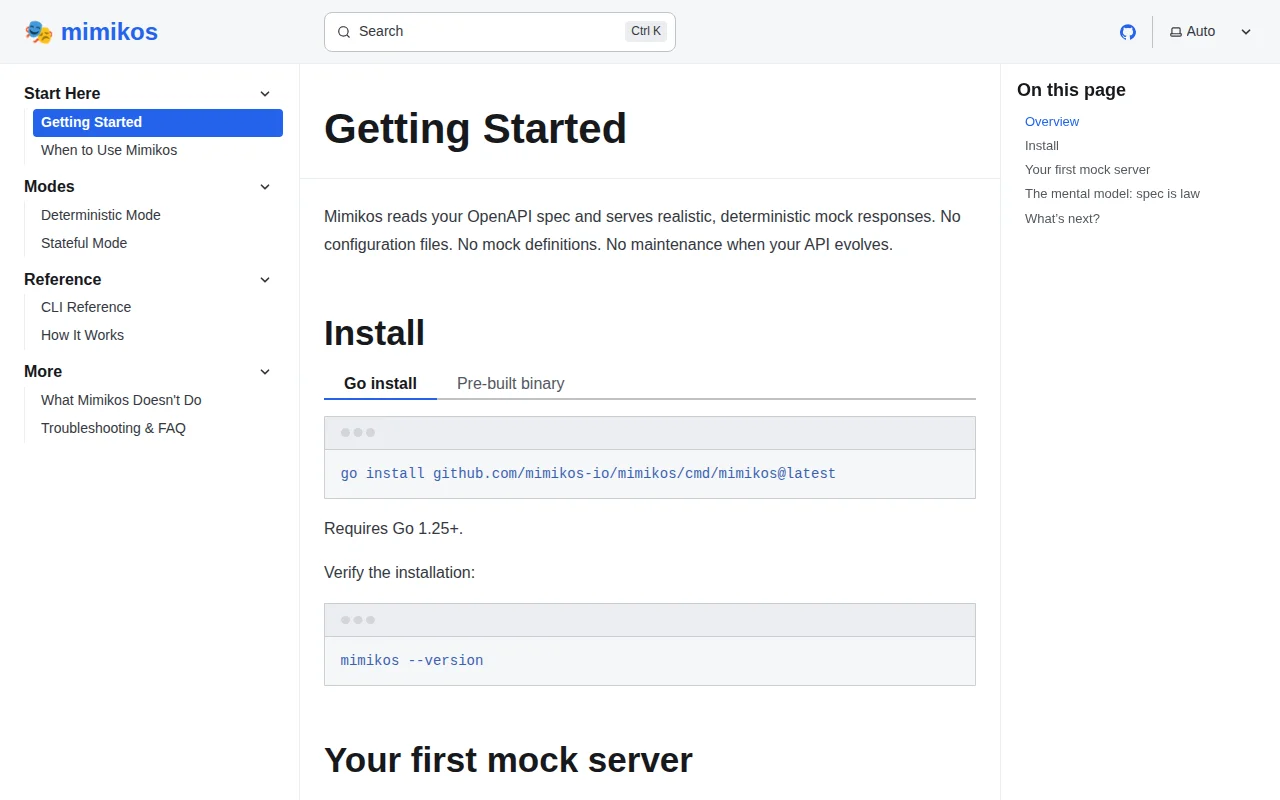
Zero-config OpenAPI mocking with behavioral inference, unlike Prism's manual setup.
Backend and frontend developers
Prism · WireMock · MockServer
``` mimikos start petstore.yaml ```
That's the entire setup. Mimikos parses your spec, classifies each endpoint (create, fetch, list, update, delete), and generates schema-valid responses with realistic data. Same request always returns the same response, so it's safe for snapshot tests and CI.
What's different from Prism, WireMock, etc.:
Most mock servers either (a) require you to hand-write every response, or (b) generate random data that changes on every request. When the spec changes, your mocks break — or worse, silently become wrong.
Mimikos sits in an unoccupied spot: zero config + high-quality responses. The key piece is behavioral inference — a three-layer heuristic classifier that determines what each endpoint does (not just what it returns) from the HTTP method, path structure, response schema, and operationId. It gets this right 96% of the time across a 344-endpoint corpus (Stripe, GitHub, Asana, Spotify specs).
Features:
1. Deterministic responses via request fingerprinting + per-field sub-seeding (adding a field to your schema doesn't change existing field values) 2. Stateful mode (`--mode stateful`) for full CRUD workflows — POST creates, GET retrieves, DELETE removes 3. 120+ semantic field mappings — `email` gets an email, `name` gets a name, `url` gets a URL 4. Spec-authored `example` values used directly when present 5. RFC 7807 error responses with field-level diagnostics for invalid requests 6. Single Go binary, no runtime dependencies, <50ms responses
Technical details:
The architecture separates startup from runtime: spec parsing, schema compilation, and behavior classification happen once at startup. At request time, it's routing + deterministic generation from a pre-computed seed. No AI in the request path — no LLM calls, no network dependencies.
I explored using LLMs for behavior classification twice (GPT-4.1, Claude) and they scored worse than the heuristic both times. The heuristic wins because it can exploit structural signals (path patterns, schema shapes) that LLMs tend to ignore in favor of semantic reasoning.
Written in Go, single binary. OpenAPI 3.0 and 3.1. Apache 2.0 licensed.
- Get started: https://mimikos.dev/getting-started/ - Repo: https://github.com/mimikos-io/mimikos
Stateful OpenAPI mocks when Prism is stateless and json-server ignores your spec.
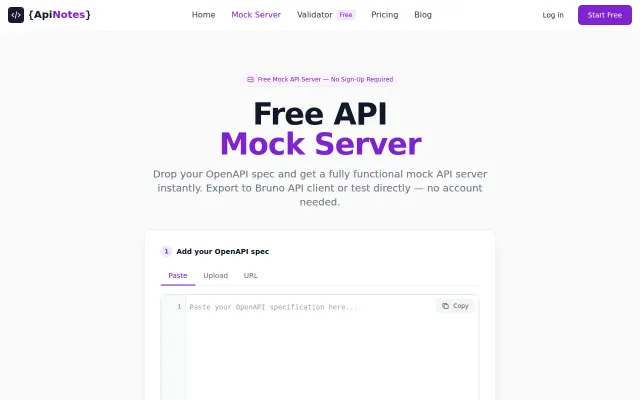
Yet another mock server, but Bruno export is a genuine differentiator.
AI-generated specs from real traffic beat mechanical type-merging tools like Swagger.
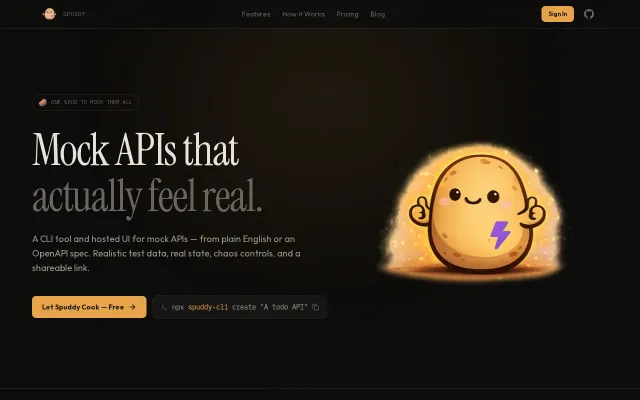
Natural language to live API in 14 seconds with chaos injection and team share links.
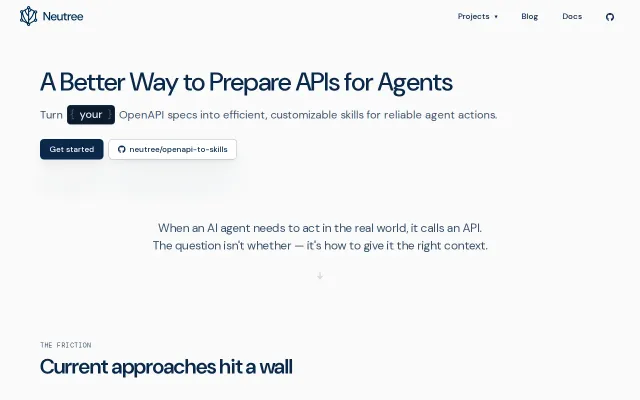
Progressive disclosure beats MCP tool flooding for large OpenAPI specs.
It extracts focused, executable operations from giant OpenAPI files (the GitHub REST YAML is shown) to shrink context and avoid sidecar adapter sprawl — a pragmatic answer to token bloat and brittle ad-hoc integrations. Useful and concrete: if it actually generates tidy, updateable skill units and runtime hooks it saves a lot of maintenance. That said, the idea competes with existing LangChain/openai-function patterns; the repo will need clear runtime, versioning, and update strategies to feel like more than a nicer converter.