Other●●Solid
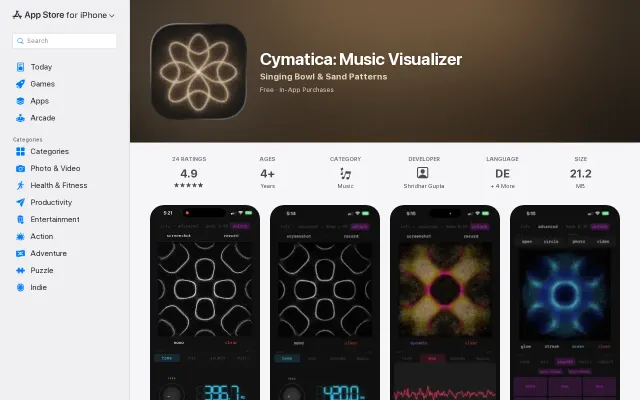
Cymatica – Chladni Plate Simulator
Renders 100k particles in real-time on iPhone with synced haptic feedback.
WizardryEye CandyNiche Gem
_august
121mo ago
Adds mass and density to meshes when most 3D tools only do visuals.
Robotics engineers, simulation developers
NVIDIA Omniverse · NeRF2Physics
Then robotics companies started to approach us and they asked for thousands of 3D assets that they can use in creating different simulation environments. This is crucial for them so they can achieve better sim-to-real transfer with domain randomization (train a humanoid in a million different kitchens so a real one is not a surprise when it is deployed in the real world).
However, we realized nice geometry and pretty textures are not enough for sim engines as they lack physics properties.
So we developed a new pipeline creating SimReady assets in OpenUSD and MJCF that plug directly into Isaac Sim and MuJoCo.
- Mass: volume from the mesh, density from material classification by a vision-language model (approach adapted from NeRF2Physics), multiplied together. - Center of mass, static/dynamic friction coefficients and restitution from the same material classification and estimation priors. - Collision meshes via CoACD; adaptive hull count is in progress. - Geometry and texture optimization, plus file format conversions. - Validated by Omniverse Asset Validator - We are currently focused on physics property estimation for props. Next step: articulated objects
It comes with free credits on easy Google sign-up so you can give it a test. No credit cards required.
Still early. All we'd ask is honest feedback. What works, what doesn't, what you wish it did differently. That's worth more to us than anything right now.
Renders 100k particles in real-time on iPhone with synced haptic feedback.
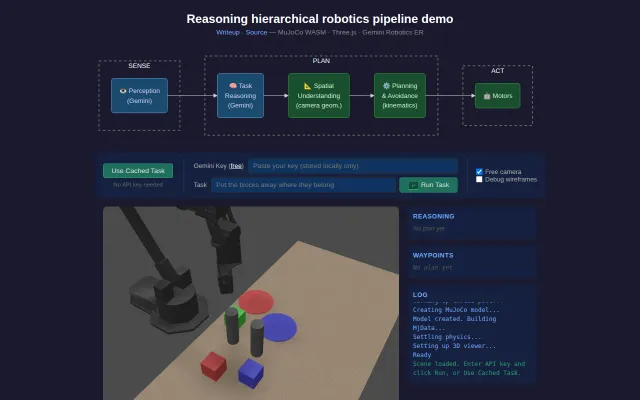
MuJoCo physics meets Gemini reasoning entirely inside your browser tab.
This is a tweet, not a project—no code, demo, or tool to evaluate.
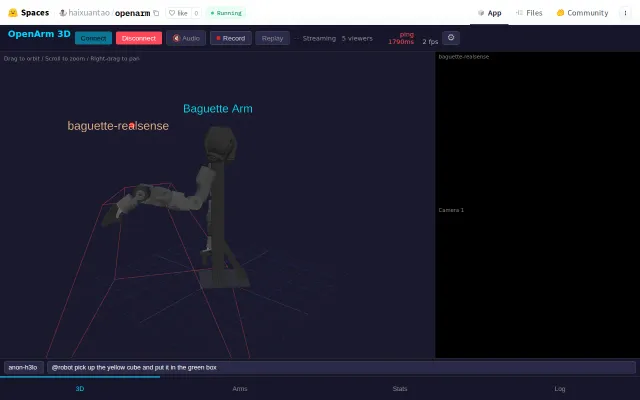
Chat-controlled robot arm livestream feels like Twitch Plays Robotics evolved.
Robot arm kinematics in Excel cells — no code, just formulas and Solver.
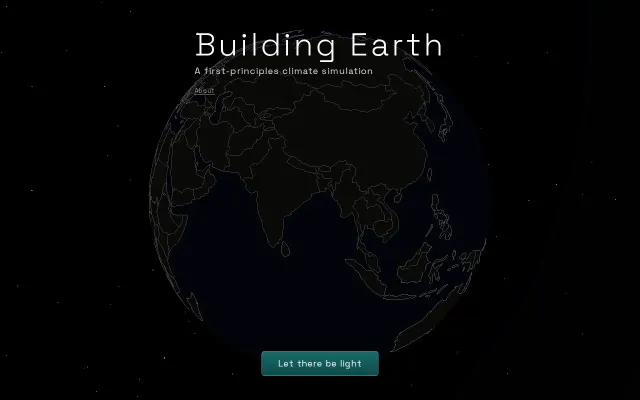
Layer-by-layer climate physics you can actually watch unfold in 3D.