Security●●●Banger
Vestauth – Auth for Agents
Agent auth via key-signing beats API keys and OAuth for autonomous systems.
Big BrainSolve My ProblemZero to One
scottmotte
1113mo ago
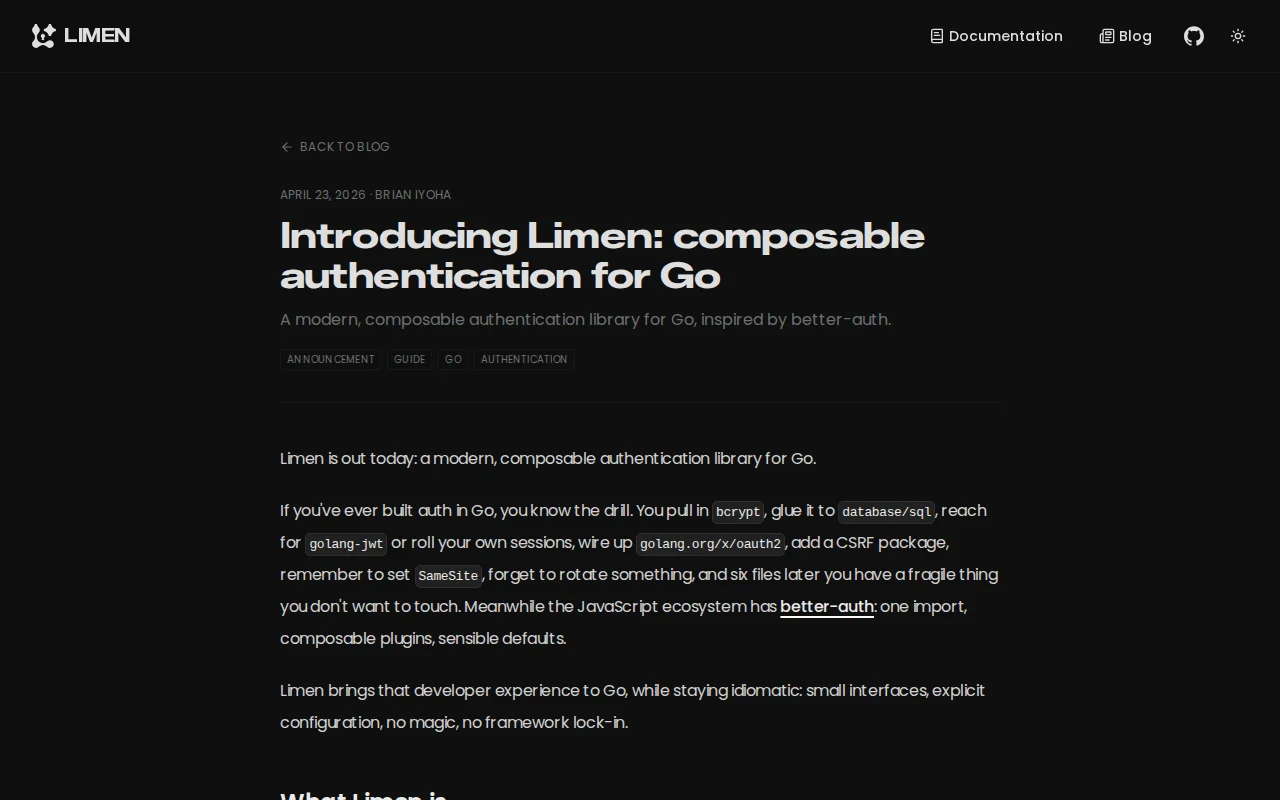
Brings better-auth's plugin DX to Go without framework lock-in.
Go developers building web applications
better-auth · Goth · Ory Kratos
https://github.com/thecodearcher/limen
Writeup/docs: https://limenauth.dev/blog/introducing-limen
It’s inspired by better-auth’s plugin-first DX, but designed for idiomatic Go. The core handles sessions/cookies/security primitives, and auth methods are composed as plugins (credential auth, OAuth providers, and 2FA today).
It exposes an http.Handler, so it works with plain net/http and frameworks like Gin/Echo/Chi/Fiber without framework lock-in.
This is the first public release. I’d really appreciate feedback.
Agent auth via key-signing beats API keys and OAuth for autonomous systems.
Implements real WebAuthn/passkey support plus OTP and HTTP-only cookie session validation, and exposes JWKS and token endpoints — plus an npx create-seamless scaffold and Docker Compose so you can stand up the stack in minutes. The repo deliberately focuses on the auth engine (no admin UI or hosted control plane), which makes it easy to audit and integrate; still, the space is crowded with Ory/Keycloak/Supabase, so this is best if you specifically want a lean, self-hostable passwordless core.
Auth + Stripe billing combo in 5 lines, but Supabase, Firebase, and Clerk already nail this.
First WhatsApp-to-Codex bridge lets you control AI sessions from your phone.
OAuth relay for AI subscriptions, but relies on unofficial device-code flows.
End-to-end TypeScript typing for agents when Vercel AI SDK already handles this well.