AI/ML●●●Banger
RoBrain – Shared memory for AI agents, with rejected alternatives
Prevents AI agents from re-litigating rejected architectural decisions across sessions.
Big BrainZero to One
mart1adelina
102mo ago
A knowledge base for what the code can't tell you.
Documents why alternatives were rejected—what code and comments never capture.
Engineering teams using AI coding agents
ADR (Architecture Decision Records) · Swimm · Mintlify
Time and time again, I've seen teams try to change something to a better way, only to realize why it was done the "worse" way in the first place. Documenting decisions not taken is just really hard, and for a long time I've wanted to change it.
With LLMs, we can. LLMs are diligent about documenting, and all you need is an instruction in AGENTS.md. That's why I built gnosis.
Simply tell your agent to run it after planning and when done, and gnosis provides the agent with all direction necessary.
Gnosis tells the agent to document only information it got from the human, not anything it can find by itself, and especially to document why alternatives were rejected. It uses a JSONL append-only log and a SQLite index (for retrieval), making it simple, fast, and convenient.
I'd appreciate it if you tried it out and gave me feedback!
Prevents AI agents from re-litigating rejected architectural decisions across sessions.
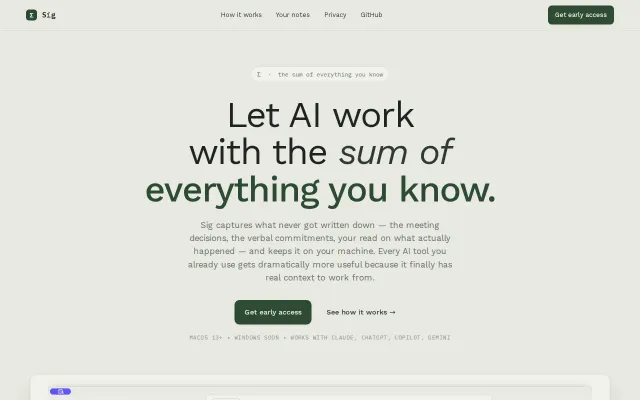
Local markdown files beat cloud SaaS for AI context that stays yours.
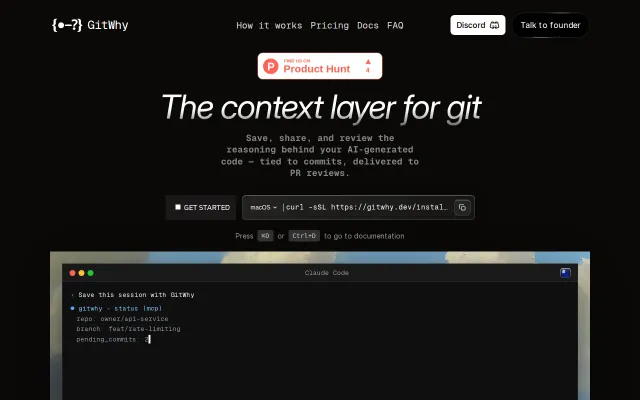
Context tied to commits, not floating docs—reviewers finally see why, not just diff.
Stores the why behind code in git orphan branches, not some cloud API.
Auto-capturing AI chat context alongside Git commits solves a real memory leak problem.
Deterministic gap detection without LLM hallucination is genuinely novel for knowledge bases.