Productivity○Pass
macOS PDF Organizer Using Apple Intelligence
App Store link returns 404 error, can't verify the product exists.
abu_ameena
402mo ago
Runs entirely on-device with Apple Intelligence, but struggles with complex tool chains.
Mac users wanting private, local AI automation
Siri · Junco
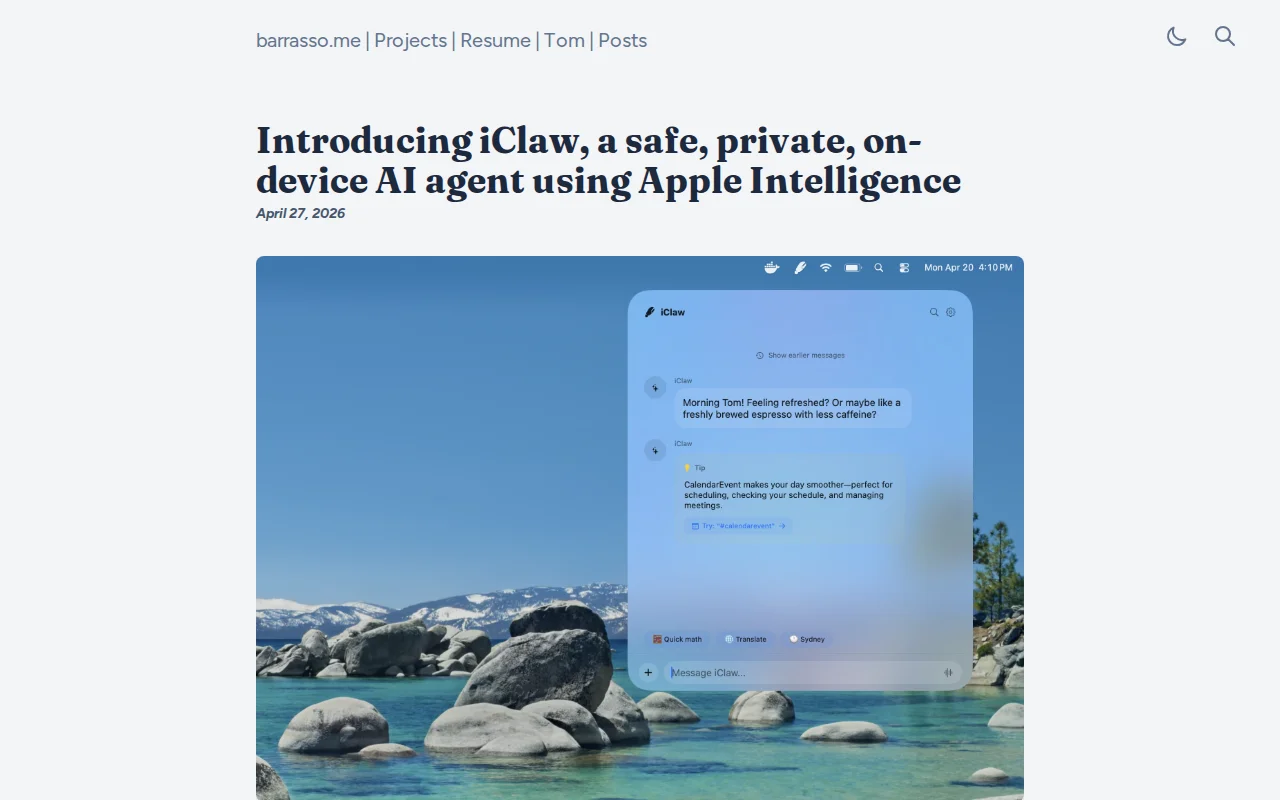
Last month at a SundAI hackathon, my team built a prototype for an app called iClaw. The goal was to develop an AI agent using Apple Intelligence. I've since continued hacking away at this idea when I had time, and now I'm releasing it on https://geticlaw.com with code on GitHub.
Apple Intelligence is a really poor model choice for an AI agent. It's not great at extracting information (it often injects preambles like "Here's the page..."), it struggles with following directions, and it gets overwhelmed when you ask it to choose from more than 3 available tools. But it's also a great choice because it comes pre-installed on many Macs without any configuration. It's also incredibly fast compared to just about every other 2-4B model I've run on my MacBook Air.
iClaw is very experimental and will make mistakes, but it's designed around safety. iClaw lives in the App Sandbox where it only has access to the permissions you grant it. All tools calls that create or delete (files, emails, calendar events) require explicit consent. You can also fully disable any tool, so they can't be called.
It was fun pushing the limits of what the 3B Apple Foundation Model (AFM) could do. I trained a LoRA adapter for better instruction following, and to "learn" a DSL for rendering custom widgets. I built, re-built, and re-re-built a 40+ tool library routing system using text classifiers and a multi-step decision framework. I built a Safari Extension that allows iClaw to access what's on your browser (I envision use cases like data extraction, form filling, or agentic navigation).
In all honesty, iClaw isn't ready for prime time. My ultimate goal was to distribute on the Mac App Store, which I perceived as a "safety & trust" signal. iClaw tries to do too much, so it easily gets lost. But I'm also surprised at just how much is possible, even without a purpose-built model. Check it out at https://geticlaw.com and GitHub, and let me know what you think.
App Store link returns 404 error, can't verify the product exists.
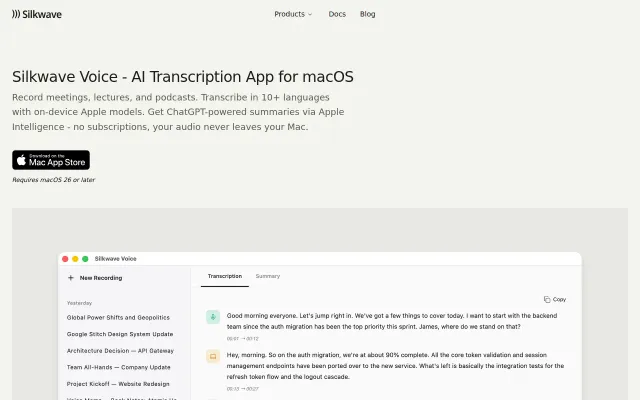
Native system audio capture without BlackHole drivers sets it apart from MacWhisper.
This is a practical glue layer over Apple's container CLI that bundles three handy steps into one command: create from an image, copy host folders into /sandbox/host, and run an init script inside the container. It's a tidy shortcut for people orchestrating many short-lived macOS sandboxes, though it's narrowly useful (macOS-only) and could use richer examples and error handling to feel more robust.
Compile-Verify-Fix loop is clever scaffolding for guiding small on-device models.
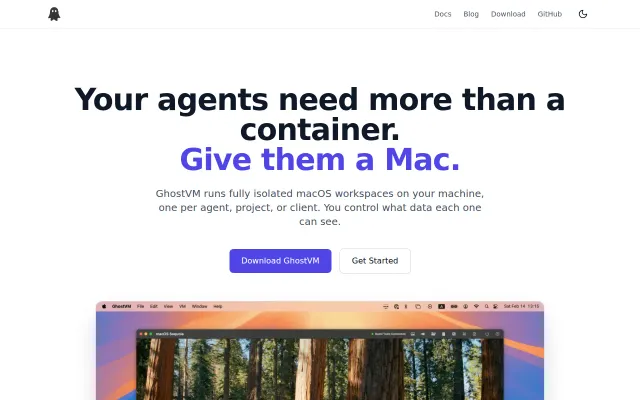
Native macOS VMs with APFS snapshots beat Docker for agent isolation.
MLX-powered local TTS plugin for OpenClaw—elegant but audience is Apple Silicon only.