Developer Tools●Mid
Git-wt – A Bash wrapper for Git worktrees
Git worktree wrapper for AI agents, but worktree management is niche and solved adequately by git natively.
Ship ItNiche Gem
kuder
203mo ago

Full Linux environment in-browser via WebAssembly, but Codespaces and Replit already own this space.
Developers who want browser-based terminal access without local setup
GitHub Codespaces · Replit · Gitpod
Ghostty Playground is an experimental project based on ghostty-web. It includes the full Ghostty terminal with configs, like themes and keybinds (config panel is based on zerebos' ghostty-config).
It runs a real Linux-like backend directly in the browser via BrowserPod with a dedicated filesystem, port-listening, bash, git, node.js, npm etc.
It includes the ability to download small AI models via Hugging Face and run inference in the browser using WebLLM. There are some very early experimental agentic features, but they're very rough at the moment (based on Vexi).
There are many limitations here. It's an early demo that's due a major refactor, so expect things to break unexpectedly. Some limits that can't be overcome are functions and keybinds that aren't compatible in the browser.
If you scroll past the terminal, there's some documentation that can help with usage.
Feel free to give it a try and let me know of any feelings, thoughts, bugs, improvements.
Credits (git):
- Leaningtech/browserpod-meta - Coder/ghostty-web - Zerebos/ghostty-config - Bezhermoso/tree-sitter-ghostty - mlc-ai/web-llm - Elomami1976/vexi
Git worktree wrapper for AI agents, but worktree management is niche and solved adequately by git natively.
Running full Claude Code in the browser via Wasm is genuinely wild.
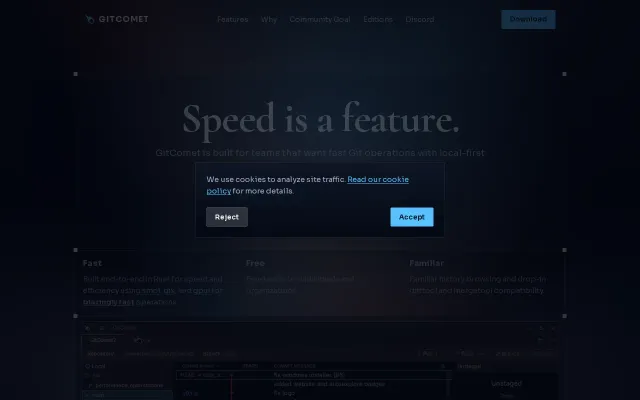
Opens Chromium repo in 1s while GitKraken takes 25 seconds on the same machine.
Git-synced memory for agents sounds clever, but it's a shell script wrapper without a clear agent integration path.
Concrete, hands-on demos — row-level multi-tenancy implemented with Prisma, async jobs via BullMQ/Redis, and tracing through OpenTelemetry/Jaeger — make this a useful reference for people building SaaS backends. It’s not reinventing the stack, but the repo bundles several production patterns and infra pieces together in a way that’s easy to explore; would be stronger with architecture diagrams, runnable quickstart scripts and example data.
Every site is literally a folder and every save becomes a Git snapshot you can preview or rewind in one click — previews spin up per-request runtimes so you get real server-side languages with no build steps. The design keeps the mental model delightfully small (files + Git + a URL), though you'll want clearer docs around security, multi-user workflows, and scaling before using it for public production traffic.