AI/ML●Mid
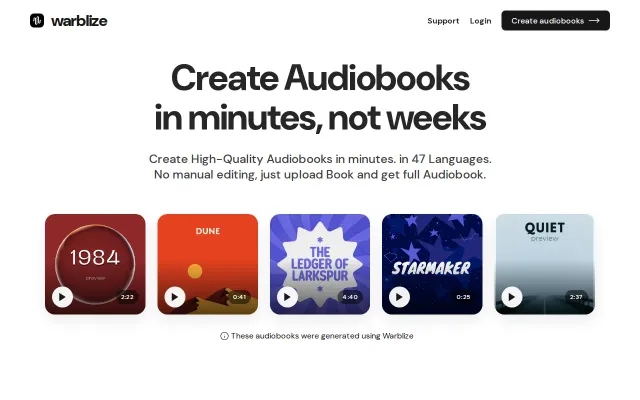
Narrate Books in Any Language
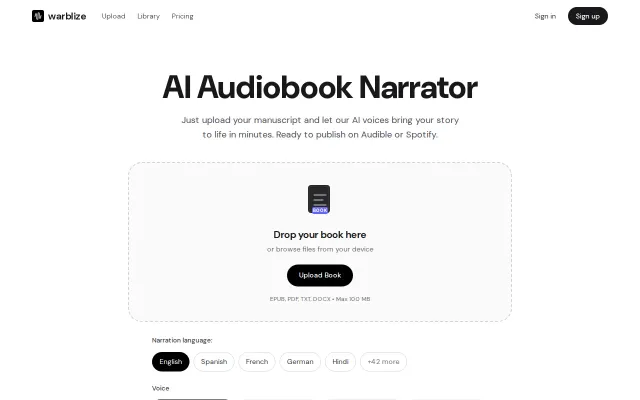
Claims zero-edit workflow for full books in 47 languages, competing with ElevenLabs.
SlickSolve My Problem
on3ye
133mo ago
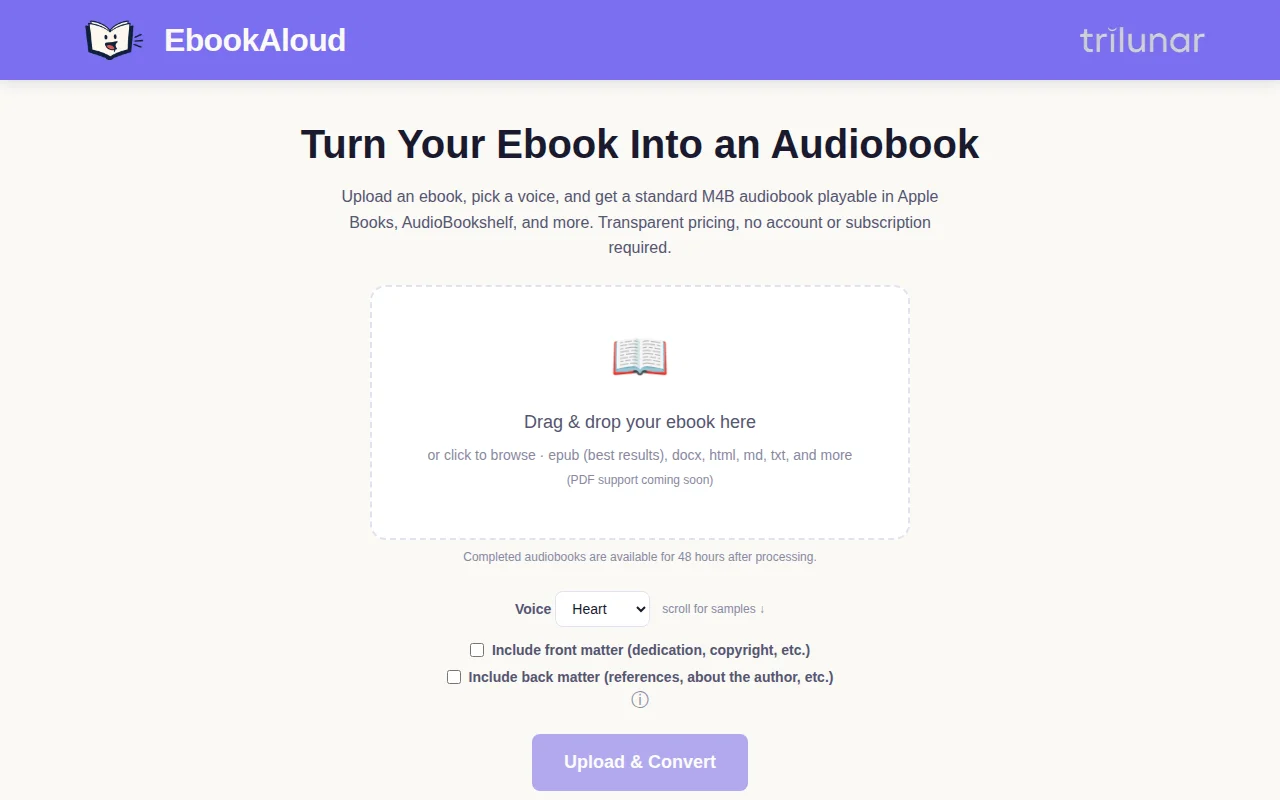
Pay-per-use audiobook conversion when ElevenLabs pushes subscriptions hard.
Self-hosters and ebook collectors wanting audiobook narration
ElevenLabs · PlayHT · Murf
I had two goals in building this: get some exposure to AI multi-agent coding workflows, and build a TTS product targeting ebook to audiobook conversion specifically. 99% of ebookaloud was written by DeepSeek v4 in OpenCode. I've used about 750 million tokens costing $12 in credits over the course of a month, and I'm very pleased with the results. Every change/feature went through a plan -> implement -> test -> review -> correct -> commit cycle with a mix of Pro and Flash agents. This was generally limited to one or two concurrent workers. I had a separate eval agent for quality control on various parts of the extraction and synthesis pipeline, which I could run 8-10 at a time. I may be approaching Yegge's Stage 6 [1] in terms of AI workflow automation.
I later set up Claude Code and ran Opus 4.8 side by side with DeepSeek. There are definitely quality differences, but I'm an experienced developer with a hands-on approach. I didn't write any of the code, but I have read critical sections of what it generated and had extensive conversations with DS Pro about each step of the approach. Opus didn't have much critical to say about DeepSeek's choices, and I'm not convinced a frontier model would have made an appreciable difference for my workflow. I suspect on a large codebase the differences would become more apparent, but the few changes I implemented with Opus had similar issues to all the models I've used: random changes without my direction, over-complicating simple solutions, taking unanticipated/destructive actions when it gets stuck, etc. I do see Opus being capable of handling more of the complex planning and orchestration that I was involved in. That's something I may want sometimes but not others.
As to the product itself, there are a lot more sophisticated solutions out there. I'm not trying to compete with ElevenLabs. I'm targeting m4b generation for a seamless audiobook experience with a pay-as-you-go pricing model and good-enough output quality. This is the first product I've ever tried to commercialize, and AI code generation put something polished within reach. Without AI, this would have taken me 6-8 months of manual research and development, and I would have gotten burned out long before completing it.
I have a free sample on the front page of the site if you just want to see what it generates in terms of voice/format. I made a few opinionated decisions regarding output quality. I aimed for 140 wpm for most of the voices to match industry standards, but some are much slower or faster and lose prosody at that rate. Rather than give users a wall of options, I'm deferring to the playback device for things like speed control. If the site sees real usage I'd like to expand to support Kokoro's other languages, and extraction and synthesis from PDF would round out the product quite a bit.
[0] https://github.com/hexgrad/kokoro
[1] https://steve-yegge.medium.com/welcome-to-gas-town-4f25ee16d...
Claims zero-edit workflow for full books in 47 languages, competing with ElevenLabs.
Client-side PDF-to-M4B pipeline using OpenAI APIs and vendored Mediabunny for encoding.
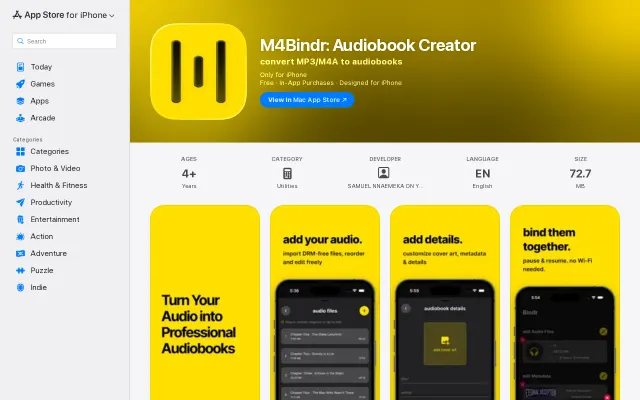
On-device M4B packager for DRM-free files, but iOS-only and narrow scope.
Yet another TTS wrapper for authors when ElevenLabs already dominates this.
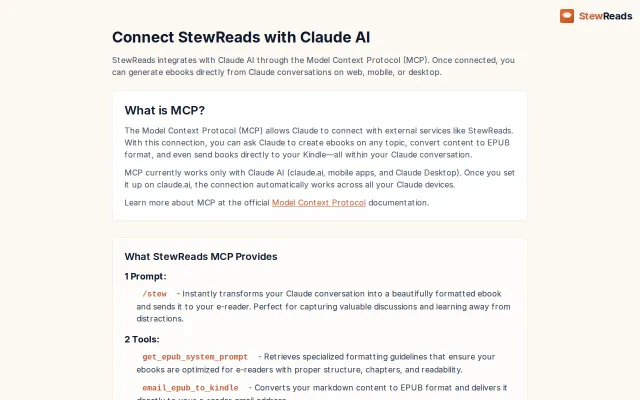
It wires into Claude via MCP and exposes a single /stew prompt plus two tools (get_epub_system_prompt and email_epub_to_kindle) to convert conversations into EPUBs and push them to a Kindle address. Practical and focused — however it's tethered to the Claude ecosystem, consumes your Claude tokens, and enforces a 2,000-word cap as a guardrail.
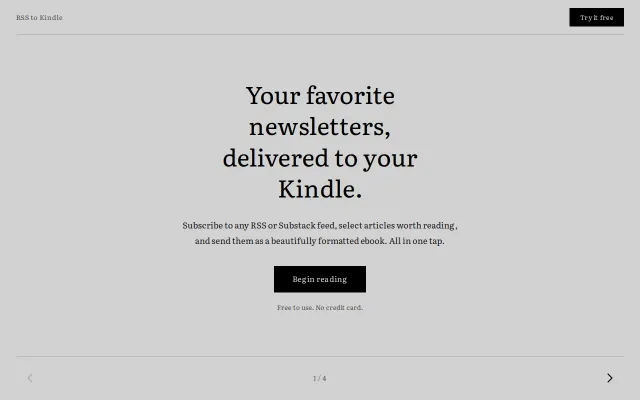
Yet another RSS-to-Kindle wrapper when Calibre and Send-to-Kindle already do this.