AI/ML●●Solid
Nerve – self hosted runtime for AI agents
Self-hosted agent runtime with persistent memory and personality modes via SOUL.md files.
SlickSolve My Problem
animetyan
641mo ago
Self-hosted runtime for personal apps that combine reliable code with LLM agents and adapt across every screen.
One app definition renders natively on phone, watch, and browser with agent assistance.
Developers building personal tools who want cross-device access without rebuilding for each platform
Home Assistant · Node-RED · Appsmith
Like many folks I was trying to build and customize little apps for myself, start by some web apps, but soon I realize I would want to access them across the devices I own, without opening the browser. While many agents now can generate ephemeral apps that customized to the need at the time and show in the chat interface, regenerating everything each time could be slow and costly. What I wanted is the middle ground: AI widgets/mini-apps that I can create, customize and host myself - reusable, still has the intelligence from llms when needed, and being able to access and use across devices.
So in Moumantai, an app is defined once with the schema (data), tools (actions), and faces (views). The server hosts the state, with some agent in the back as the intelligence layer, and handle all the heavy lifting. The clients just renders the UI natively, with different device-specific faces resolved on the server. The main app logic is still simple CRUD operations, with some wrapped as tools so the backend agent can provide intelligence when needed.
It is mostly a small personal experiment so designed a bit opinioned around what I use and need. Would love any feedbacks to make it more useful. In particular any security issues or performance suggestion, any recommendation to make the architecture more elegant and cut down the complexity. Any issues are welcome :)
Self-hosted agent runtime with persistent memory and personality modes via SOUL.md files.
Agent runtime infra, but 0 stars and crowded with LangGraph and Temporal.
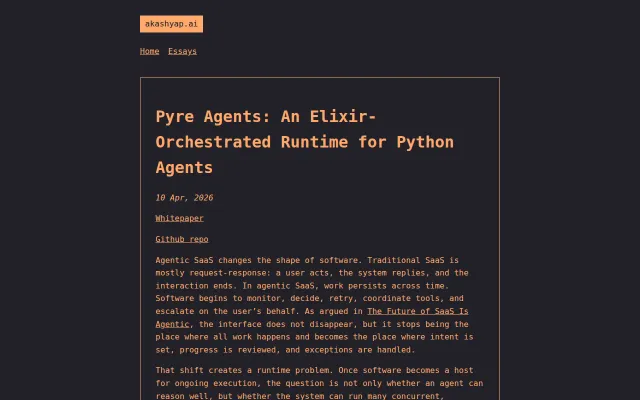
Uses Elixir OTP to orchestrate Python agents with 3.77 KB memory overhead.
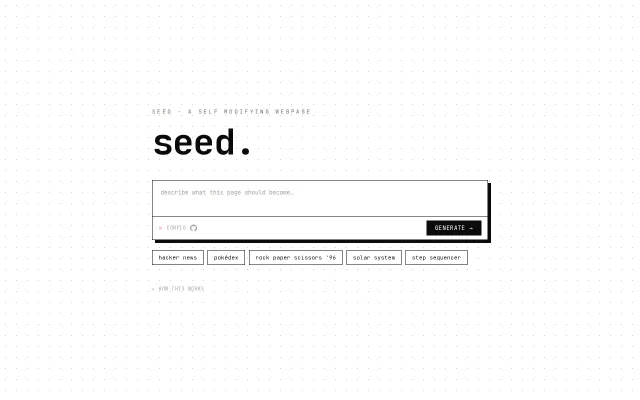
On-device LLM with site state in the URL inverts how web apps normally work.
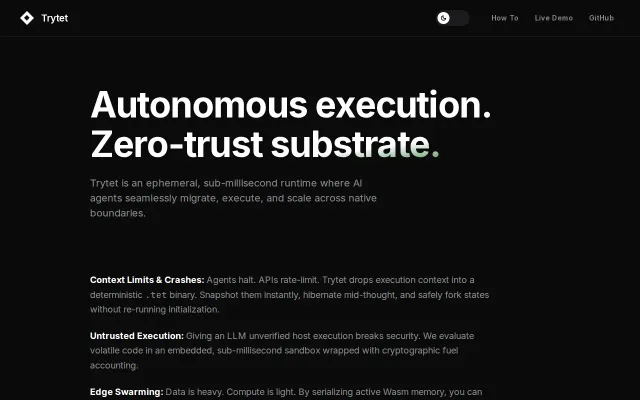
Snapshots active Wasm memory to migrate agents edge-side, cutting context latency.
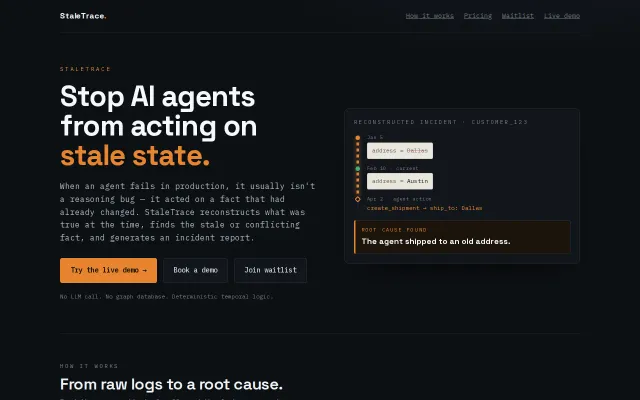
ValidMemory engine gives reproducible verdicts when LangSmith just guesses.