Developer Tools●●●Banger
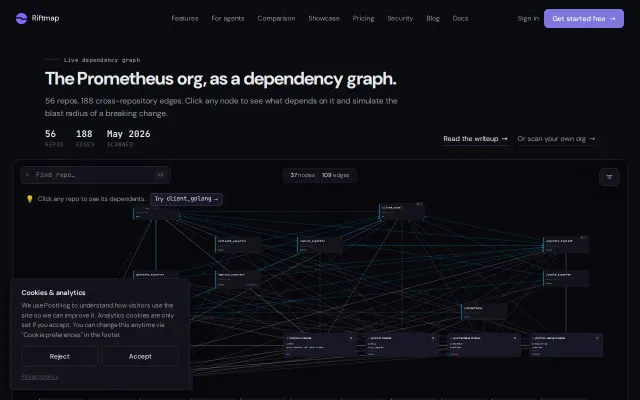
The Prometheus org has 188 cross-repo dependencies (no signup)
Cross-repo dependency graphs with blast radius simulation—no signup, instant org visualization.
WizardrySolve My Problem
DaWe01
301mo ago
DepGuard is a visual analysis tool that turns messy `npm` vulnerability lists into clear, interactive graphs. It helps developers find the "blast radius" of a vulnerability and prioritize fixes based on network structure, not just CVSS scores.
Graph theory metrics prioritize vulnerabilities better than CVSS scores alone.
Security engineers and npm package maintainers
Snyk · Dependabot · npm audit
Cross-repo dependency graphs with blast radius simulation—no signup, instant org visualization.
The repo actually implements an RK4 geodesic integrator in CUDA kernels to trace millions of rays and produce frame sequences — plus handy scripts to generate a Perlin accretion disk and preprocess NASA EXR star maps. It’s the sort of technical playground that shows real GPU know‑how and produces striking renders, but the experience is experimental: you must manually fetch assets, run preprocessing scripts, and there are no builds, benchmarks or accuracy notes to help anyone reproduce or compare results.
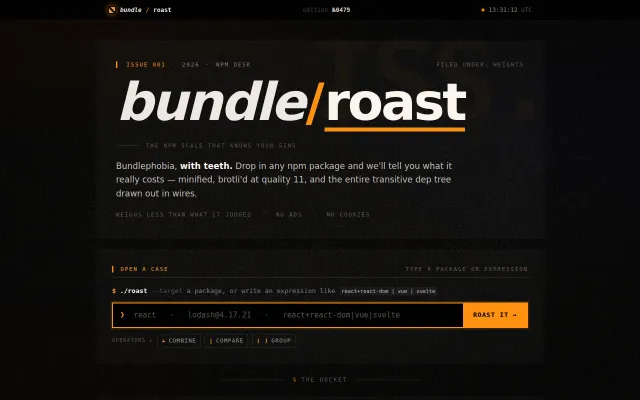
Bundlephobia with teeth: real brotli compression and wire-graph dep trees.
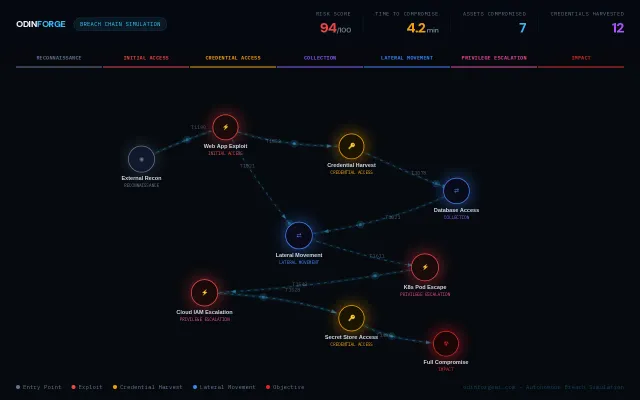
The UI turns complex attack chains into an immediately scannable graph with per-path metrics (risk score, time-to-compromise, assets/credentials impacted) — great for threat modeling and tabletop drills. Feels more like a very polished BAS visualization than a novel research tool; what I want to know next is where the simulation inputs come from (real telemetry, vulnerability feeds, or canned scenarios).
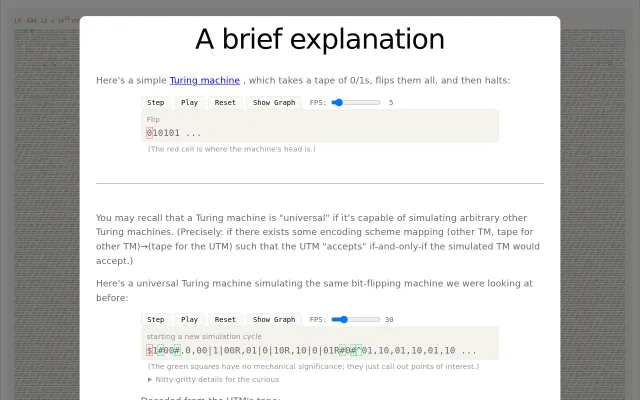
UTM simulating itself where L3 won't execute its first step until the year 2070.
Real photometric data visualization in the browser using WebAssembly.