Developer Tools●●Solid
Game Engine in Julia with 400KB Exports (Vs Unity's 200MB)
PBR + physics in 400KB WASM, but Julia adoption limits the audience significantly.
WizardryNiche Gem
MrNova
524mo ago
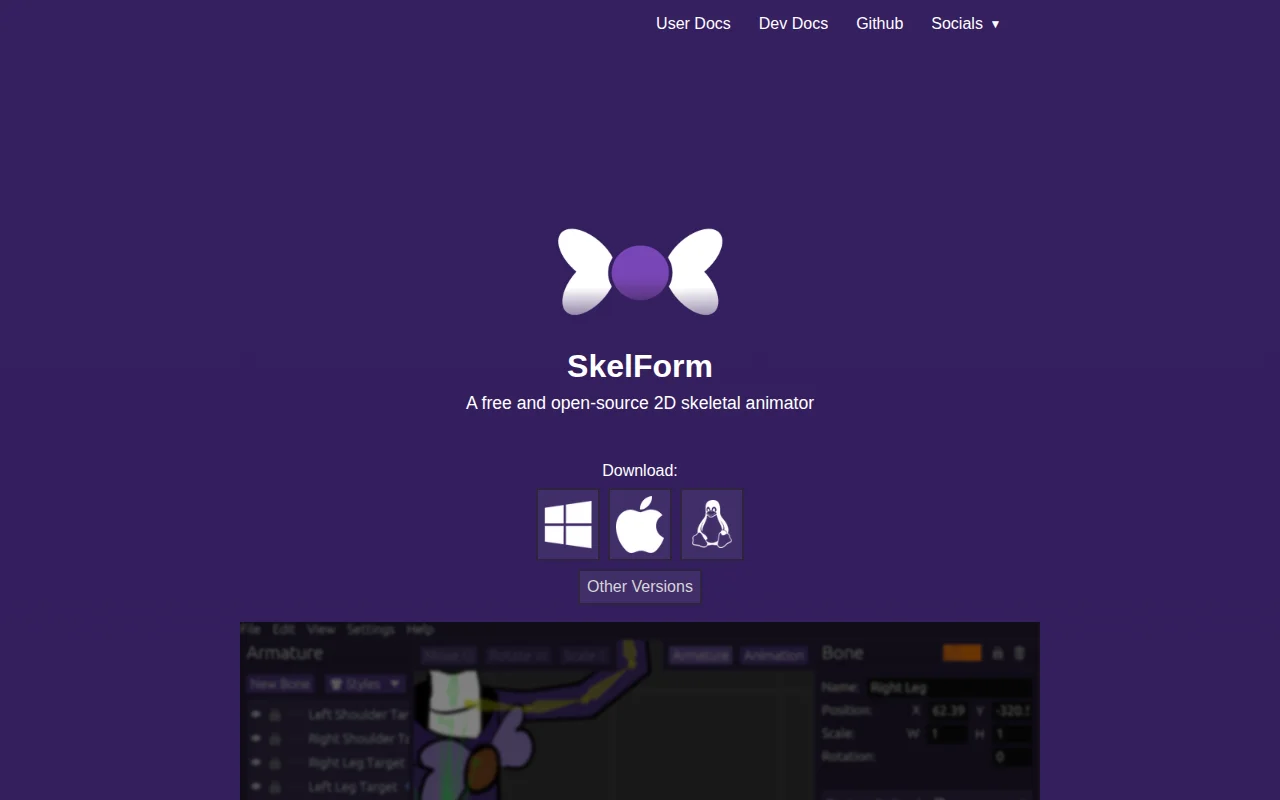
Free Spine alternative with runtimes in four languages when DragonBones died.
Indie game developers, 2D game creators
Spine · DragonBones · Creature
SkelForm is simpler than its peers, but it has support for the advanced stuff: inverse kinematics, mesh deformation, damping and swaying-based physics. The editor supports PSD importing and, beyond just the armature, exporting spritesheets or videos.
As well as the usual user documentation, its runtime specification and implementation is fully documented separately (albeit mostly with pseudo code): https://skelform.org/dev-docs
The currently supported game engines are moreso just frameworks like Macroquad and Pygame, since those are what I wanted to make games on and are easy to maintain. Someone else is developing a Godot runtime, but I plan to develop the Unity runtime once I can devote my time to learning it.
PBR + physics in 400KB WASM, but Julia adoption limits the audience significantly.
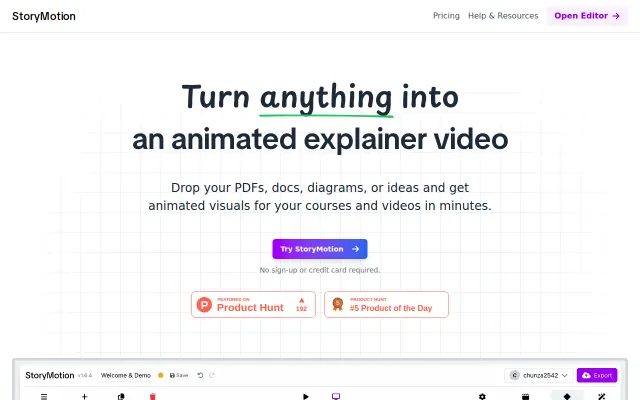
Excalidraw integration is nice, but Vyond and Animaker already own this space.
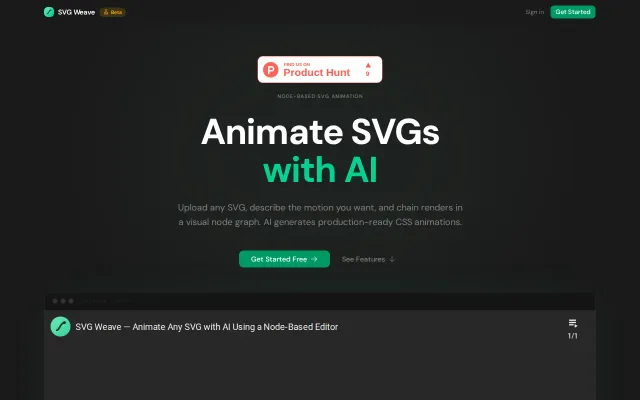
AI-to-CSS animation pipeline beats hours of manual keyframe tweaking.
Pure SVG ASCII animations with typing and glitch effects look surprisingly smooth.
Pretty noise animation—novelty with no practical use beyond screensavers.
Turns text prompts into looped pixel-sprite animations with on-site playback and spritesheet/GIF export, which is immediately useful for rapid prototyping. The live preview and palette controls feel catered to creators, but the real value will hinge on consistency across frames (same character, directional sprites) and granular timing/frame controls.