Developer Tools●●Solid
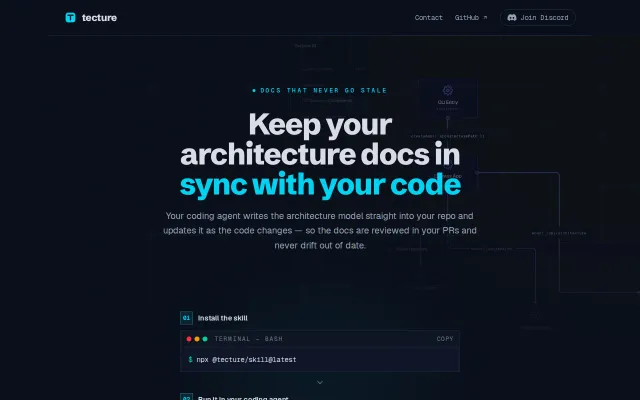
Tecture – A navigable architecture map from your coding agent
Agent-authored docs reviewed in PRs beat stale Confluence pages.
Solve My ProblemSlick
shanika
3014d ago
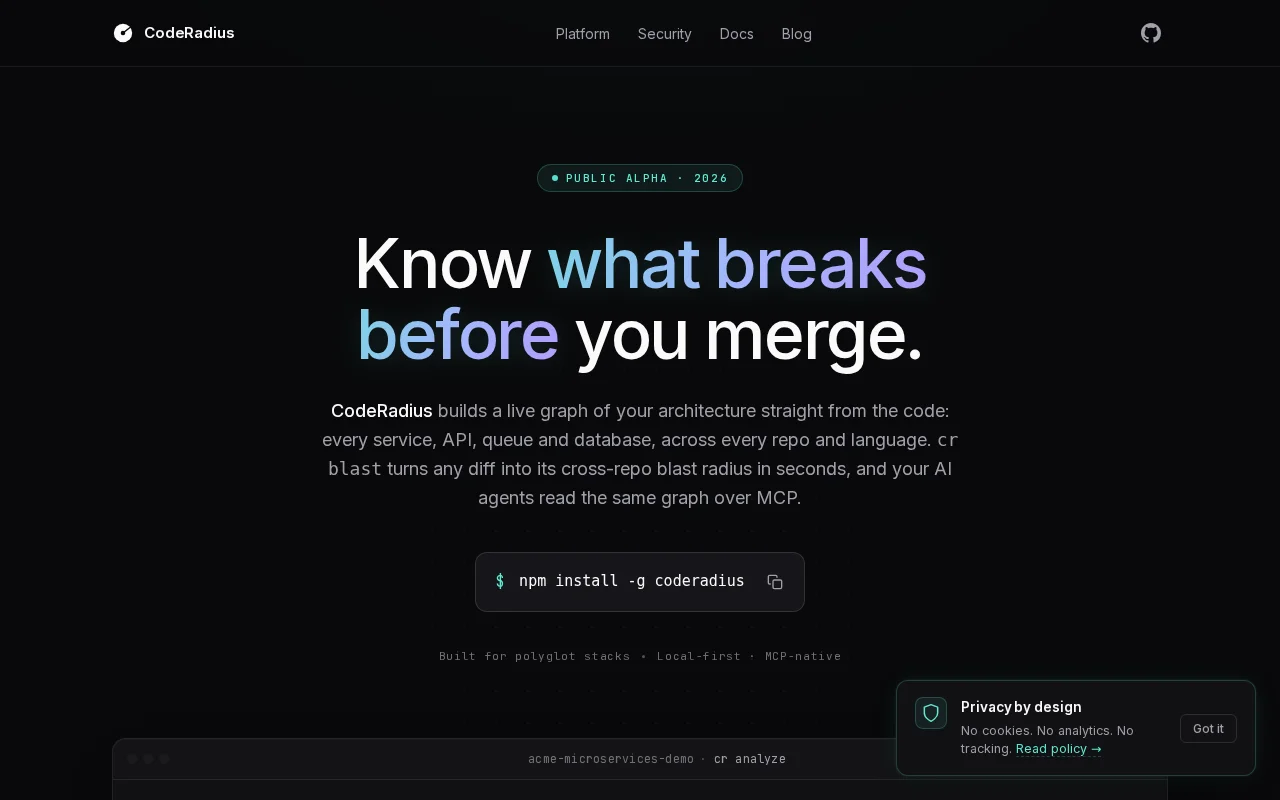
Cross-repo blast radius checks before merge — architecture drift finally has teeth.
Engineering teams managing multiple repositories and microservices
Sourcegraph Cody · Snyk · Datadog Service Map
I deal with tens of repositories daily, in a company with thousands. Having a clear picture of real-time architecture relies on discipline and the goodwill of engineers to keep the (fragmented) documentation up to date. With coding agents, this problem grows at the speed of light.
LLMs are good at explaining parts of code, but are very bad at extracting precise and reliable architecture mapping of big codebases, not to say when dealing with multiple repos of a microservices fleet (read: distributed monoliths being dressed as microservices architecture).
I’ve built CodeRadius to try to solve this problem (and other adjacent ones) in a more deterministic way, leveraging static analysis combined with local LLMs and a graph database.
repo: https://github.com/coderadius-ai/coderadius
demo: https://coderadius.ai/acme-microservices-demo.html
What CodeRadius tries to do:
- maps dependencies paths across services through APIs, databases, and message brokers
- calculates the blast radius of a code change and detects breaking changes (BC) at a static level, before reaching production
- gives platform teams a governance tool to assess and enforce policies
- empowers your already existing catalogs (e.g. Backstage, Cortex) with the ground truth of the real software architecture
- provides package intelligence that helps tech leads assess the fragmentation of software versions across all their repos, and security teams to have a quick overview over the vulnerabilities of the used packages. It also detects internal packages and calculates the adoption of each release
- exposes all of this via MCP to coding agents
How do you handle cross-repo impact today? How do your platform teams govern the golden paths?
Agent-authored docs reviewed in PRs beat stale Confluence pages.
LLM governance framework, but early-stage spec with no working code—Phase 0 skeleton promised.
Architecture spec with no AI yet — Phase 0 skeleton competing against LangChain and AutoGen.
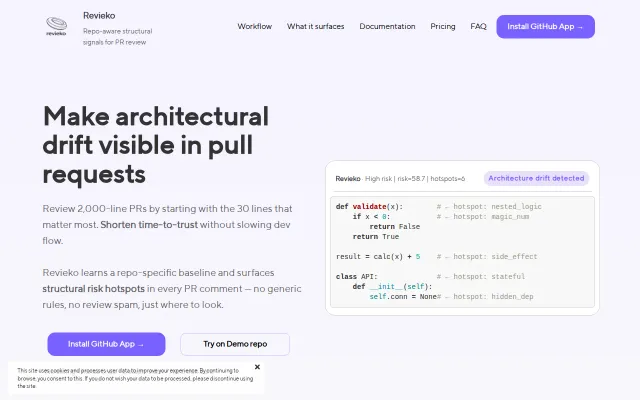
Repo-aware PR reviewer that flags structural drift instead of lint errors.
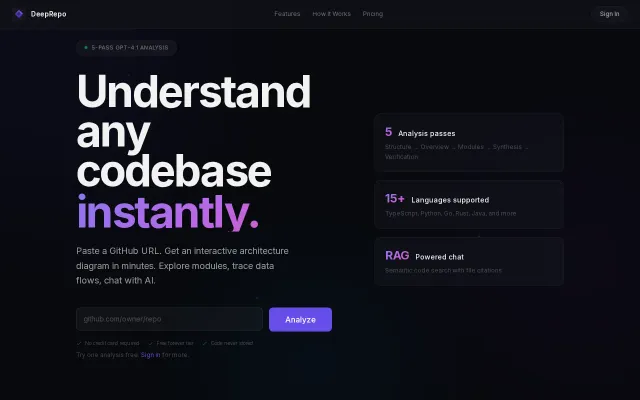
Five-pass verification pipeline beats single-shot codebase analyzers like Cursor.
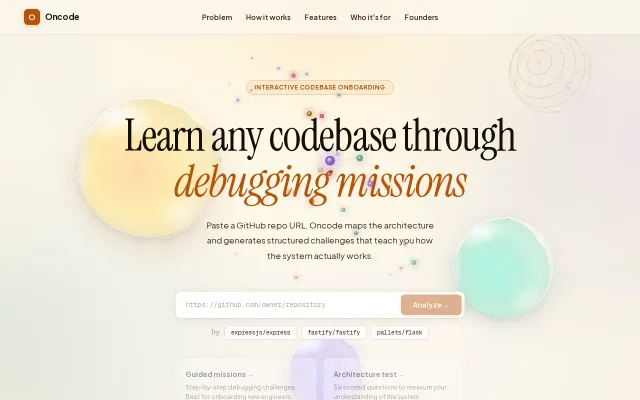
Debugging missions beat Q&A — structured challenges instead of chatting with codebases.