AI/ML●Mid
Jargo – a Golang port of Pipecat for conversational-AI apps
Honest Pipecat port in Go — single binary beats Python for production voice servers.
Ship It
fallais
7116d ago
A WebRTC-native, audio-first conversational-AI framework for Go.
Ports Pipecat's architecture to Go for single-binary deployment without Python dependencies.
Go developers building voice AI agents who want to avoid Python
Pipecat · LiveKit Agents · Deepgram
Pipecat is great, and jargo is a port of it — the architecture and many design decisions are Pipecat's.
Honest Pipecat port in Go — single binary beats Python for production voice servers.
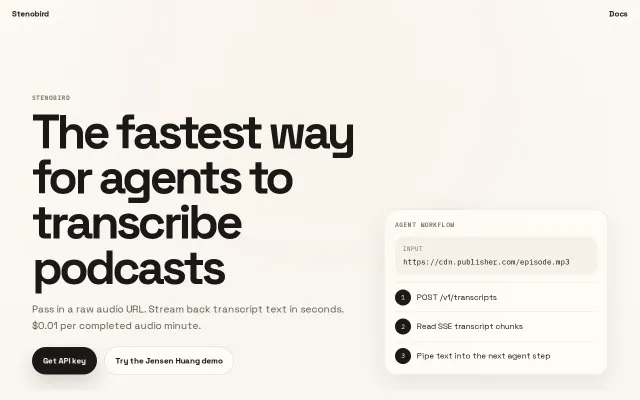
Fast Parakeet-based transcription API for agents at $0.01/minute.
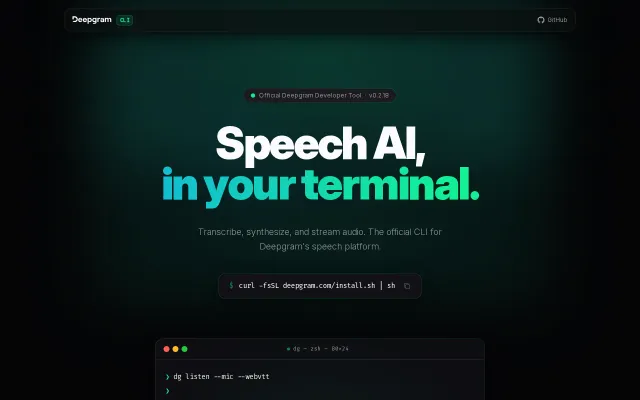
Agent-aware speech CLI with MCP support, but wraps an existing API service.
Voice+video agent built by orchestrating Deepgram, ElevenLabs, LemonSlice, and LiveKit together.
This is practical, low-level tooling: the addon runs Opus encode/decode and all RTP I/O on native threads so the Node event loop stays out of the way — exactly what you need when streaming audio to AI models. It bundles helpful primitives (createRtpParameters / createSrtpParameters / createSDP, produceRtp/consumeRtp) but does require native deps (FFmpeg/libopus) and currently only documents macOS/Linux builds.
Passive observability parses agent artifacts without touching proprietary LLM calls.