AI/ML●●Solid
Incremental RAG ingestion, only changed chunks get re-embedded
Chunk-level incremental sync saves 67% embedding calls on partial document edits.
Big BrainSolve My Problem
shamikhan005
201mo ago
SyncLite : Build Anything Sync Anywhere
SQLite transaction logs as an open replication format beats wrestling with Debezium.
Backend engineers building offline-first mobile or edge applications
LiteFS · ElectricSQL · PowerSync
We have been building SyncLite, an open-source platform to simplify offline-first application development.
If your application uses SQLite or DuckDB, SyncLite lets it continue using the local database as usual while synchronization happens in the background.
For SQL-based applications, SyncLite records transactions into transactionally consistent .sqlog files using SQLite as an open replication format. A background consolidator replays those transactions, derives row-level CDC and schema changes, and applies them transactionally to destination databases like PostgreSQL.
The same architecture supports both database replication and many-to-one data consolidation. For applications that don't work directly with SQL, SyncLite also provides Store Devices (CRUD APIs) and Streaming Devices.
SyncLite is open source and available for Java, Python, Rust, and native C/C++ ( nodejs, .NET, go in roadmap).
GitHub: https://github.com/syncliteio/SyncLite
We wouldd love your feedback on the architecture, developer experience, and whether this is something you would find useful for building offline-first applications.
Chunk-level incremental sync saves 67% embedding calls on partial document edits.
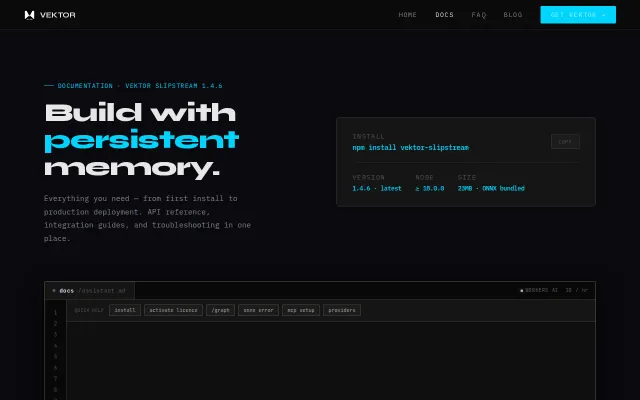
SQLite-backed agent memory with graph viz when Mem0 and Zep already dominate.
GraphDB for agents with schema enforcement—clever idea, but early and positioning unclear.
28 MCP tools and stealth browser bundled into local-first agent memory layer.
Skip SQL entirely; direct B-tree KV API cuts RocksDB memory from 121MB to 11MB.
Unsupervised KMeans clustering discovers HN topics instead of relying on predefined tags.