AI/ML●●●Banger
oMLX – SSD-backed KV cache cuts coding agent TTFT from 90s to 1s on Mac
SSD-backed KV cache cuts coding agent TTFT from 90s to 1s, packed in a native macOS app.
WizardrySlick
jundot
414mo ago
OpenLake is a high performance storage engine for efficient LLM inference and GPU Training
Deferred materialization CUDA kernels cut KV cache network transfer by 1.72x with 600GB/s decompression.
ML infrastructure engineers, AI startup CTOs
vLLM · TGI (Text Generation Inference) · Anyscale Endpoints
A single 256K token conversation on Gemma 4 31B produces approximately 43GB of KV state, more than half the memory of an 80GB H100. The problem becomes even harder across a cluster: a prefix cached on one GPU host is unavailable when the next request lands on a different GPU, forcing the new GPU to repeat work the fleet has already completed.
Once the KV cache is offloaded, network bandwidth becomes a major constraint on read latency. To move less data across the wire, we built deferred materialization: a custom CUDA kernel that losslessly compresses KV blocks before they leave GPU memory and decompresses them on the GPU after retrieval. In our tests, this achieved:
- 1.72× lossless KV compression. - Approximately 600GB/s decompression throughput on an H100 - 80GB/s of effective KV throughput over a physical 50GB/s link
At 128K context, retrieving cached KV reduces TTFT from 44 seconds to 0.6 seconds, a 66× improvement. Across the complete workload, GPU time reduces from 1,169 seconds to 606 seconds, saving 48.2% of GPU cost.
OpenLake is written in Rust and uses io_uring with one pinned runtime per physical core. We provide connectors for vLLM and SGLang so the cache can be enabled without modifying the inference engine itself.
I would love to hear how others are handling KV reuse across GPU hosts, especially for long contexts, and get to know your thoughts.
Thanks!
GitHub: https://github.com/openlake-project/openlake
Here is our blog: https://cloud.theopenlake.com/blog/taming-the-beast-managing...
SSD-backed KV cache cuts coding agent TTFT from 90s to 1s, packed in a native macOS app.
RDMA-backed distributed KV cache cuts prefill latency 3.1× where vLLM's built-in caching maxes out.
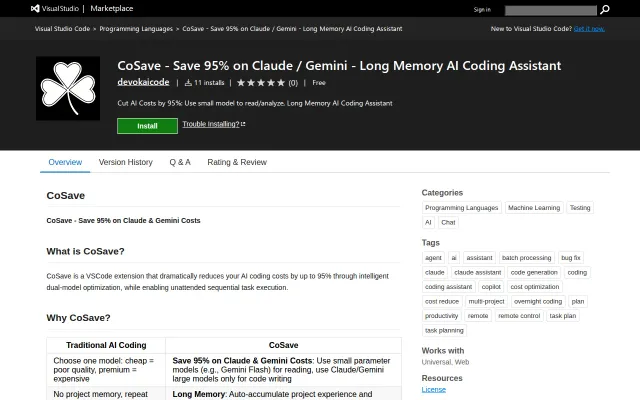
95% cost savings via dual-model optimization, but unproven and only 11 installs.
Persistent Python runtime keeps state alive across tool calls, unlike Claude Code's stateless tools.
Saves 20% on API bills by preventing cache expiration during long subagent waits.
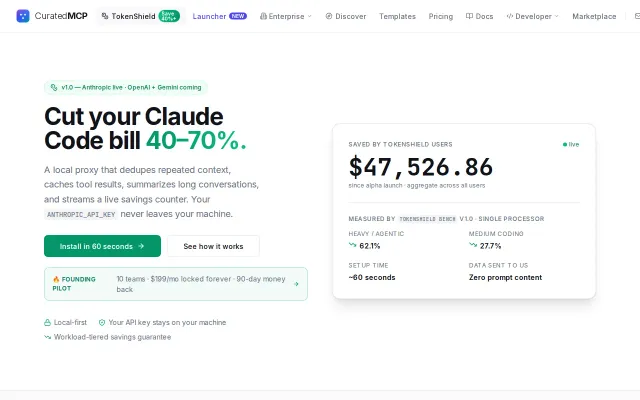
Six optimization layers slash Claude Code bills while keeping your API key local.