Productivity●●Solid
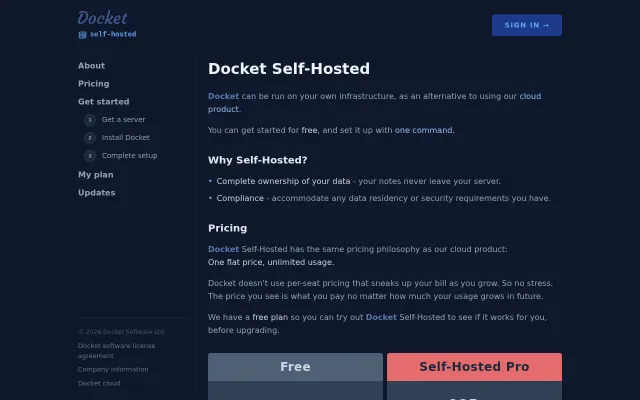
Docket (system for active note-taking) now self-hosted after HN asked
One-command Docker install with auto-SSL beats most complex self-hosted setups.
Ship ItSolve My Problem
davnicwil
842d ago
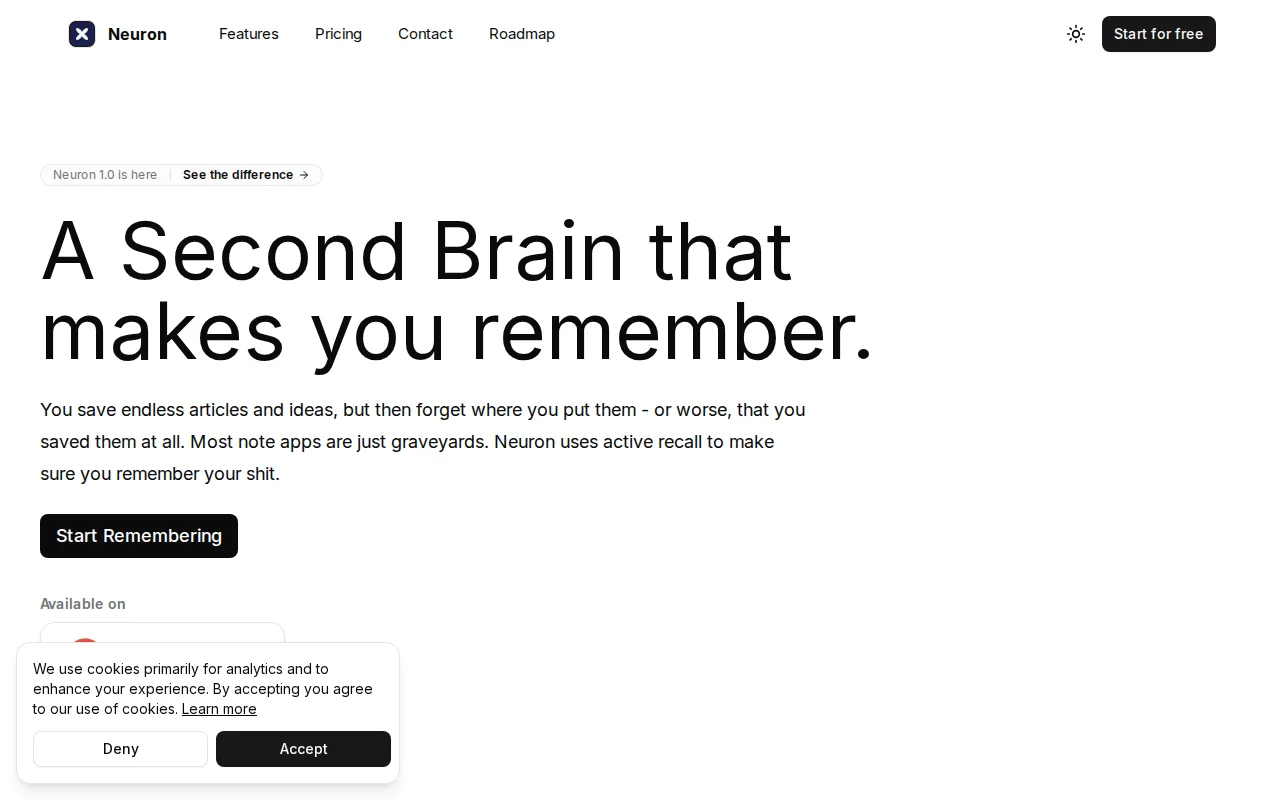
Active recall spaced repetition for notes, but Obsidian, Readwise, and RemNote already own this space.
Knowledge workers, students, researchers, and anyone who saves content but struggles to remember or reuse it
Obsidian · RemNote · Readwise
That’s when it hit me: we don’t have an information problem anymore. We have a retention problem. We save everything. Articles. PDFs. Tweets. Meeting notes. Video insights. Random ideas. But two weeks later, most of it is gone from our head. The insight decays. The context disappears. The connection between ideas fades. Our notes slowly turn into an archive instead of an asset. What frustrated me most was realizing I kept relearning the same things. I’d read about mental models, startup distribution, learning science, systems thinking — and every time it felt new. But it wasn’t new. I’d seen it before. I just didn’t retain it. That’s when I had an uncomfortable realization: my “second brain” wasn’t a brain at all. It was a storage locker. It stored information, but it didn’t help me remember or use it.
Most tools are optimized for storing, organizing, tagging, formatting, linking. They assume you’ll come back and reread your notes. But you usually don’t. And even if you do, rereading isn’t the same as remembering. Real retention requires re-exposure, active recall, and spaced repetition — the same principles behind learning science — but applied to everyday thinking and work, not flashcards and exam prep.
So I started asking a different question. Instead of “How do I organize my notes better?” I asked, “How do I make sure I actually remember what I capture?” That shift changed everything. What if your notes didn’t just sit there? What if they occasionally asked you to explain an idea in your own words? What if they reminded you of a concept right before you forgot it? What if they connected new thoughts to old ones automatically and resurfaced insights you saw months ago when they became relevant again? That’s the idea I started building around. I’m working on something called Neuron. The core loop is simple: Capture → Understand → Remember → Retrieve → Reuse. You throw everything in — notes, links, PDFs, highlights, voice ideas — and the system handles structure automatically. Behind the scenes it extracts key ideas, builds a living knowledge graph, generates contextual recall prompts, and schedules spaced repetition quietly in the background. You don’t “study.” You just spend a few minutes a day reinforcing what actually matters.
The goal isn’t to build another note-taking app. It’s to build something memory-first. Something that turns knowledge into something that compounds instead of decays. If this resonates - especially if you feel like you consume way more than you retain — I’d genuinely love your thoughts and criticism.
You can check it out here: https://neuronapp.tech
One-command Docker install with auto-SSL beats most complex self-hosted setups.
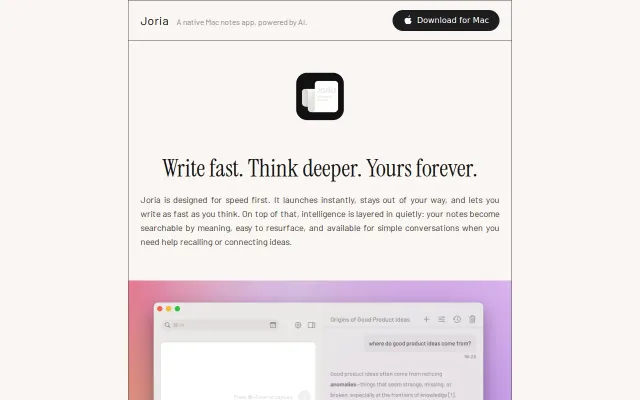
Instant-launch capture bound to a keystroke and local-first storage are the app's best ideas — you can jot something down without breaking flow and then query your notes by meaning. The 'chat with your notes' and use-your-own-AI angle is sensible for privacy-minded users, but the pitch leaves open how sync, model routing, or integrations actually work, and the space already has stiff competition.
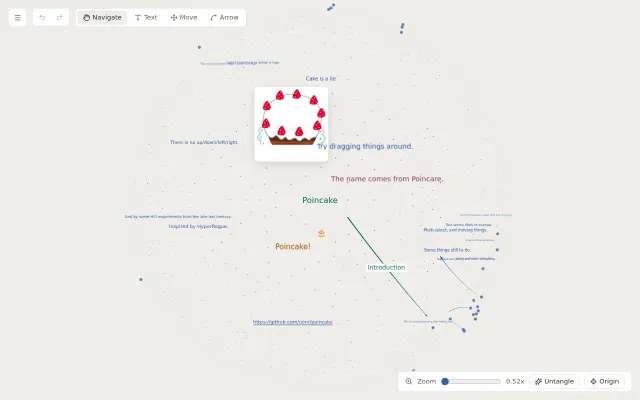
Hyperbolic geometry note-taking demo with Poincaré disk visualization, but controls need work.
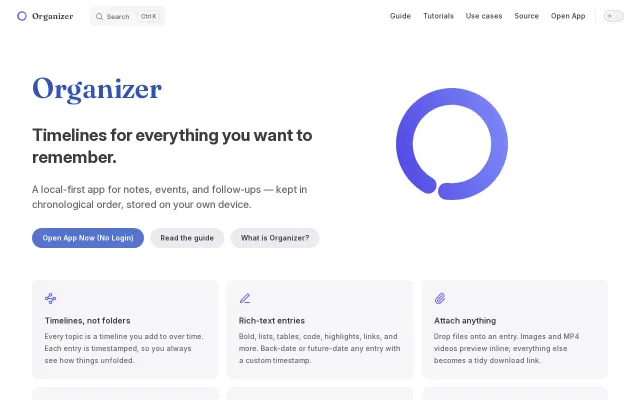
Another local-first notes app when Obsidian and Logseq already own this space.
Yet another local AI notes app when Obsidian plugins and Mem already exist.
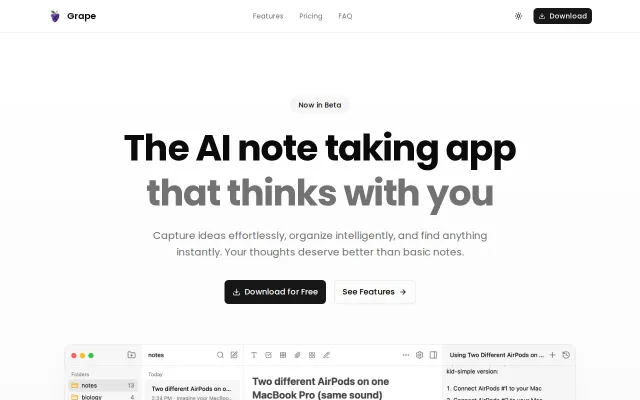
Yet another AI notes app competing with Notion, Obsidian, and Mem without clear differentiation.