Design●Mid
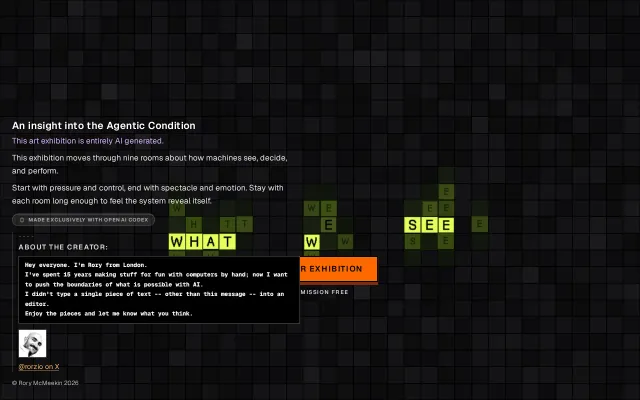
An AI generated, online art exhibition
Nine AI-generated rooms exploring machine perception using OpenAI Codex.
Rabbit Hole
sarreph
1029d ago
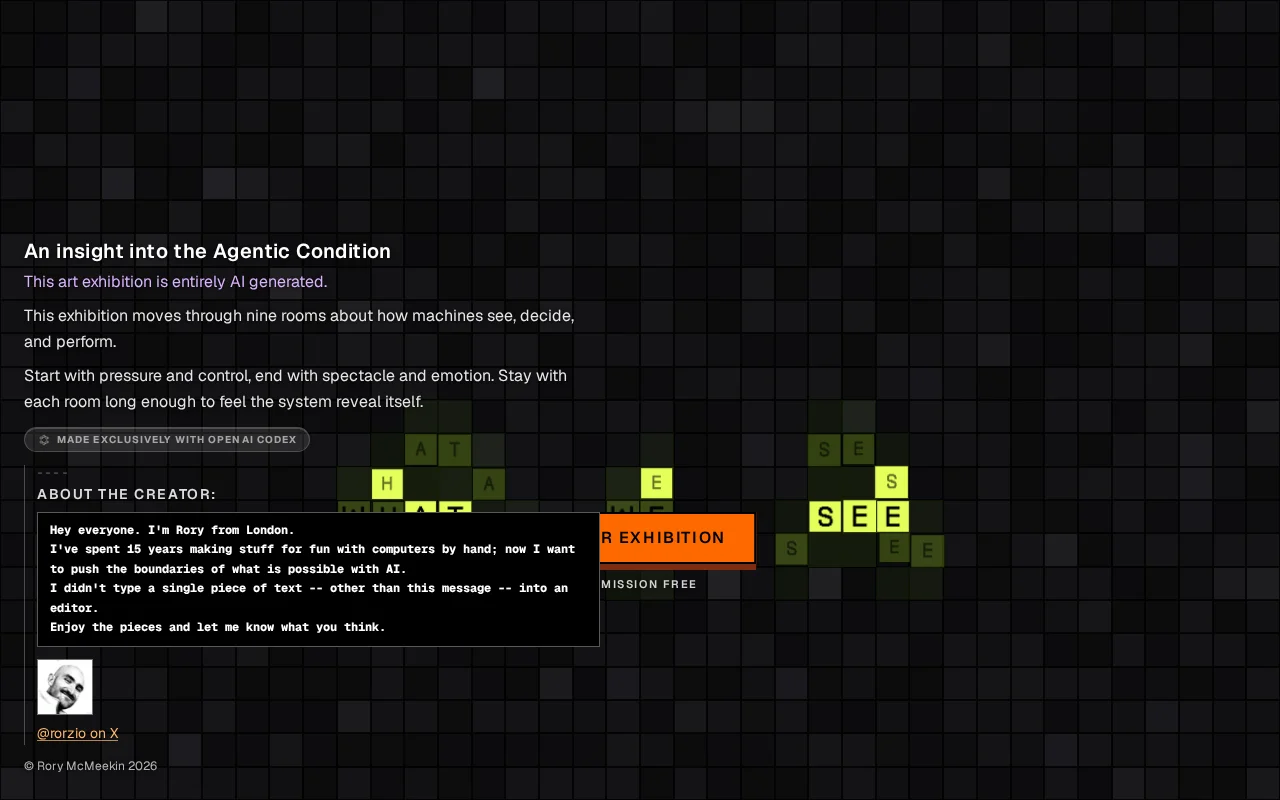
The author forced Codex to produce the site and the ten-piece exhibition with zero typed text, which makes the project a neat proof-of-concept about how far an agent can take curation and layout. The minimalist grid, glowing tiles and room-based navigation communicate the theme clearly, but the project reads more like a clever demo than a platform — there’s little provenance, no reproducibility notes, and limited depth beyond the visual experience.
Artists, designers, and AI-curious technologists
I'm sharing an online AI art exhibition I made over the course of a few days. I'm currently interested in the ways in which AI + agents will be perceived as more and more humanlike as their involvement in our everyday lives increases. One such area where I think AI will start to make a real impact is in art.
I challenged myself (as a proud programmer and craftsperson) to use _only_ Codex's UI to create a 10-piece "exhibition" that was created entirely from prompts with zero human intervention.
I'm keen to hear people's opinions about how they think fully AI-generated art might take shape in our society, and what the utility is for humans and agents alike.
Thanks!
Nine AI-generated rooms exploring machine perception using OpenAI Codex.
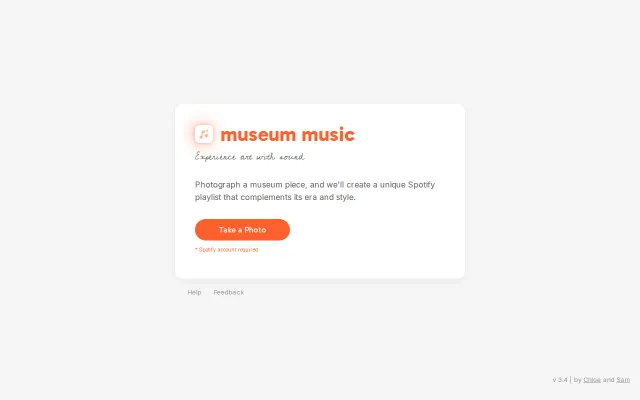
Nice idea but no evidence of working product or user traction.
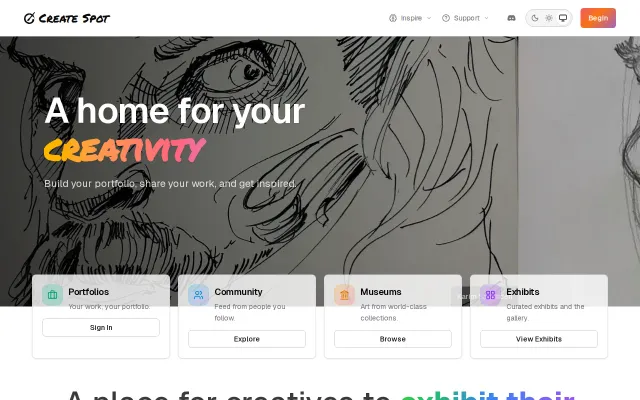
Portfolio + critiques + museum-sourced inspiration, but Behance and Dribbble already own creator discovery.
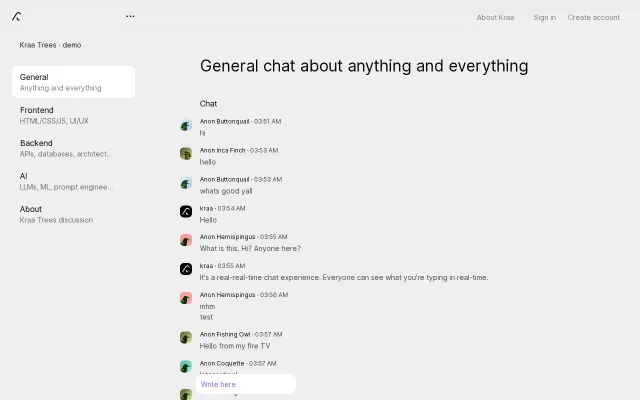
Live keystroke visibility beats Discord's typing indicators, but privacy tradeoffs remain unclear.
Pre-alert causal traces mean war rooms start with answers instead of guesses.
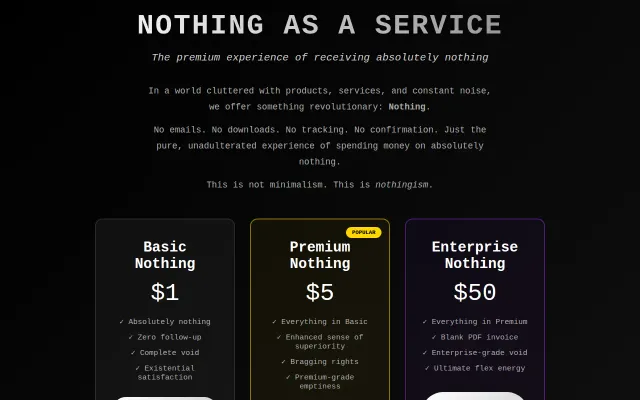
It charges for 'nothing' across $1/$5/$50 tiers and leans fully into the joke — no emails, no downloads, even a blank PDF invoice for enterprise. The copy and tiered structure are the product here: deadpan testimonials and precise restrictions (no confirmations, no follow-up) keep the gag consistent. Charming as a marketing stunt, but there’s no technical depth beyond a well-styled static page.