Developer Tools●●Solid
WSE Rust-powered WebSocket engine for Python 2.1M del/SEC fan-out
Rust acceleration + zero-GIL JWT tokens, but Socket.io and Pusher already solve this tier.
WizardryShip It
silvermpx
103mo ago
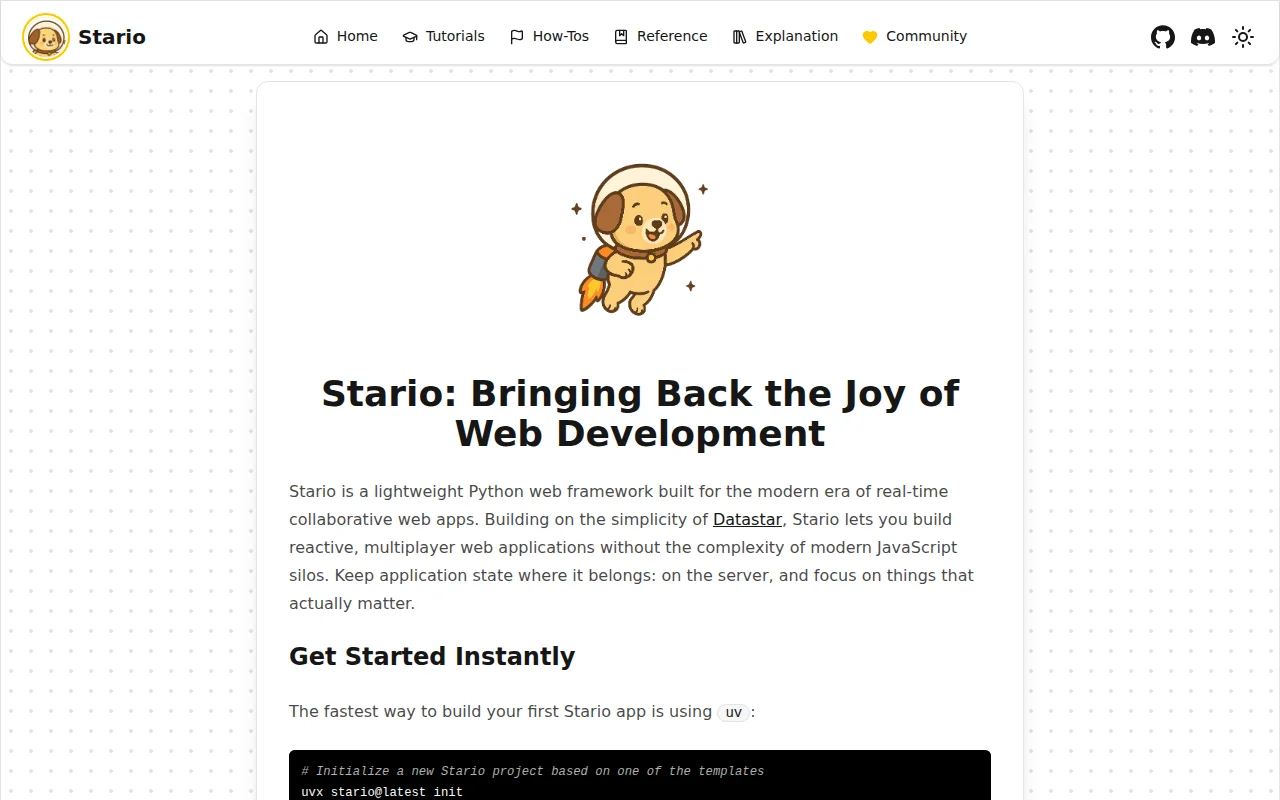
Server-first Python framework replaces WebSocket/React bloat with SSE and CQRS patterns.
Python developers building internal tools and collaborative web apps who want to avoid JavaScript framework complexity.
Datastar · HTMX · Liveview (Elixir)
What it is: server-first web app architecture with HTML rendered on the server, realtime updates over SSE, and multiplayer behavior through CQRS patterns. The goal is to keep things simple, performant, and Pythonic.
Backstory: I kept running into the same issue in internal tools. Basic HTTP screens were easy, but once realtime collaboration was needed, projects often pulled in websocket protocol handling, client-side state sync, and more frontend framework complexity than the product needed.
Stario started as an exploration of Datastar and a question: what would a Pythonic framework look like if it fully embraced that philosophy? The result was a narrower approach: keep truth on the server, stream updates over SSE, and use one handler model for the most common endpoint behaviors.
What is different in practice:
- A Go-like shape with a Pythonic twist: `async def handler(c: Context, w: Writer) -> None`
- One handler model for three common types:
- single response (`w.html`, `w.json`, etc.) - streaming over time (`w.alive(...)` + `w.patch(...)`) - work that continues after response (`w.empty(204)`, then continue server-side)
- Multiplayer sync via CQRS-style reads/writes plus in-process `Relay` fanout- Realtime without requiring WebSocket protocol code for most use cases
Try it locally (no signup, interactive setup):
``` uvx stario@latest init # interactive prompts guide project/template setup ```
Links:
- Docs: https://stario.dev
- Source: https://github.com/bobowski/stario
- Tiles walkthrough: https://stario.dev/tutorials/tiles-walkthrough
Rust acceleration + zero-GIL JWT tokens, but Socket.io and Pusher already solve this tier.
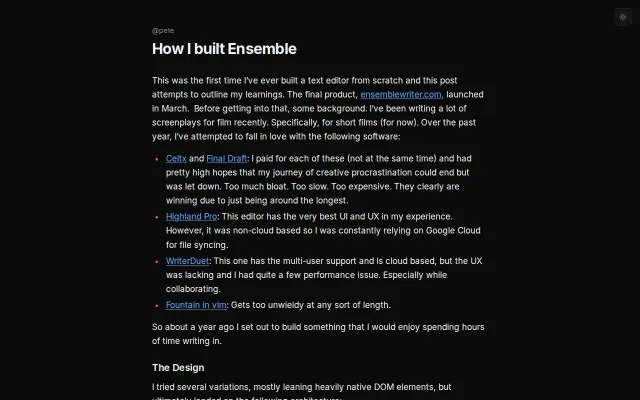
Rust/WASM editor with OT collaboration, but Final Draft and WriterDuet already dominate.
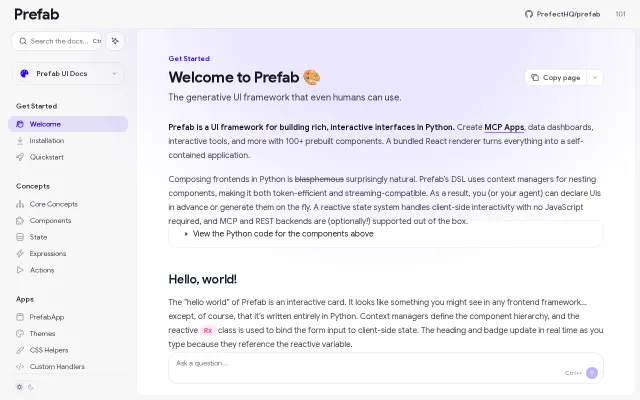
Context manager DSL for token-efficient streaming UIs beats Streamlit for MCP apps.
Another Lexical-based Notion clone with collaboration still marked as planned, not working.
Steer live AI music generation with text prompts inside your DAW.
Ten times faster than Ink with cell-level diffing and native terminal scrollback.