Education●Mid
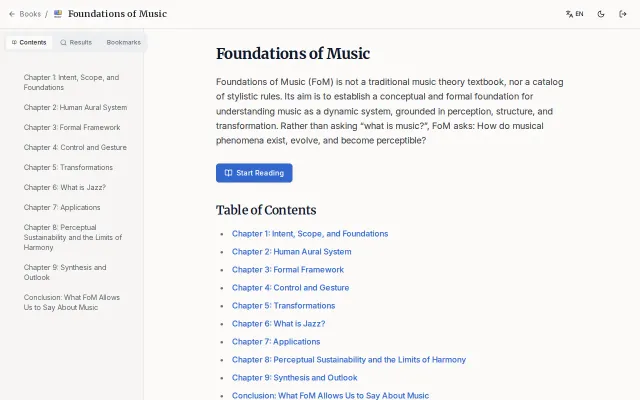
Foundations of Music (FoM)
Music theory textbook focusing on perception and dynamic systems rather than rules.
CozyNiche Gem
ersinesen
302mo ago
Research-backed pedagogy beats random quiz generators, but Tenuto and EarMaster exist.
Musicians of all levels, music teachers, hobbyists
Tenuto · EarMaster · JustinGuitar Ear Training
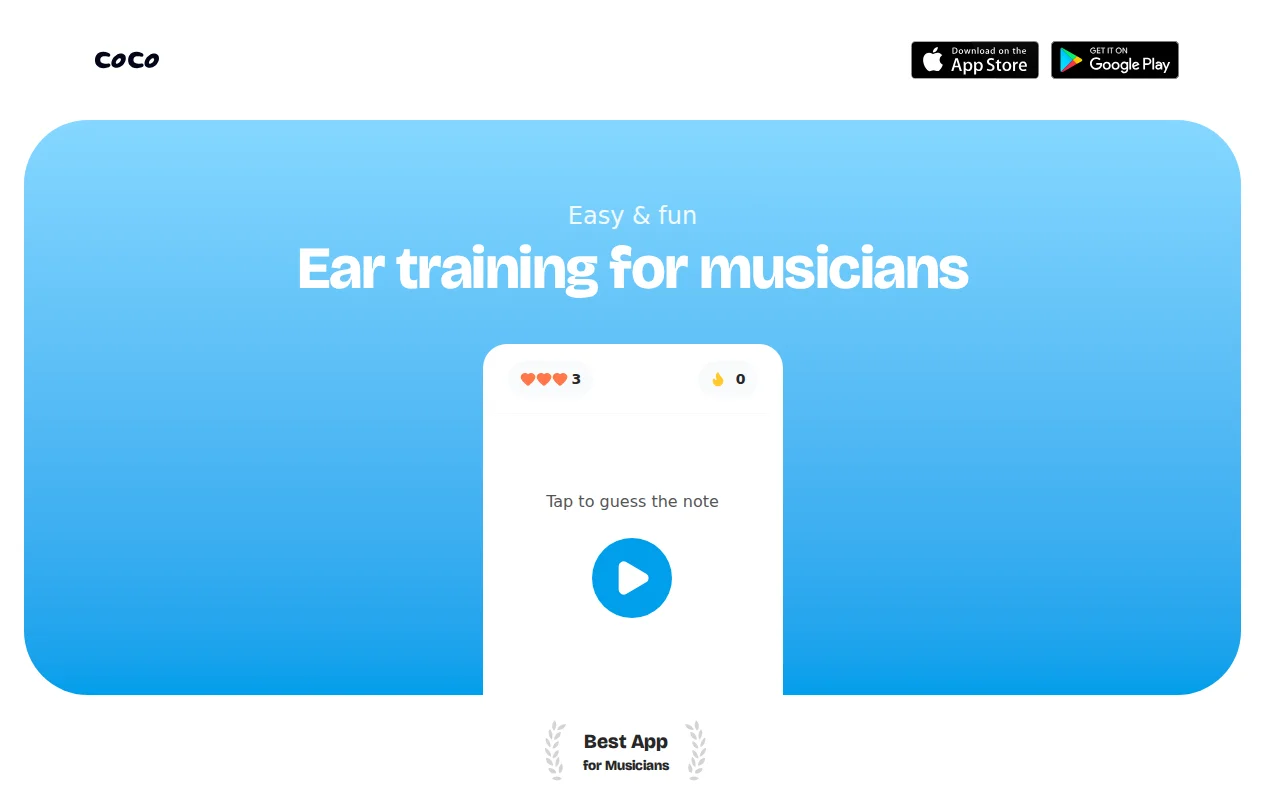
*What it is:* A mobile app (iOS/Android) with structured courses for ear training (intervals, chords, scales, relative pitch, and pitch recognition). Sessions are 2–5 minutes. Levels unlock sequentially, each one designed with a specific learning goal.
*How I got here:* I spent a long time going through the research literature on pitch perception and aural skill acquisition (Levitin, Zatorre, Deutsch, and others). A few findings shaped the whole design: 1. Isolated interval drills barely transfer to real musical listening. Tonal context matters. 2. You learn faster when you start with maximally contrasting sounds and gradually introduce similar ones ("contrast before similarity"). 3. Short daily sessions with spaced repetition outperform long sporadic ones. 4. Most people conflate ear training with perfect pitch. Relative pitch (understanding how notes relate in context) is the actually useful skill.
No existing app I found followed these principles in a structured way. Most just randomize exercises from a flat pool with no progression logic. So I built one.
*What's different pedagogically:* Every course follows a deliberate arc. For example, in melodic intervals you don't start with all 12 intervals at once; you start with a perfect 5th vs. minor 2nd (maximally different), build up contrast pairs, then progressively add intervals that are closer in size. Each practice level is preceded by a short theory intro so you know what you're listening for and why.
*Current state:* Just launched. Six courses live (Perfect Pitch, Relative Pitch, Melodic Intervals, Harmonic Intervals, Chords, Scales). It's still early and I'm actively iterating. Would love feedback from anyone here who plays music or has thought about how skill acquisition works in audio/perceptual domains.
Happy to answer questions about the pedagogical design, the technical architecture, or the research that informed it.
Music theory textbook focusing on perception and dynamic systems rather than rules.
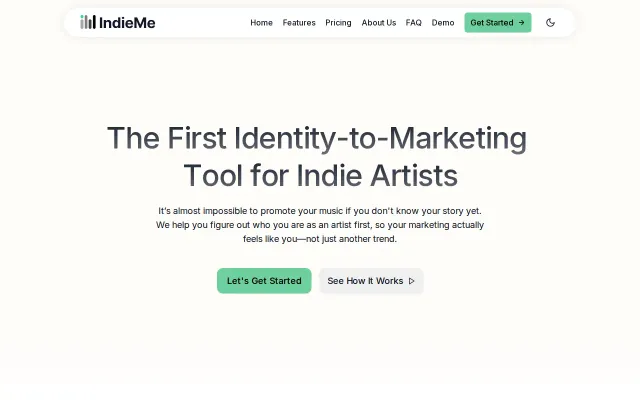
Artist identity-first music marketing, but crowded SaaS space with limited differentiation.
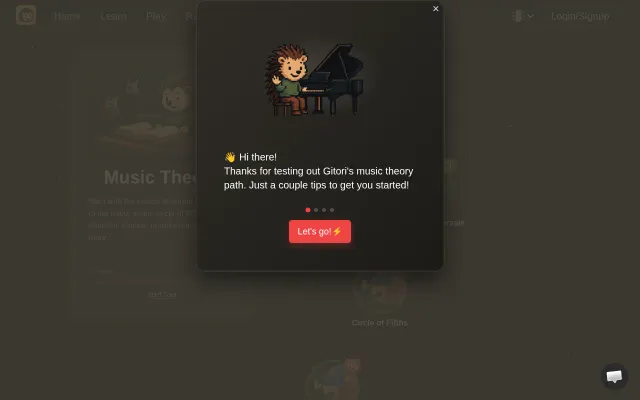
Polished music theory app in a category with Hooktheory and musictheory.net.
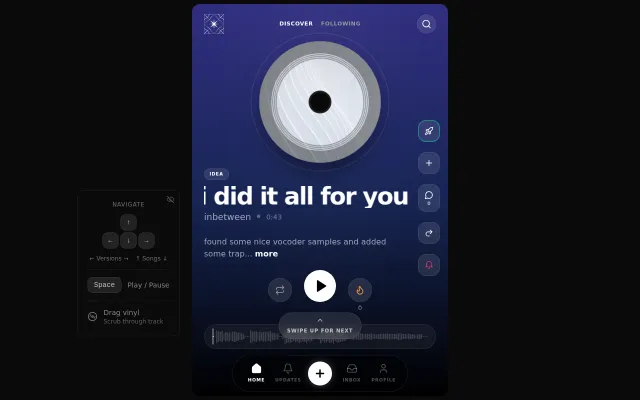
Polished TikTok-style feed for music, but SoundCloud and Bandcamp already own this lane.
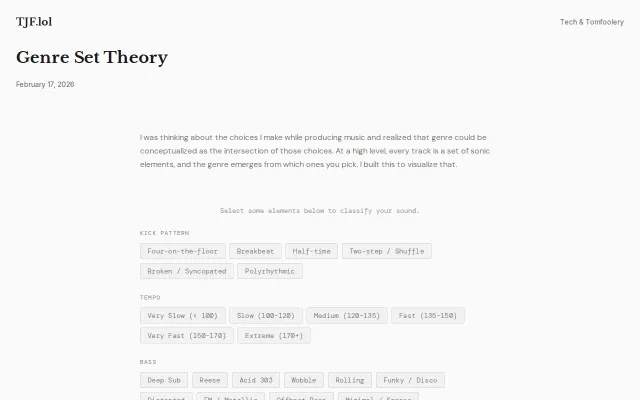
Clickable cards map kick patterns, tempo bands, bass types, leads, mood and texture into 21 base genres and 47 hybrids — a tidy way to treat genre as the intersection of production choices. It’s more of a creative prompt than an analytic product (there’s no audio ingestion, sharing, or export), but it’s useful for brainstorming track direction and naming ideas.
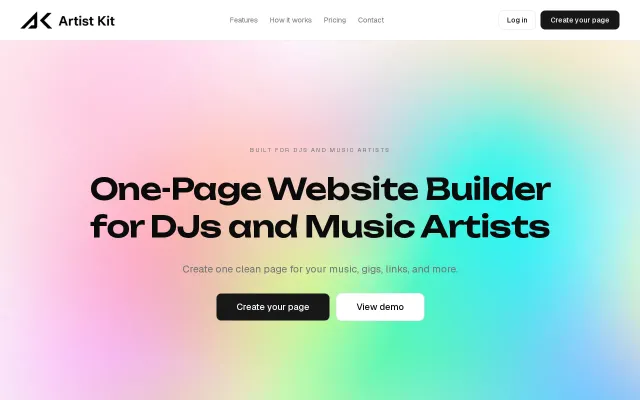
Clean niche site builder, but Linktree and Carrd already dominate this exact use case.