AI/ML●●●Banger
Statewright – Visual state machines that make AI agents reliable
Forces 13B models to solve SWE-bench tasks by making the problem smaller, not the model bigger.
Big BrainZero to One
azurewraith
126591mo ago
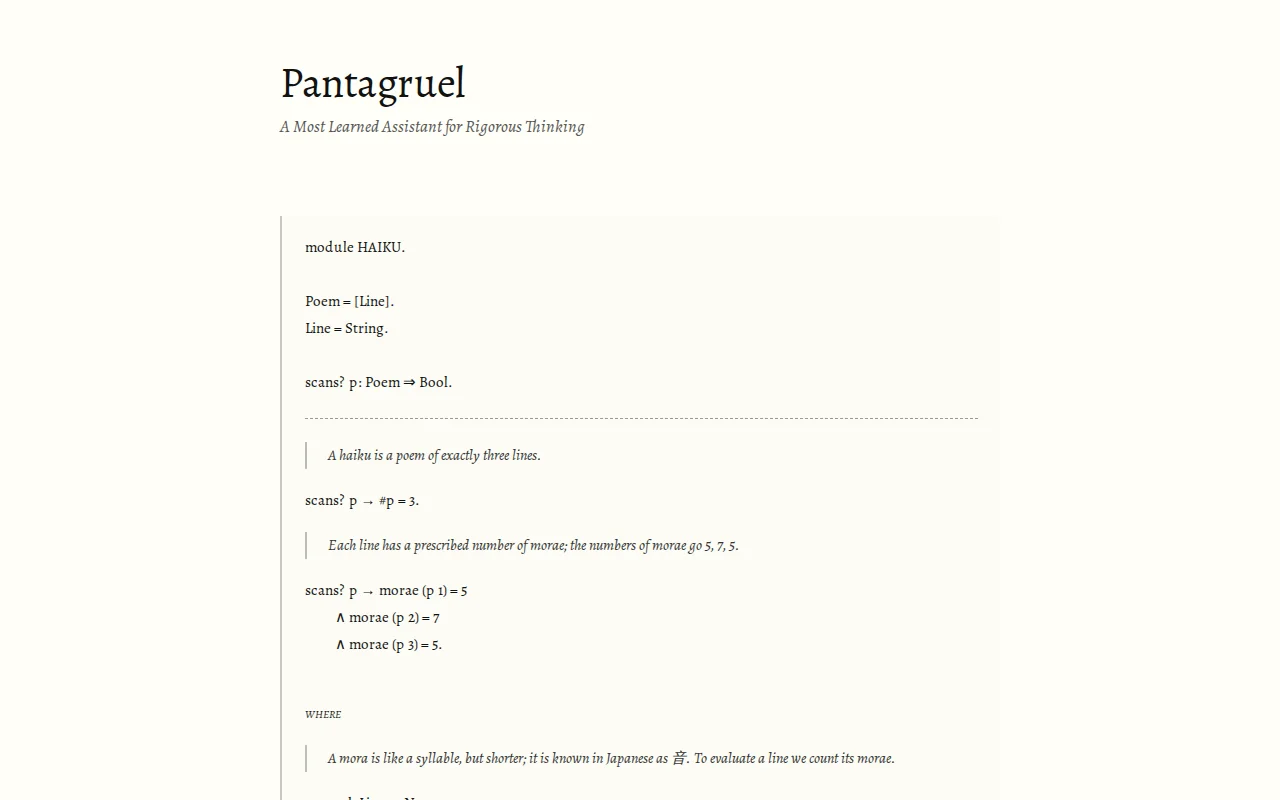
TLA+ or Alloy for people who aren't PhDs, but adoption depends entirely on community.
Software engineers, formal methods practitioners, systems designers, anyone wanting to formalize ambiguous requirements.
TLA+ · Alloy · Coq
Seven years ago I posted the very first version of PANTAGRUEL (my phone has started autocorrecting to all-caps; I have no idea why but I like it), a “lightweight formal methods” language.
Since then it’s gone through many iterations. I want to post it here because in the recent months it’s acquired a consistent, well-formed and documented type system, and an actual model checker.
In other words, it’s now a language of the same kind as something like TLA+ or Alloy. It differs from those in being (hopefully) radically simpler. It’s designed to be approachable with far less learning and specialization, and it’s designed to be effective in specifying not just software, but any type of formal system, including poetry and games.
If you’ve ever been interested in “tools for thought” and ways to make your own descriptions of things more precise and rigorous, it might be worthwhile to you.
Forces 13B models to solve SWE-bench tasks by making the problem smaller, not the model bigger.
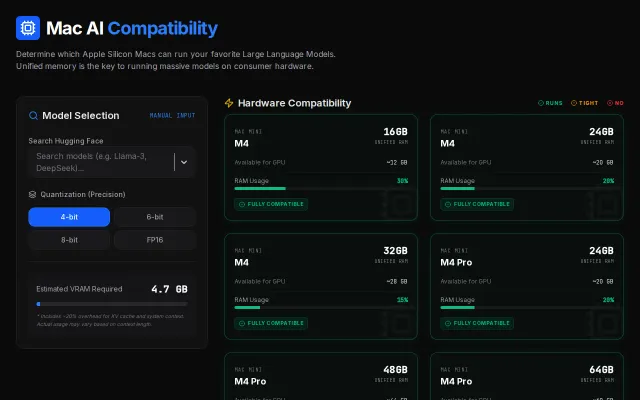
Clean hardware-model compatibility checker, but solves a narrow, one-time lookup problem.
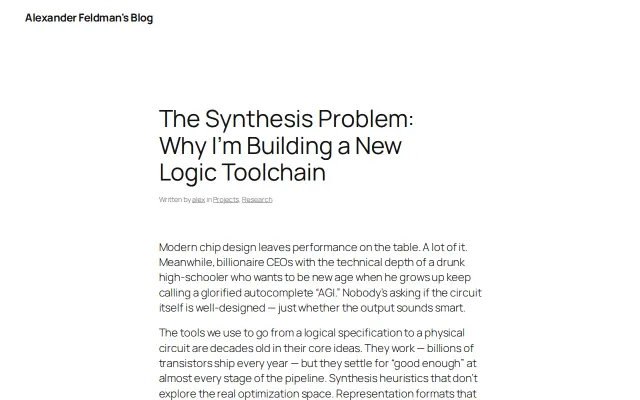
Open-source logic synthesis running on FPGAs when Yosys dominates the space.
Sub-cent CPU-only voice agent with vision-keyed proactivity beats cloud APIs on cost.
Template collection for multi-LLM apps; LLM Gateway wraps existing models.
Runs Thinking Machines-style voice agent on a laptop CPU with no GPU required.
![Replicating Thinking Machines Interaction Model demo for $0.01 [video]](/screenshots/48181928_thumb.webp)