Productivity●Mid
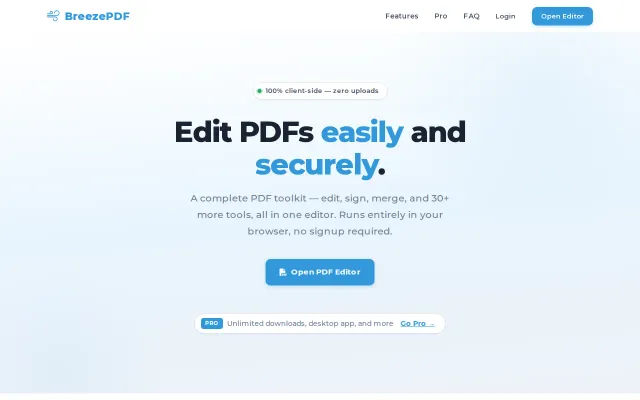
Free, in-browser PDF editor
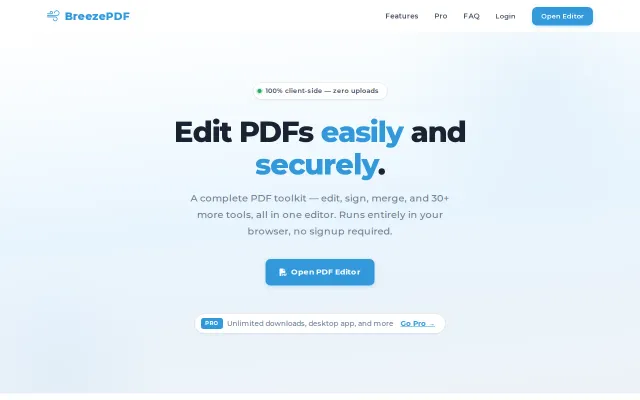
Privacy-first PDF editor running locally, but Smallpdf and PDF24 already do this.
SlickSolve My Problem
philjohnson
54433mo ago
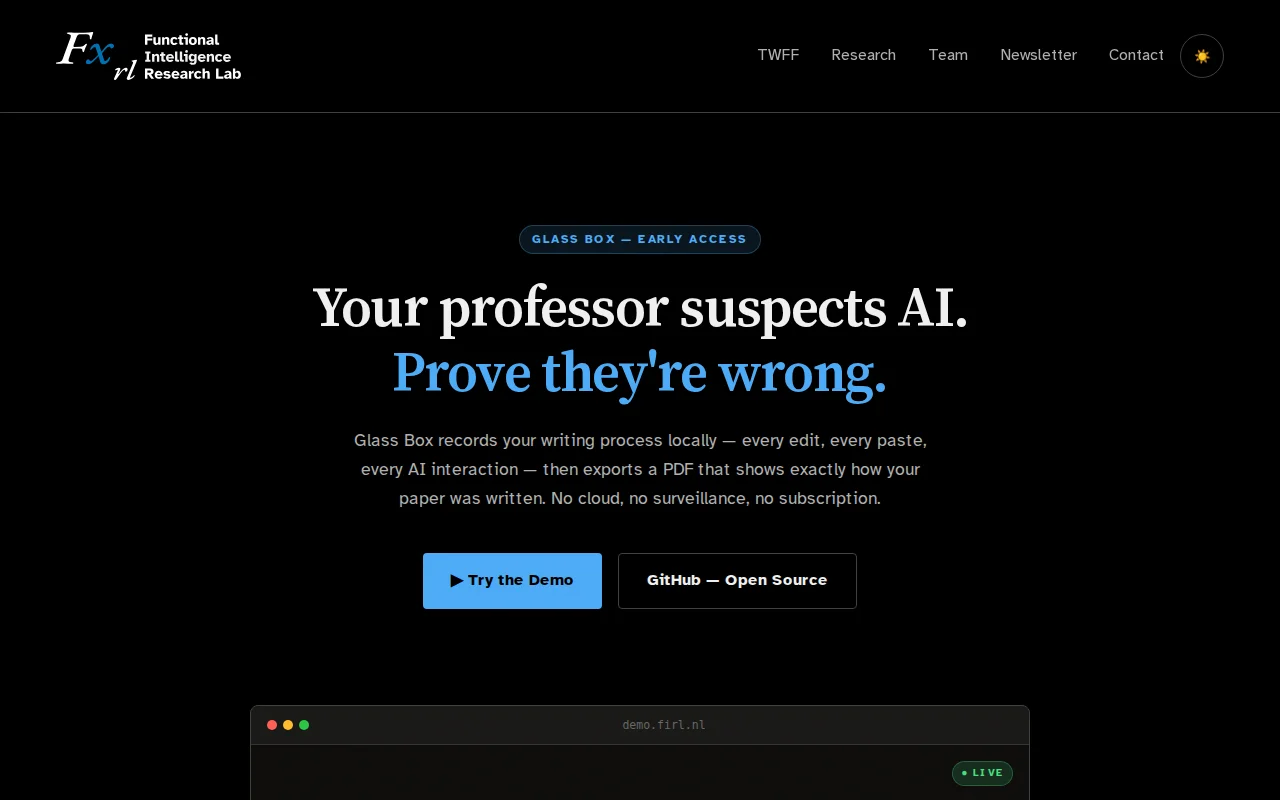
Proves AI usage with a verifiable PDF receipt instead of probabilistic detection guesswork.
Students defending against AI detection accusations, educators seeking integrity verification, academic integrity advocates
Turnitin · Grammarly · OpenAI text classification
The motivation: AI detectors are genuinely broken. Stanford research showed >60% false positive rates for non-native English writers on TOEFL essays. The "solution" from institutions has been to buy more detectors or make the policies so broad that either the student can do nothing if they are accused or the teacher can do nothing if the student does not make an admission.
Instead of trying to detect AI use after the fact, we give students a way to record their process as they write. The exported PDF shows a professor exactly what was human-written, what was AI-assisted, and what was pasted from external sources.
Tech stack: - NiceGUI (Python) for the editor - Quasar Q-Editor (contenteditable) with JS paste/ghost-completion hooks - Dual PDF engine: WeasyPrint (CSS rendering) with ReportLab fallback (pure Python, works on Windows) - Ollama integration for local AI (recommended model: qwen2.5:0.5b, ~400MB) - TWFF (Tracked Writing File Format): ZIP-based container with XHTML content + process-log.json with SHA-256 chained hash
The format spec (TWFF) is open. Anyone can implement it. We're trying to get at least one other tool to support it before calling it a "standard".
Demo: https://firl.nl/twff Spec: github.com/Functional-Intelligence-Research-Lab/twff
Privacy-first PDF editor running locally, but Smallpdf and PDF24 already do this.
Fixes a real annoyance, but manual editing is what Adobe Acrobat already does.
Client-side PDF toolkit when most competitors upload your files to their servers.
Another Lexical-based Notion clone with collaboration still marked as planned, not working.
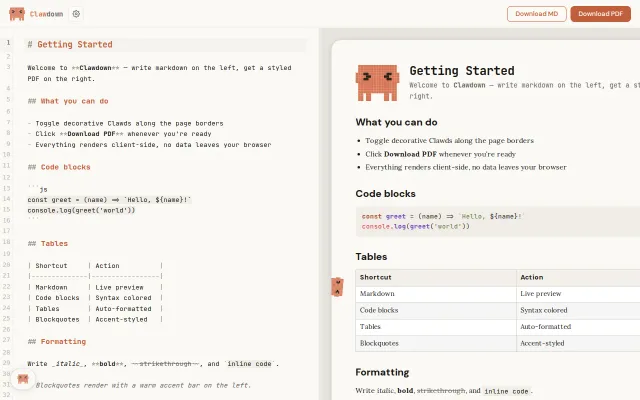
Client-side markdown to PDF with decorative cats bordering the page.
Edit audio by describing what you want—Descript but fully voice-controlled.