Security●●●Banger
Plyra-guard – intercepts AI agent tool calls before execution
Sub-2ms policy guard for agent tool calls—real safety layer where none existed.
Solve My ProblemWizardry
plyra
103mo ago

Wire-protocol interception means zero code changes; solves LLM control drift in production.
Backend engineers building AI agents that modify data or execute transactions
Guardrails AI · Pydantic
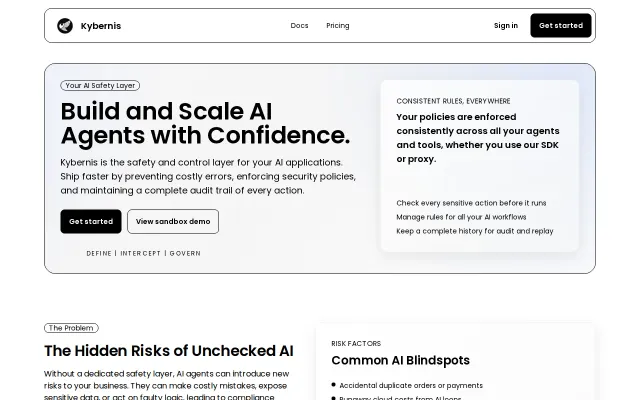
Limits sits between your agent and the real world. Every action — database writes, API calls, refunds — gets intercepted and checked against your rules before it executes. Deterministically. No LLM involved in enforcement.
Three modes:
Conditions: hard rules on structured data Guideance: validate LLM output before it reaches the user and give the agent chance to reason and retry Guardrails: scan for PII, toxicity, prompt injection etc
One line to integrate: npm install @limits/js
our website: https://limits.dev
our docs: https://docs.limits.dev
We've processed 30,000+ policy checks across 16 teams. Would love feedback from anyone who's built something like this internally."
Sub-2ms policy guard for agent tool calls—real safety layer where none existed.
Deterministic agent governance with capability tokens beats probabilistic guardrails.
Wire-protocol middleware for LLM safety, but constitutional AI has dozens of frameworks.
Structural command parsing beats regex for catching dangerous agent actions.
Idempotency layer for AI agents stops duplicate payments before production incidents.
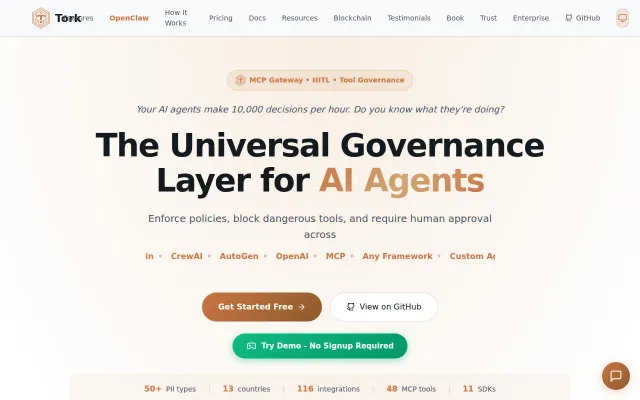
Policy-enforced AI agent middleware with 116 integrations, but governance-as-code is nascent.