Developer Tools●●●Banger
Localizeflow – I automated localization for 14 Microsoft OSS repos
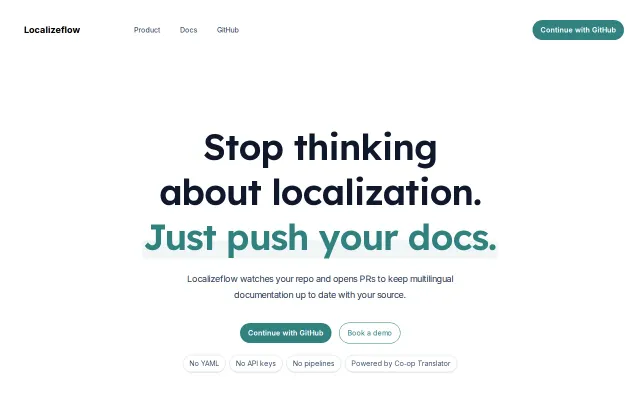
Auto-translates docs as you push—zero YAML, no traditional translation platform overhead.
Solve My ProblemZero to One
skytin1004
213mo ago

Tackles real localization pain, but author doubts usefulness; novelty or production tool unclear.
Localization engineers, design system maintainers, content creators managing multi-language assets.
Adobe Experience Manager localization · Figma plugins for multilingual design · Transifex asset management
The pipeline takes an image containing text, detects text regions, removes the text, translates it, then re-renders it in a target language while attempting to preserve layout and visual balance.
The goal is not perfect marketing copy or pixel-perfect DTP replacement. It is more about testing whether “good enough” localized visuals can be generated without manually recreating assets for each language.
Some things I’ve been curious about while building this:
• How different scripts behave (Latin vs CJK vs RTL) • Where layout preservation breaks down • Whether this is actually useful or just a novelty demo • What production constraints would make this impractical
Examples: https://postimg.cc/gallery/1X04QFz
If anyone here works with localization, design systems, or asset pipelines, I’d genuinely love to hear where you think this approach would fail.
Auto-translates docs as you push—zero YAML, no traditional translation platform overhead.
Local SigLIP embeddings + 68K-term semantic tagging in a single Rust binary, zero cloud.
Deterministic offline verification of AI pipeline outputs with Merkle hashing—novel framing, early stage.
Runs OmniAID detection locally on Neural Engine instead of uploading your data to servers.
Node-based image filtering running entirely locally in the browser.
WSL2-to-Windows browser bridging solves a real pain for Linux-based AI agents.