AI/ML●●●Banger
Real-time local TTS (31M params, 5.6x CPU, voice cloning, ONNX)
5.6x realtime on CPU with voice cloning beats most local TTS options.
WizardryDark Horse
ZDisket
444mo ago
Sub-sentence TTS streaming beats Piper/Sherpa-ONNX latency by token-level triggering on CPU.
ML engineers, roboticists, edge AI developers building privacy-first voice applications on constrained hardware.
Piper TTS · Sherpa-ONNX · Ollama (local LLM)
The goal was to see how responsive a LLM → speech system can be on normal laptops or edge devices.
It includes: - Voice Activity Detection - CPU-friendly LLM + TTS streaming - Async pipeline to reduce latency
Modular LLM backend
Useful for local assistants, robotics prototypes, privacy-first setups, or benchmarking STT/LLM/TTS latency.
We’ve been experimenting with similar CPU-first pipelines inside NEO workflows for on-device agents, and this repo is a minimal standalone version.
Would love suggestions on lightweight STT/TTS models or latency tricks people have used on CPU.
5.6x realtime on CPU with voice cloning beats most local TTS options.
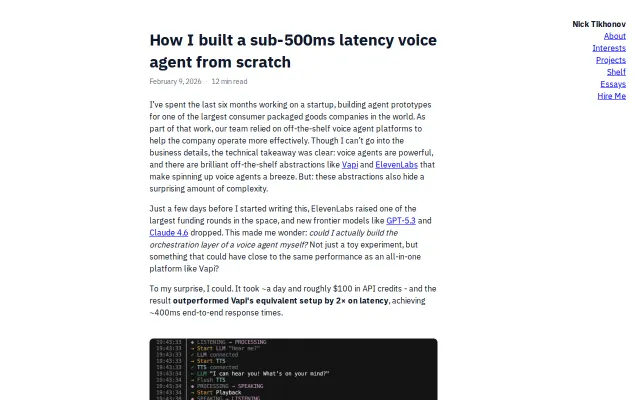
Outperformed Vapi 2× on latency by treating voice as turn-taking, not transcription.
SOTA expressivity at 14M parameters beats cloud models for on-device TTS.
Kokoro voice cloning with multilingual support, but voice cloning itself is crowded.
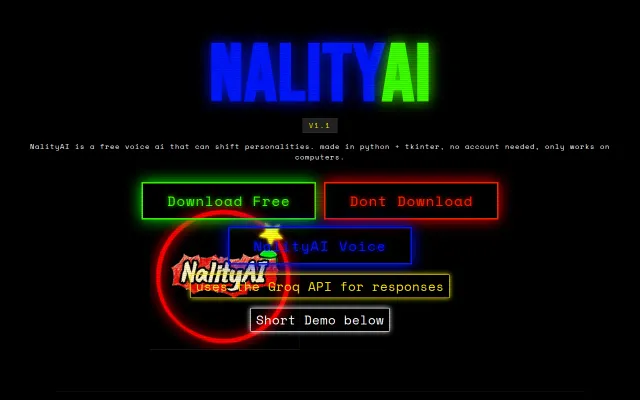
Nine personality modes are prompt variations wrapped in Tkinter with Groq API.
Qwen3-TTS voice cloning without finetuning in ~1 second on RTX 5070.