SaaS●●Solid
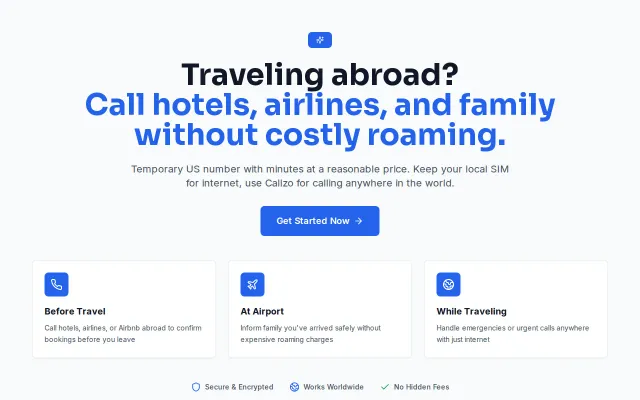
Callzo – I built this to call home when I land abroad
Solves real traveler pain ($5 entry, no SIM hassle) but VoIP calling already exists broadly.
Solve My Problem
mayursinh
103mo ago

Escalating billboard is a clever price mechanic, but is it a product or an art piece?
Art collectors, speculators, internet culture enthusiasts interested in constraint-based digital ownership experiments
I made something simple called Space.
It’s one digital billboard.
Anyone can buy it. It starts at $1. Every time someone buys it, the price increases by exactly $1.
That’s the whole mechanic.
Why I Built It
I wanted to test a constraint:
What happens when ownership is singular, public, and progressively more expensive?
At $1 it’s impulse. At $100 it’s intentional. At $1,000 it’s a statement.
By the time it reaches $1,000, it will have generated $500,500 in total revenue — purely from the $1 incremental mechanic.
I’m curious about:
How price escalation changes meaning
Whether late buyers value symbolism over reach
What people choose to display when cost forces consideration
The Constraint Layer
The constraint is the point.
Only one “space” exists at a time.
Price is deterministic (+$1 per transaction).
The entire history is embedded in the current price.
The value increases because participation increases it.
No auctions. No bidding logic. No variable pricing.
Just math and participation.
Technical Side (Where I’d Love Feedback)
This has been more interesting to build than I expected.
Some things I’ve been dealing with:
Race conditions around concurrent purchases
Locking logic so two buyers don’t claim the same price
Ensuring atomic increments on the backend
Payment confirmation before state mutation
Preventing replay or double-submission exploits
Keeping it minimal without overengineering it
Right now it’s intentionally lightweight. But I’m thinking about:
Should price increments be fully on-chain / provable?
Is there a cleaner way to handle concurrency at scale?
Would you introduce time decay or leave it purely linear?
Should the historical ownership chain be immutable + public?
What safeguards would you add?
Part of me wants to keep it naive and raw. Part of me wants it architecturally tight.
Solves real traveler pain ($5 entry, no SIM hassle) but VoIP calling already exists broadly.
Seven unanswered audio alerts trigger a phone call — works through iPhone Silent Mode.
Million Dollar Homepage concept but for AI agents instead of humans.
Another bookmark manager competing with Raindrop and Pocket without clear differentiation.
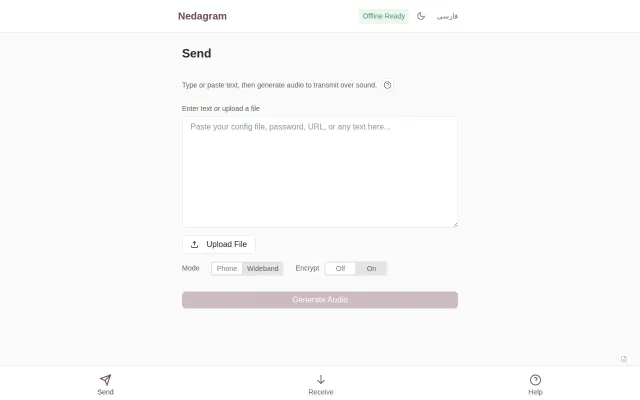
Audio-based text modem solves Iran shutdown use case; genuinely novel constraint.
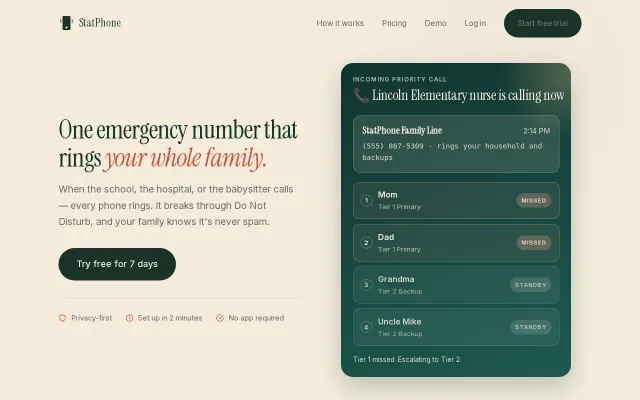
Tiered call escalation that bypasses Do Not Disturb when schools or hospitals call.