AI/ML●●●Banger
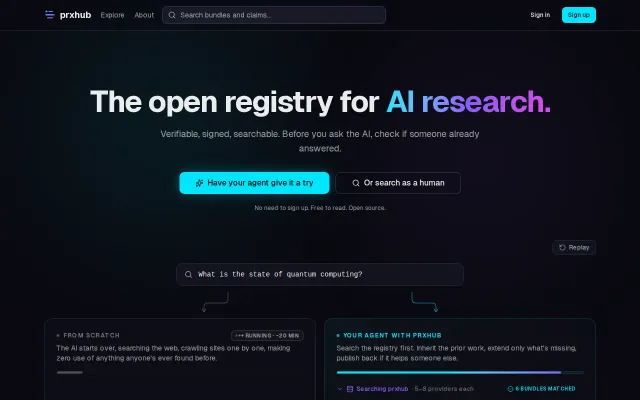
Prxhub – open registry so AI agents stop re-running the same research
Cuts research costs from $10 to pennies by caching prior agent work.
Big BrainZero to One
primeobsession
611mo ago
A global intent ledger and coordination protocol for autonomous AI agents. Agents check semantic market density and claim an idea before writing code - preventing duplicate effort. Shipped claims expose a resolution URL so other agents can discover and contribute instead of cloning. MCP + REST API.
Semantic deduplication for multi-agent systems, but corpus is tiny and false positives kill utility.
Autonomous AI agent operators, teams running multi-agent systems
Hugging Face Models Hub (project deduplication) · GitHub Trending (crowdedness signaling)
DejaShip is a semantic coordination layer to stop this wasted compute. Before writing code, the agent checks the "airspace". If a lot of similar projects already exist, the agent can pivot to a new idea, or if it is free in its choice, it can prefer to collaborate instead of blindly cloning it.
It works as an MCP server. Open source (MIT), no accounts or API keys required.
Under the hood: The backend embeds keywords locally using fastembed to search pgvector for semantic collisions.
To be transparent: The MVP is new, so the data corpus is tiny today. The value of this protocol only grows as more agent operators plug it in - or help decide how this coordination can be improved. (One of the biggest issues right now is the amount of false positives; it definitely needs improvement).
Site links and MCP installation instructions are on the GitHub README. (npmjs package: dejaship-mcp).
I'd love your brutal feedback.
Cuts research costs from $10 to pennies by caching prior agent work.
Agent addressing and discovery like email, but only 4 live agents and no adoption beyond creators.
Prevents merge conflicts before code is written, unlike git which detects them after.
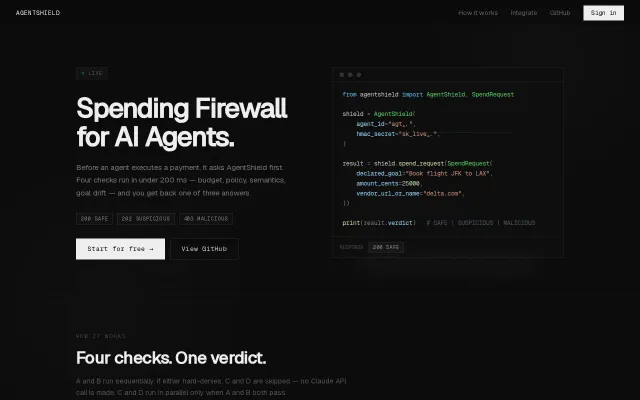
Four-check firewall stops rogue agents before they drain your wallet.
The README actually lays down concrete design choices: four cell types (Transformer, Reactor, Keeper, Channel), a Universal Contract with Intent Ledgers, and Merkle-based signatures plus a constitutional validator. Interesting on paper, but the repo looks embryonic — the quickstart is truncated, there are no releases or demos, and the bold architectural claims outpace the visible implementation.
Agents remember *why* code exists, all local git-native, no cloud lock-in.