Developer Tools●●Solid
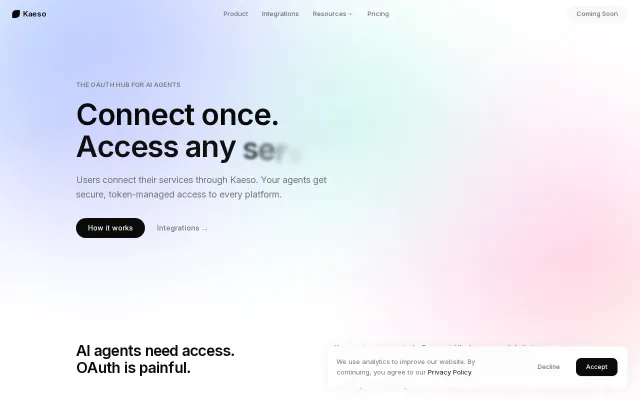
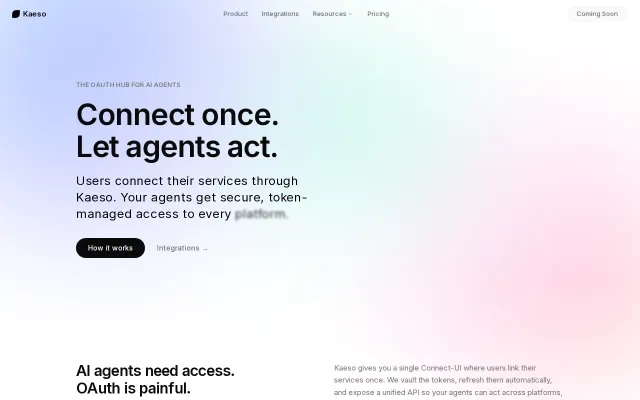
Kaeso, an OAuth hub for AI agent integrations
Unified OAuth vault for agents, but Zapier, Make, and n8n already solve this.
Solve My ProblemSlick
devinoldenburg
104mo ago
OAuth hub for agents, but auth infrastructure is crowded and the MVP is landing-page only.
AI agent builders and companies deploying multi-service automations.
Zapier · Retool · n8n
I've been working on a project called Kaeso.
The idea started fairly simple: I wanted to explore infrastructure around AI agents. While building it, the concept slowly evolved into something more focused on integrations.
One problem that keeps appearing when building agent systems is connecting them to real services in a structured and secure way. Every system ends up implementing its own integrations with tools like Google, Slack, GitHub, etc.
Kaeso is an attempt to experiment with a unified connection layer where services can be connected once and then accessed by agents through a consistent interface.
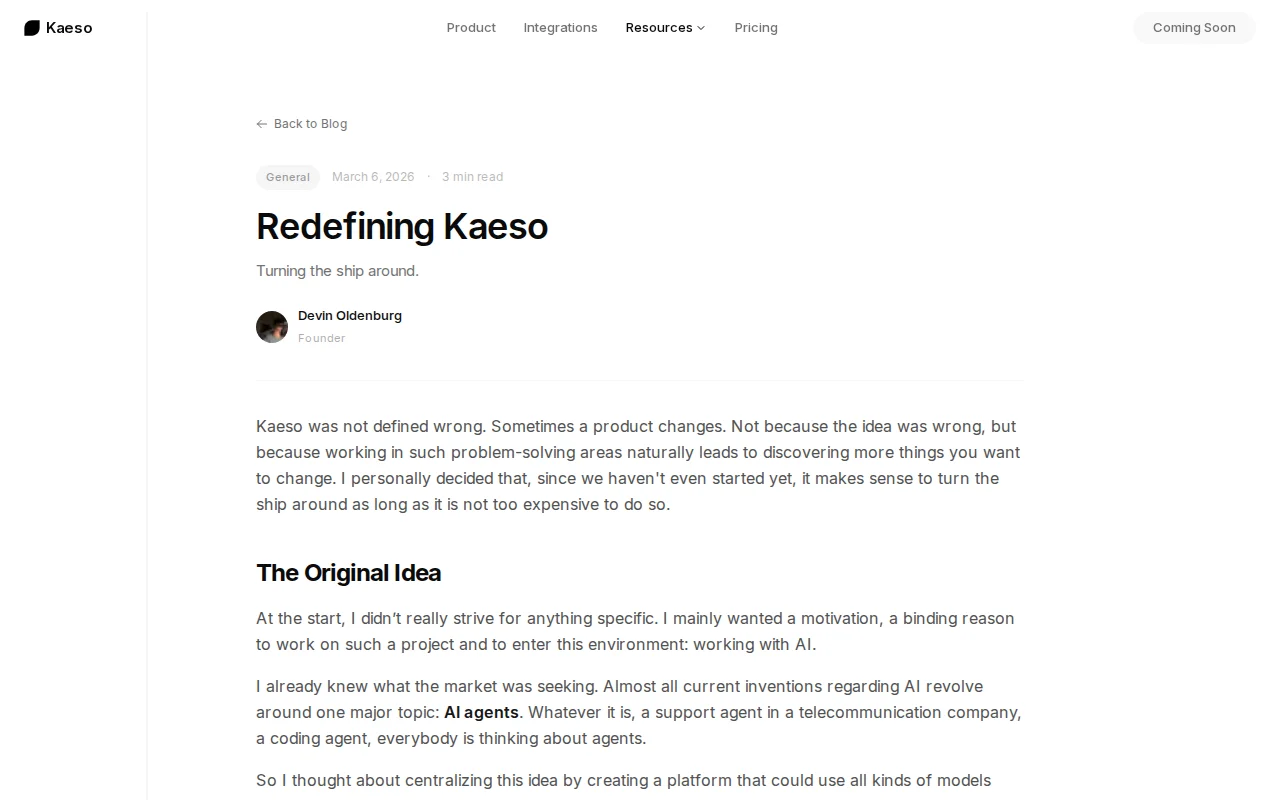
While building the project, the original idea changed quite a bit, which I wrote about here:
https://kaeso.ai/blog/redefining-kaeso
The platform is still early, but I'm curious what people here think about the idea of infrastructure specifically designed for AI agents.
Feedback is very welcome.
Unified OAuth vault for agents, but Zapier, Make, and n8n already solve this.
OAuth plumbing layer for agents, but Anthropic's Resources and LangChain already ship this.
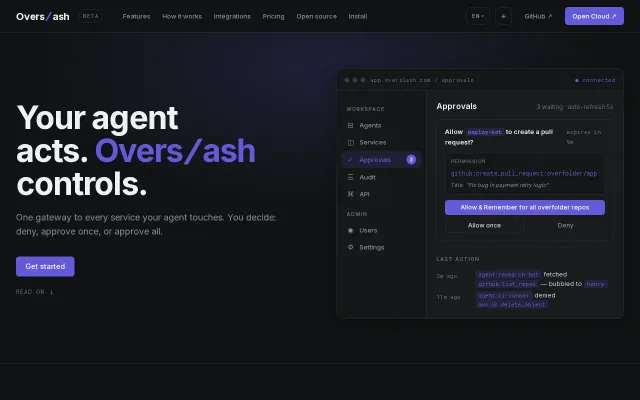
Agent identity trees with permission inheritance solve credential injection elegantly.
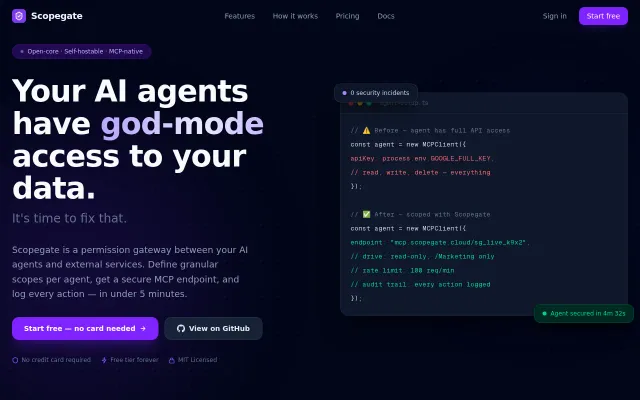
MCP permission proxy solves real AI agent over-permissioning—88% of orgs hit this problem.
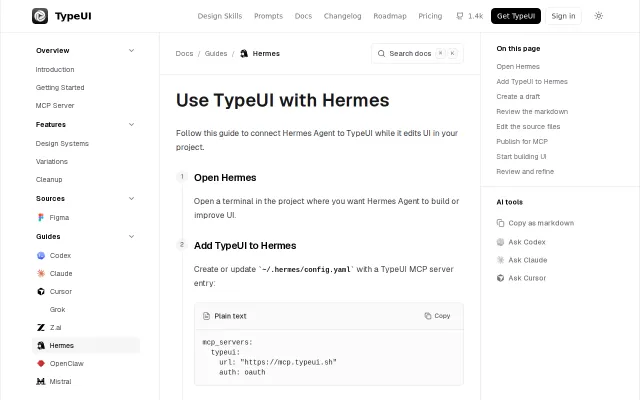
MCP integration guide for TypeUI, but this is documentation not a product launch.
Intermediary removal for global sourcing; unclear technical moat vs. existing platforms.