Developer Tools●●Solid
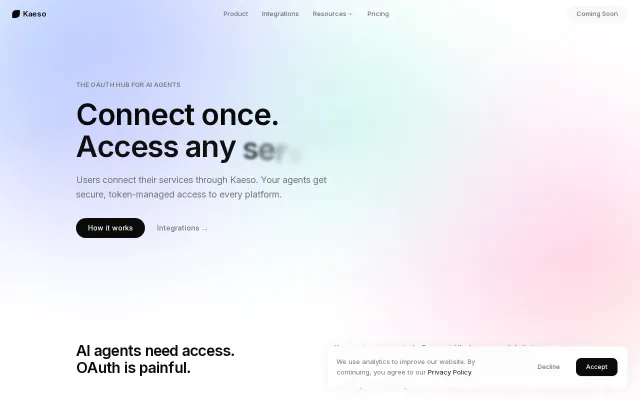
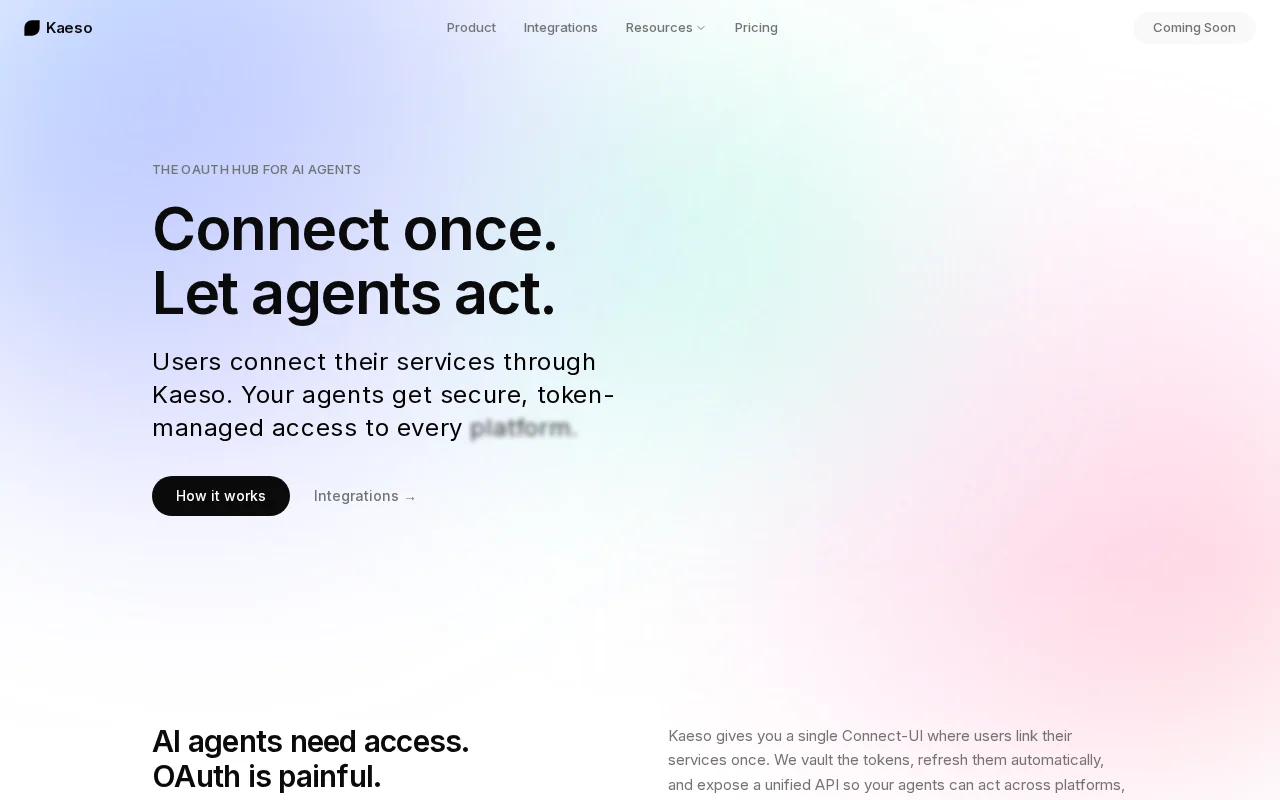
Kaeso, an OAuth hub for AI agent integrations
Unified OAuth vault for agents, but Zapier, Make, and n8n already solve this.
Solve My ProblemSlick
devinoldenburg
103mo ago
OAuth plumbing layer for agents, but Anthropic's Resources and LangChain already ship this.
AI agent developers and SaaS platforms building multi-service integrations.
Anthropic Resources (tool use + OAuth) · LangChain's tools and auth system · Zapier's OAuth abstraction layer
I've been experimenting with systems built around AI agents recently and ran into a recurring problem: connecting agents to real-world services is still surprisingly fragmented.
Every integration tends to require its own authentication flow, token management, permissions handling, and API logic. After a few integrations the architecture becomes more about maintaining service connections than about the agents themselves.
Because of that I started building a project called Kaeso.
The idea is to explore a unified infrastructure layer where external services can be connected once and then accessed by agents through a structured interface. The goal is to simplify the integration side so developers can focus more on agent logic rather than constantly rebuilding connection layers.
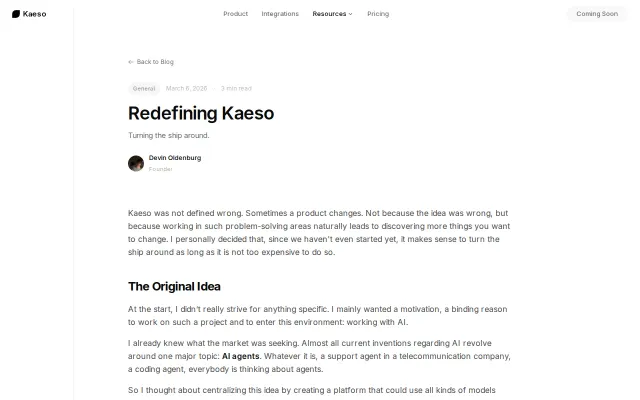
While building it, the original idea actually changed quite a bit, which I wrote about here: https://kaeso.ai/blog/redefining-kaeso
The project is still early, but I'm interested in hearing how others here approach this problem.
If you're building systems around agents or automation, do you usually implement integrations separately for each project, or do you maintain some kind of shared integration layer?
Unified OAuth vault for agents, but Zapier, Make, and n8n already solve this.
OAuth hub for agents, but auth infrastructure is crowded and the MVP is landing-page only.
First open standard for agent identity—solves a real security gap Cisco documented.
Another customer data platform wrapper, but this one targets AI agents instead of human dashboards.
Zero-knowledge vault keeps credentials out of environment variables where supply chain attacks steal them.
Replaces API key sharing with OAuth 2.0, but enterprise already has Keycloak, Auth0.