Productivity●●Solid
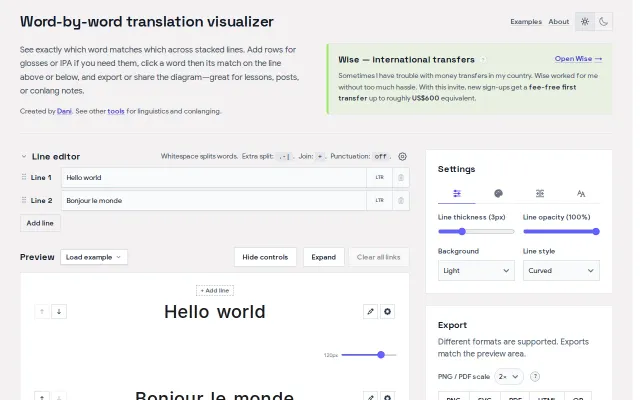
Word-by-word translation aligner tool
Curved connectors show word order changes better than linear interlinear text.
Niche GemCozySolve My Problem
danipolani
307d ago
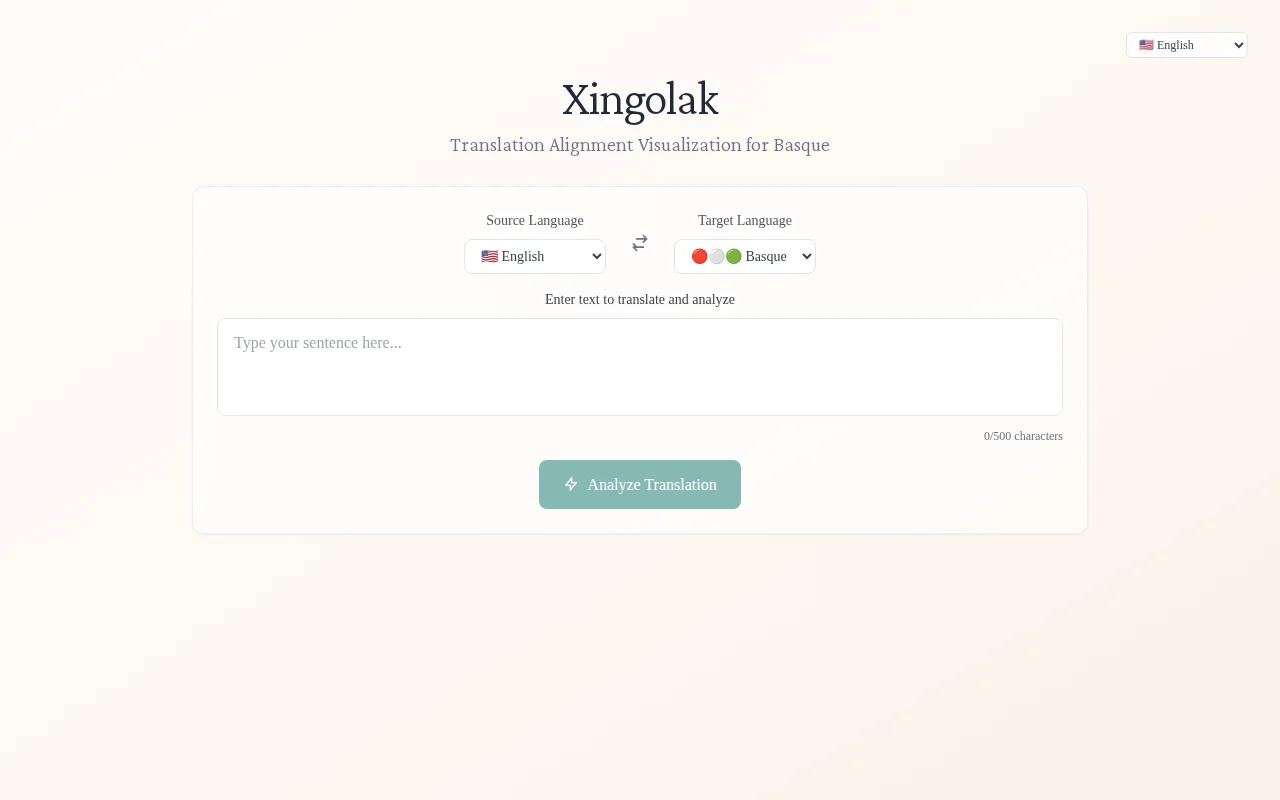
Basque translation breakdown visualizer, but niche to a single language and ML-wrapped pipeline.
Basque language learners and linguists studying grammar transfer between language pairs
Google Translate's word alignment · Linguee alignment view
I've been preparing for a trip to the Basque Country later this year by learning Euskara (aka Basque). A big part of my learning process is following Euskara-language people on social media, then putting their subtitles into a machine translation service. However, since Euskara grammar is so different from that of English & Spanish, I found myself wanting to know the "how" and "why" of the translation. This visualizer scratches that itch for me.
I'm using a processing pipeline for this app that goes like: 1. Submit the input phrase to https://batua.eus (a Basque-owned & -operated machine translation service) 2. Run both the input and output through Stanford's Stanza NLP Python library 3. Pass Stanza's output to an LLM (Claude) to generate the data structure that drives the visualization.
I'm posting this knowing there are a couple limitations: 1. My API token for batua.eus is fairly limited, so now that I'm posting it to HN I expect that limitation to get hit 2. I'm risking some charges for my Claude API token, so I've had to limit folks to max 10 translations 3. I'll take this down the moment costs get out of control, tho I reckon the limited API token for batua will protect me :)
The monorepo source code can be found here https://github.com/mattdeboard/itzuli-stanza-mcp
It's split out by backend/ and frontend/. The backend has an architecture document I'm proud of. https://github.com/mattdeboard/itzuli-stanza-mcp/blob/main/b...
I've used Claude Code extensively for this project, and am very pleased with the quality I was able to coax out of it. Keeping an attitude of "senior dev mentoring a junior dev" toward Claude, and bringing my own taste/standards to the table.
Curved connectors show word order changes better than linear interlinear text.
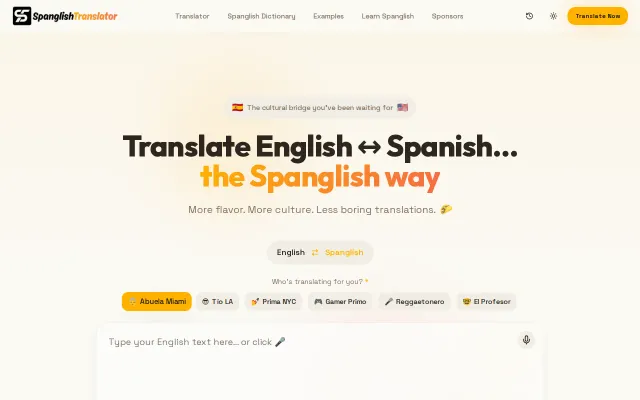
Persona-based tone switching captures cultural nuance better than Google Translate ever could.
DoScript trades shell terseness for English-like primitives (make folder, for_each file_in ...) plus safety features like a global --dry-run, typed errors (try/catch NetworkError) and rich file-loop metadata — handy for ad-hoc backups and file-sorting. The inclusion of a node-based visual IDE and a tiny installer suggests someone pushed this beyond a toy CLI, but the overall idea sits in a crowded space (PowerShell, Node-RED, AutoHotkey) so its appeal will be strongest for users who value human-readable syntax and a simple GUI.
Fixes multilingual token waste by translating to English before Claude, not after.
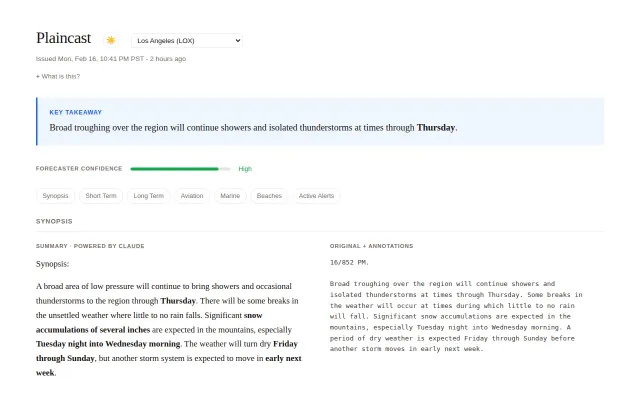
Turns impenetrable weather jargon into readable English, covering 19 NWS offices.
Early Access visual novel seeking playtesters for chapters 1-3.