Infrastructure●Mid
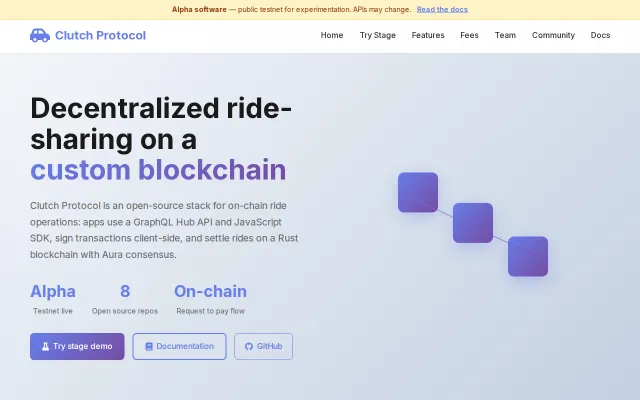
Clutch – decentralized ride-sharing on-chain (open source)
Decentralized Uber on blockchain, but this category has failed repeatedly for structural reasons.
Bold Bet
mehran_mazhar
2025d ago
65K lines of C++20 making blockchain produce useful AI models instead of wasting electricity.
Blockchain developers and ML researchers
Gensyn · Bittensor · Bitcoin
Key differences from Bitcoin: - Miners compete on validation loss improvement, not hash targets - Each block contains a verifiable model checkpoint - The network produces a publicly available AI model as a byproduct - MinGRU architecture is ~388x more parameter-efficient than Transformers
Technical details: - 65K lines of C++20, builds on Windows/Linux/macOS - 4 GPU backends: CUDA, Vulkan, Metal, CPU fallback - Lightning Network for instant payments - Ed25519 signatures, Keccak-256d hashing, Bech32 addresses - Continuous model growth: d_model starts at 384, grows +2 per block - Supply cap: 21M coins, 10-minute blocks, supply-based halvings
The model grows with the network. Early blocks train a small 26M param model. As more miners join over years, it scales toward billions of parameters — and by then, phones will be powerful enough to run it locally. No API keys, no subscriptions, no censorship.
Genesis message: "OpenAI burns $14B in 2026, adds ads to ChatGPT as last resort"
Whitepaper: https://kristian5013.github.io/resonancenet/ResonanceNet_Whi...
Decentralized Uber on blockchain, but this category has failed repeatedly for structural reasons.
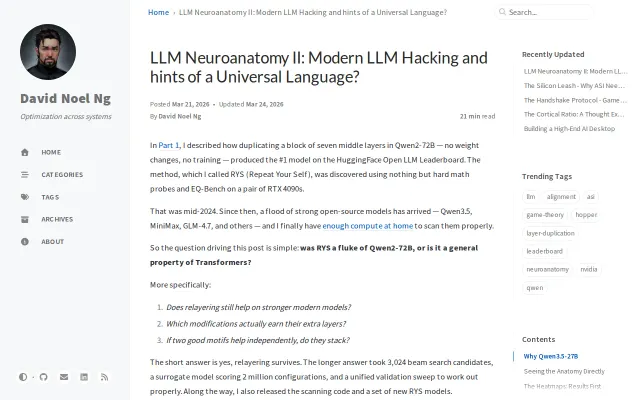
Layer duplication without training boosts Qwen3.5 performance, validating the RYS hypothesis.
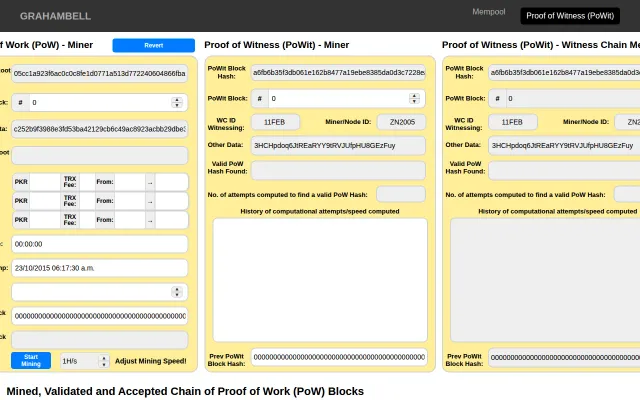
Rate-limited mining prevents 51% attacks, but Sybil identity protection is missing.
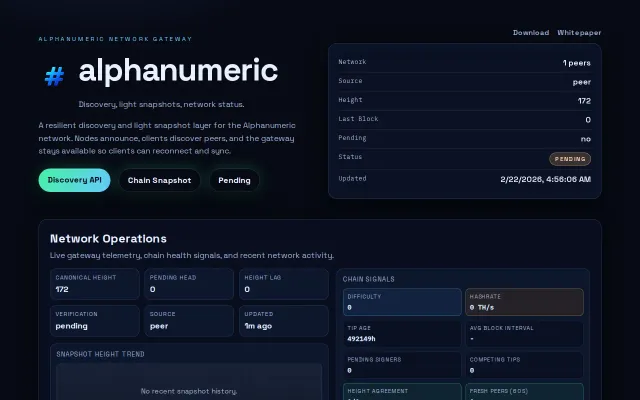
The project actually publishes canonical genesis anchors, protocol specs, bootstrap endpoints and a live explorer — so this reads like a working protocol, not just vaporware. The core idea (PoP-S4.1: up to ~30k phones per block) is a bold, unusual approach to consensus, but the repo shows little community traction and lacks obvious public audits or transparent attestation primitives, so treat the live network with healthy skepticism until security details and client code are clearer.
Post-quantum crypto blockchain, but live network shows zero blocks and one peer.
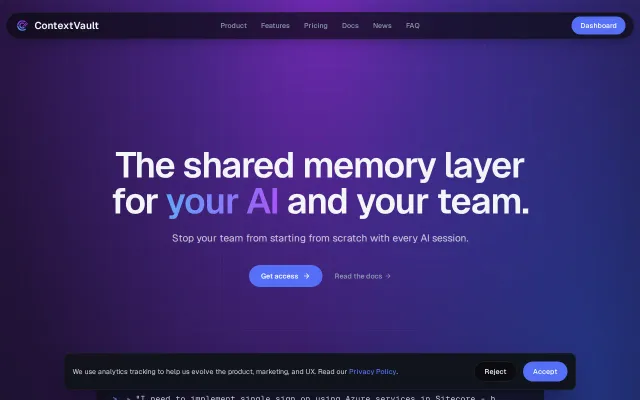
Another team memory store competing with Mem0 and standard RAG patterns.