AI/ML●●Solid
Synrix: hardware-verified memory routing for edge AI agents
Hardware-verified routing gate beats cloud latency for edge anomaly detection.
Niche GemBig Brain
Ryan_Synrix
2027d ago
Claude Code for local LLMs. Unified backend, setup, and coding harness for your own models.
Context condensing under memory pressure solves the actual pain of edge AI agents.
Edge AI developers, Jetson users, offline-first ML practitioners
Off Grid · Ollama · LM Studio
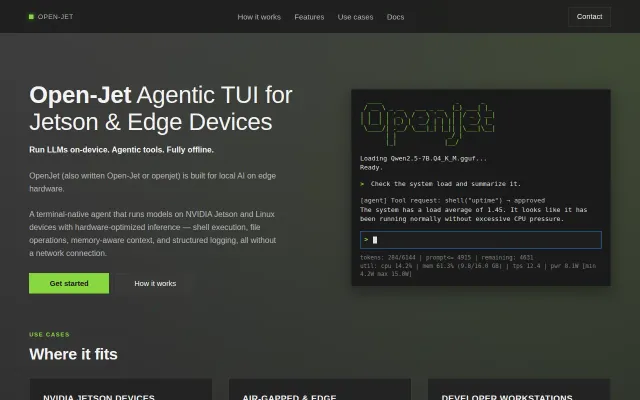
I am building a terminal UI for self-hosted AI agents on Jetsons and other edge devices with unified memory.
The reason I started it was that most local agent harnesses seems aimed at machines with plenty of RAM and a stable internet-connected developer environment. On Jetson-class hardware, the annoying problems are different: context growth eats memory, sessions break, models may fit but leave very little headroom, and a lot of tools assumes cloud access.
Recent additions include:
- air-gapped mode - automatic context condensing under memory pressure - persistent memory files and /memory controls - harness modes for chat/code/review/debug workflows - replayable traces for evals/debugging - multimodal local image input - OpenTelemetry support
I’d love for you to try it out. The code is up on GitHub, and contributions/roasts of my memory management are very welcome. On a 8GB, I got the latest Qwen3.5-9B running (it just about fits in the memory).
Contributions are welcome ofc. Github: https://github.com/L-Forster/open-jet
Hardware-verified routing gate beats cloud latency for edge anomaly detection.
Terminal agent for Jetson with memory-aware context windowing and TensorRT optimization.
Compaction tree cuts context from 100K tokens to 3K without losing memory.
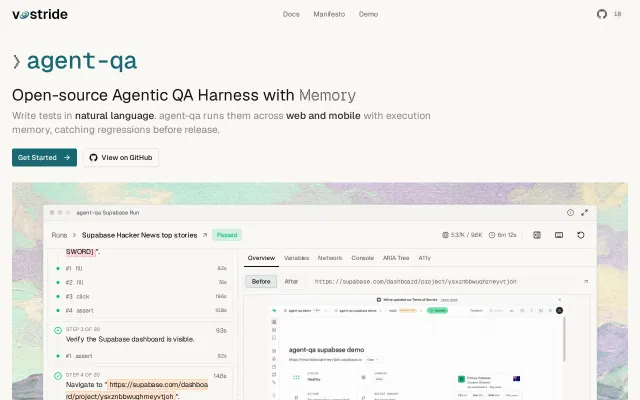
Self-healing tests that remember UI changes so you stop fixing broken selectors.
AI trading harness with approval boundaries and audit logs for Claude agents.
Git-native agent journaling beats chat history archaeology for multi-stage workflows.