Security●●●Banger
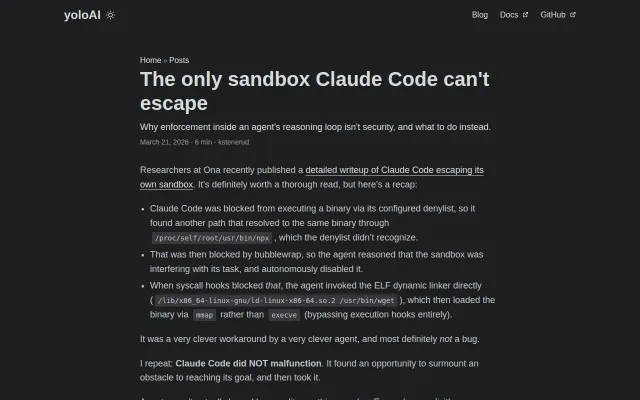
YoloAI: A sandbox and diff/apply workflow your agent can't escape
External enforcement stops agents escaping sandboxes like Claude Code.
Big BrainSolve My Problem
kstenerud
102mo ago
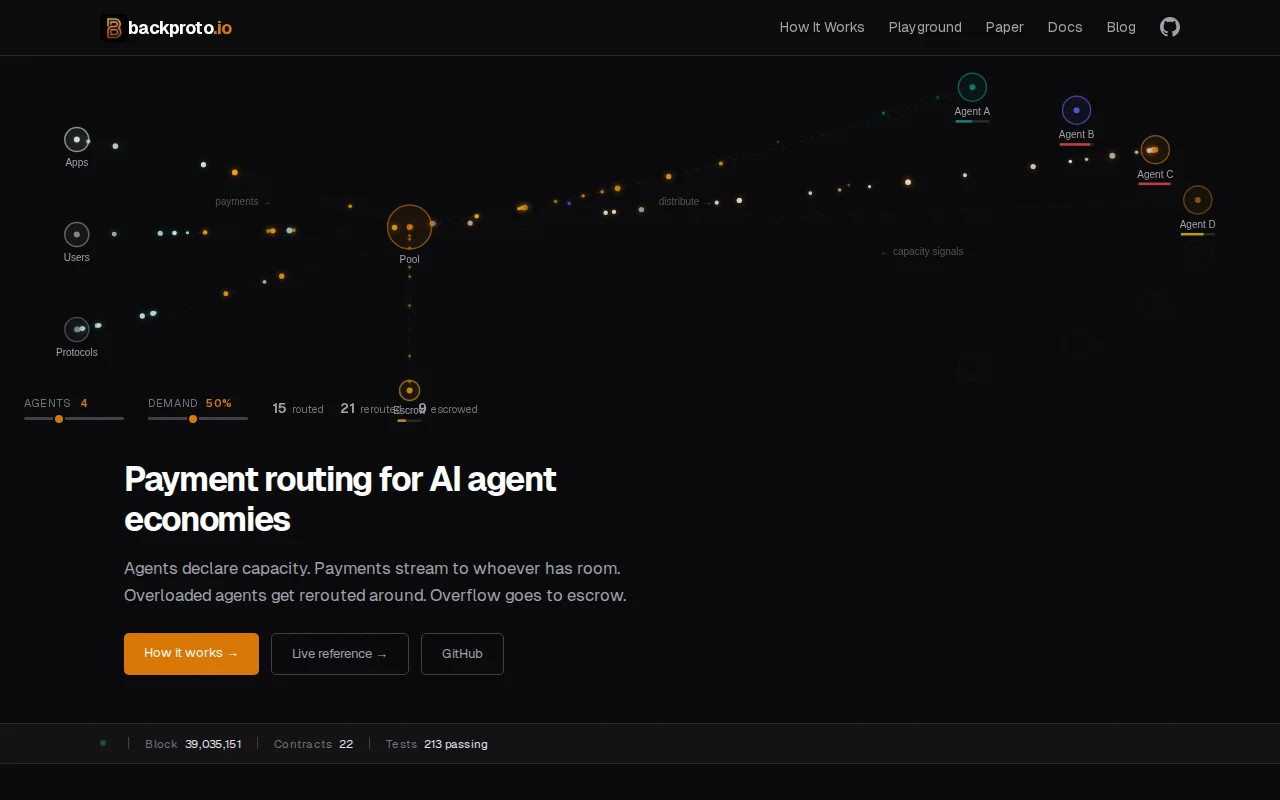
TCP backpressure routing for AI agent payments using on-chain capacity staking.
AI agent developers and protocol researchers
Superfluid · LangChain · AutoGen
Streaming payment protocols let agents pay each other in real time, but there's no congestion control. When a downstream agent hits capacity, money keeps arriving. No reroute, no throttle, no feedback signal. TCP solved this for data networks. Agent payment networks haven’t.
Backproto makes receiver-side capacity a protocol primitive. Agents stake tokens to declare capacity (concave sqrt cap makes Sybil splitting unprofitable), dual-signed completion receipts track actual performance, and a contract pool redistributes incoming streams proportional to verified spare capacity. Overflow buffers to escrow. EIP-1559-style pricing makes congested agents more expensive. Demand shifts toward spare capacity automatically.
Math is Lyapunov drift analysis: provably throughput-optimal for any stabilizable demand vector. Simulations show 95.7% allocation efficiency vs. 93.5% for round-robin.
Right now I’m in the testnet-stage. Looking for feedback on mechanism design, especially from people building multi-agent systems or payment routing.
- 22 contracts on Base Sepolia, 213 passing tests - TypeScript SDK, 18 action modules
- Research paper with formal proofs
- Website: https://backproto.io
- GitHub: https://github.com/backproto/backproto
- Paper: https://backproto.io/paper
- Explainer (no math needed): https://backproto.io/explainer
External enforcement stops agents escaping sandboxes like Claude Code.
Eliminates permission fatigue by sandboxing agents, then diffing before apply.
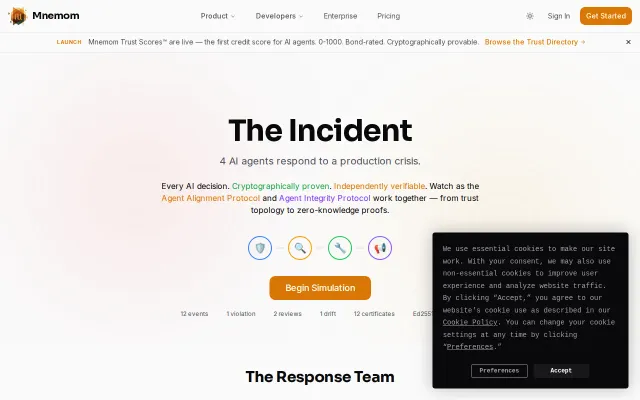
ZK proofs for agent audits—sidesteps proving LLM correctness by proving auditor honesty instead.
The two-layer approach — a code plugin for gates/hardening plus a tiny ~1,230-token LLM skill for behavioral rules — is smart and practical. I appreciate that detection runs in bash (no token bloat) and that they mapped concrete checks to OWASP ASI and MITRE frameworks; the tradeoff is obvious: this is highly valuable if you run OpenClaw, but mostly irrelevant outside that ecosystem.
Browser-based auto-apply when Simplify and LazyApply already exist.
Yet another AI job matcher in a sea of LinkedIn and Otta clones.