Productivity●Mid
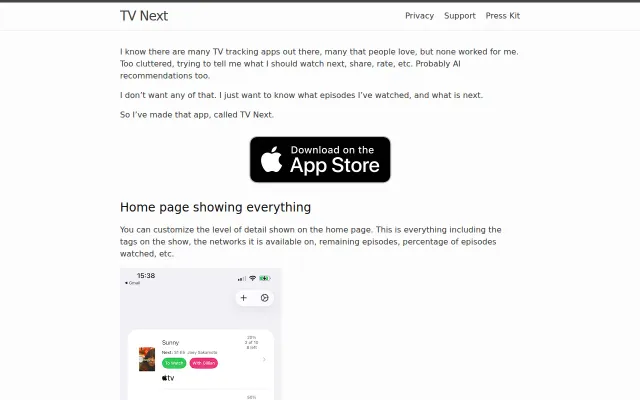
TV Next – the uncluttered TV Tracking app you've been looking for
Clean TV tracker without AI recommendations or ads, unlike TV Time.
CozyShip It
dmehers
103mo ago
Dynamic Disney routing engine fights decision fatigue better than Genie+.
Disney World visitors, families
TouringPlans · Disney Genie · MouseWait
I built a mobile-first web app that solves a problem I had at Disney World: too many choices, not enough time, constant decision fatigue.
*The problem:* You're in Magic Kingdom with your family. There are 40+ attractions, real-time wait times changing constantly, height restrictions to remember, and you have a mental list of must-dos. You waste time debating what to do next, walking past rides with short waits, and standing in long lines at the wrong times.
*The solution:* Park Autopilot gives you real-time "what to do next" recommendations. You set up your party profile once (2 minutes), pick your must-dos, and the app continuously recommends the optimal next attraction based on: - Current wait times (fetched every few minutes via Queue-Times API) - Your party's height restrictions - Proximity to your location - Time-of-day patterns - What you haven't done yet
*Tech highlights:* - React Router v7 (Remix) on Cloudflare Pages - Cloudflare Workers for API + cron jobs - D1 (SQLite) for park metadata and user data - KV for session storage - Recommendation algorithm with weighted scoring (wait time 35%, priority 25%, distance 20%, time-of-day 10%, popularity 10%) - Hysteresis threshold to prevent recommendation flip-flopping - Magic link authentication (passwordless) - PWA with offline support
*Current state:* - Magic Kingdom only (49 attractions with full metadata) - $4.99 one-time Day Pass per party - Soft-launched last week with small beta group - Processing real-time wait data every 5 minutes via scheduled Workers
*Pricing model:* One-time day pass ($4.99) instead of subscription. Felt cleaner than recurring billing for something you use 1-2 times per year.
*What's interesting:* The recommendation algorithm needs to balance multiple competing factors. For example, a must-do attraction with a 60-minute wait might score higher than a nearby ride with a 10-minute wait, but only if the must-do's wait is significantly lower than its average. I used hysteresis (15-point threshold) to prevent the top recommendation from changing on every screen refresh.
Wait time data is surprisingly noisy - theme parks don't publish official APIs, so I'm using Queue-Times which crowdsources from park-goers. I built a cron worker that fetches every 5 minutes and caches in D1 with timestamps.
*Challenges:* - Height data for all attractions (had to manually compile from Disney's official site) - Handling edge cases (park closures, ride downtime, special events) - Mobile-first design with glass morphism that doesn't tank performance - Making recommendations explainable ("Perfect timing! Wait is 40% lower than average")
*What's next:* - Add other Orlando parks (EPCOT, Hollywood Studios, Animal Kingdom, Universal) - Show time optimization (recommend nearby attractions during parades) - Multi-day pass options - Better offline handling
*Try it:* https://parkautopilot.com/?utm_source=hackernews&utm_medium=...
Would love feedback, especially on: - Recommendation algorithm tuning - Pricing model - Technical architecture (is D1 overkill for this?) - Feature priorities
Built this as a bootstrapped side project after a frustrating family trip last year. Happy to answer questions about the tech, business model, or theme park optimization in general.
Clean TV tracker without AI recommendations or ads, unlike TV Time.
Teaches retrieval-ranking split that matters at scale, but it's educational scaffolding, not a product.
Gathers schema + EXPLAIN + stats for LLM context; HypoPG simulates indexes risk-free.
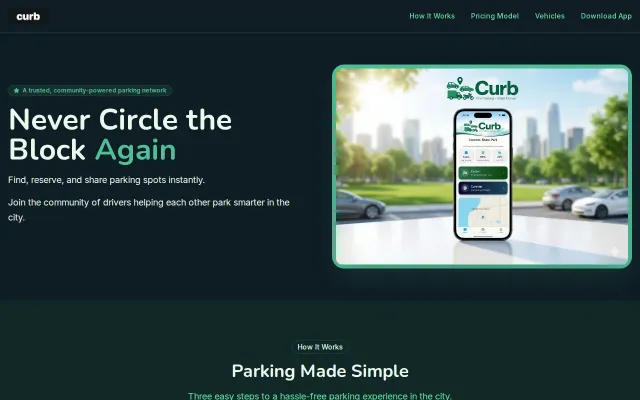
Community parking app, but Waze, ParkWhiz, and SpotHero already own this space.
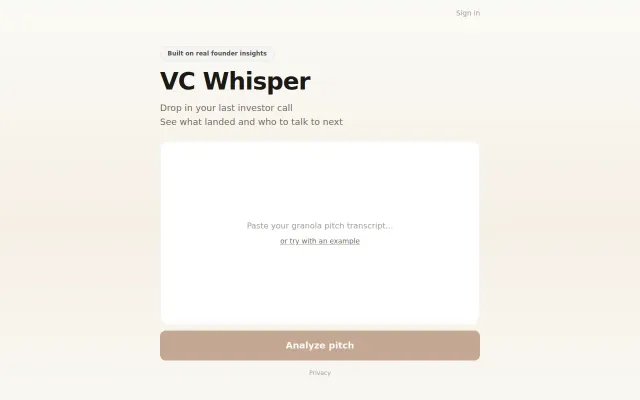
Drop-in transcript analysis and a one-click 'who to talk to next' pitch is a tidy, founder-focused idea and the copy has personality (’granola pitch’ is memorable). The page, though clean, hides the hard parts — no sample output, evaluation, or dataset details — so the product's usefulness depends entirely on the matching accuracy (speaker diarization + embeddings would be the right plumbing). Worth trying if you're fundraising, but the site needs proof of signal quality to move beyond a neat demo.
Jurassic Park FSN nostalgia meets live Kubernetes watch API visualization.