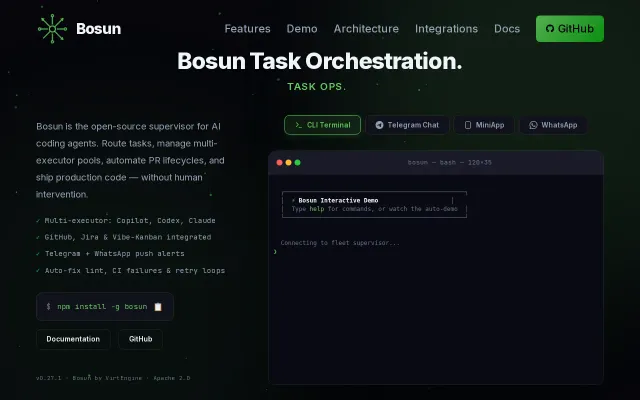
Developer Tools●●Solid
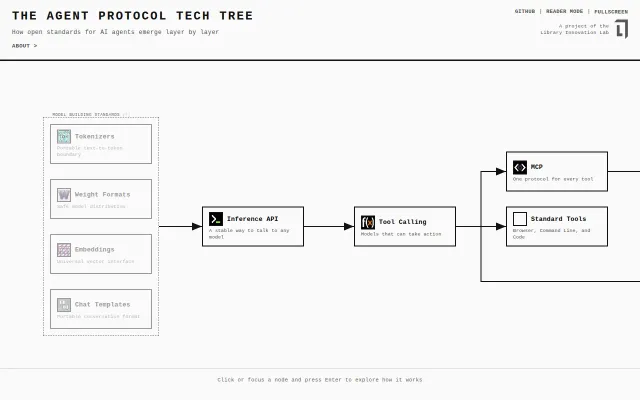
Agent Protocols Tech Tree
Civ-style tech tree for AI agent standards—good explainer, but presentation over substance.
Big BrainNiche Gem
JackC
103mo ago
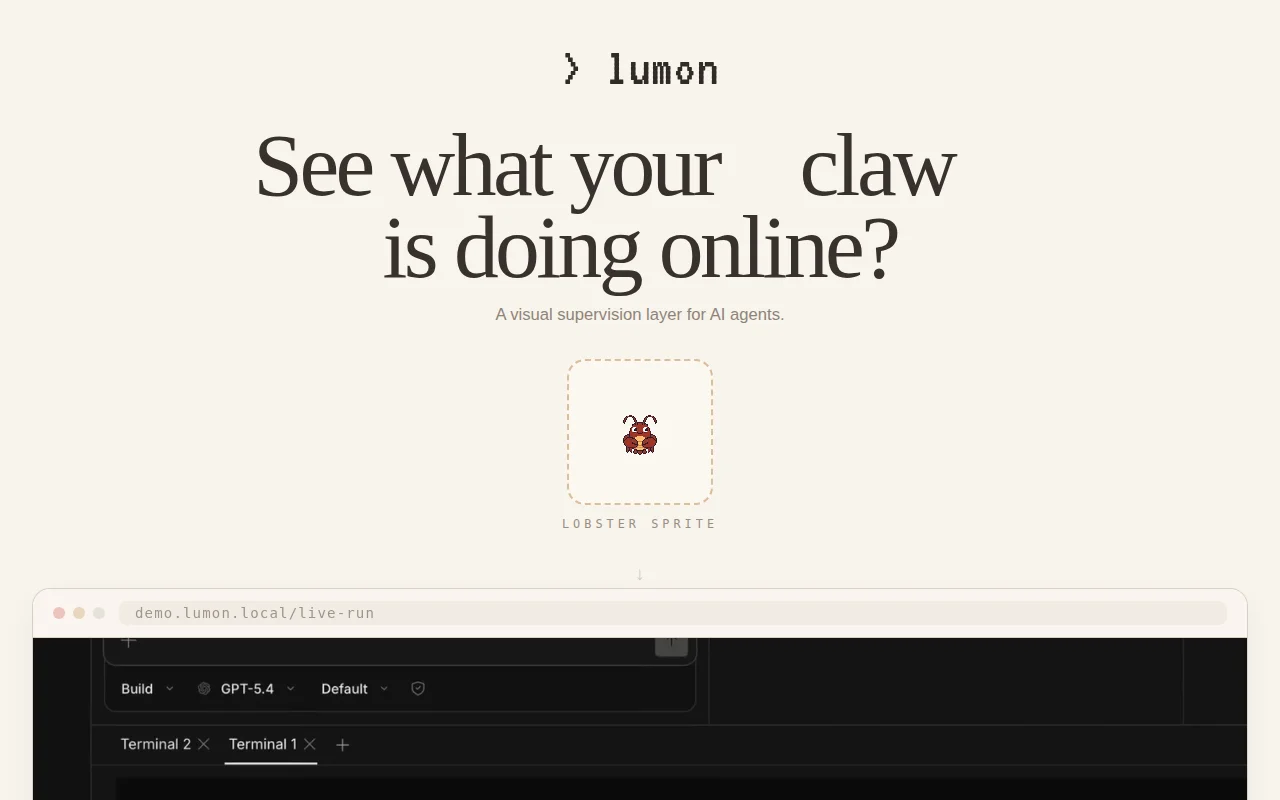
Sprite personality makes agents feel less abstract than logs.
Developers building or monitoring browser automation agents
Browser-use · AgentQL · LangWatch
Most browser agents are still shown through logs, traces, or at best a moving cursor. I wanted them to have some personality.
Lumon started as a class project. I kept wishing agents felt less like invisible processes and more like something you could actually watch, understand, and step in on while they worked. It is a real-time browser agent experience with a live stage, target highlighting, approval pauses, takeover, and Larry, an interactive sprite that reflects what the agent is doing as it works.
It’s still an early alpha, but I’d love feedback on whether this feels like a slightly less cursed way to interact with agents than the usual logs and cursor setup.
Civ-style tech tree for AI agent standards—good explainer, but presentation over substance.
The describe → plan → act split is an elegant, accessibility-inspired way to give LLM agents actionable UI context: annotate with data-ai-* attributes or use the Marker component, call describe(), send it to a planner, then client.act() executes DOM instructions. It's a clever middle layer that turns messy DOM state into structured inputs for server-side planning, though adoption will hinge on robust selector semantics and out-of-the-box integrations with popular LLMs and automation backends.
Behavioral genome evolves from real sessions, not static prompt configs.
Peer-to-peer agent coordination with human checkpoints, but execution unclear and zero traction.
Stops wallet-draining AI agents with rule-based guards, addresses real emerging pain.
Multi-executor agentic task router with Telegram control—ambitious but lacks proof it works end-to-end.