Data●Mid
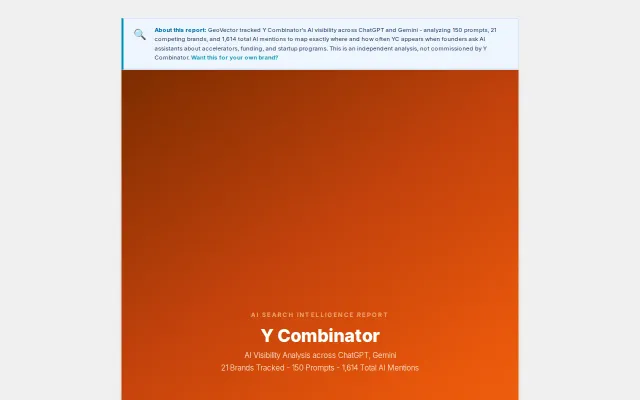
Measuring brand share in AI answers – a Y Combinator case study
Thorough methodology, but it's a one-off report—no recurring product or unique insight beyond the YC analysis.
Big Brain
roman10
434mo ago
CLI for tracking brand mentions in LLM outputs when manual checking is too slow.
Marketers and brand managers monitoring AI visibility
Brandwatch · SEMrush
Thorough methodology, but it's a one-off report—no recurring product or unique insight beyond the YC analysis.
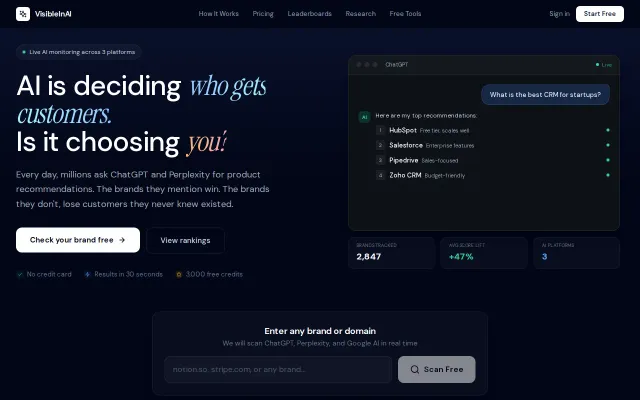
It treats LLM outputs as a new acquisition channel and backs that insight with real-time scans, an AI visibility score, alerts and auto-generated content aimed at sources LLMs trust (Reddit/Quora/Medium). The execution reads product-grade, but the landing leans on bold claims (human publishing network, +47% lift) with little methodological transparency and potential platform/ethics risk around gaming AI recommendations — I'd want more proof and clarity before committing budget.
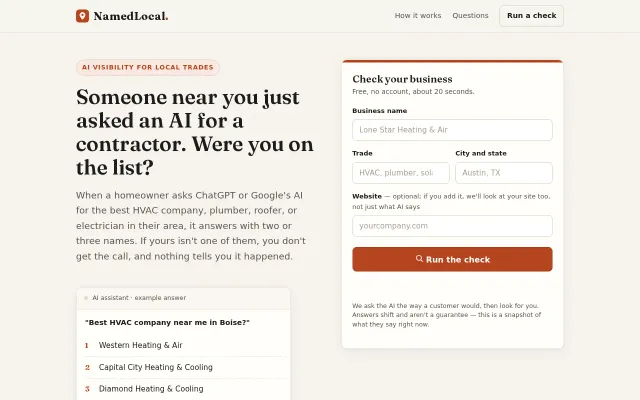
Checks if ChatGPT recommends your local business when SEO tools can't.
AI SEO scanner when the underlying recommendation mechanics are still opaque.
Solves a real new problem, but the market is barely formed and validation is weak.
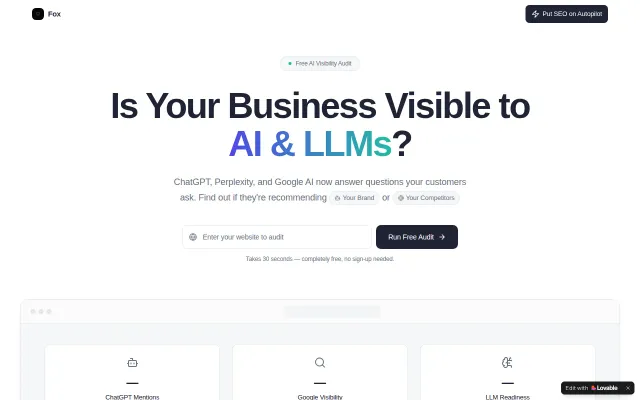
Tracks citations and sentiment across ChatGPT, Claude, Perplexity, Gemini and others, then surfaces gaps where competitors get mentioned but you don't (Battlemap) and prescribes concrete content edits (Hikoo Analyzer + Elevate). Smart product-market fit — GEO is an under-served spin on SEO — but the landing leaves open how data is collected, how often audits run, and whether recommendations actually move the needle at scale.