Gaming●●●Banger
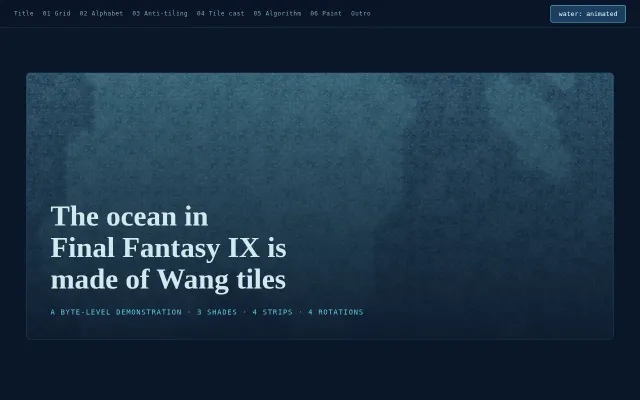
The ocean in Final Fantasy IX is made of Wang tiles
Byte-verified reverse engineering reveals FFIX ocean uses only 3 shades across 3,583 tiles.
Rabbit HoleWizardryEye Candy
jawnston
5115d ago
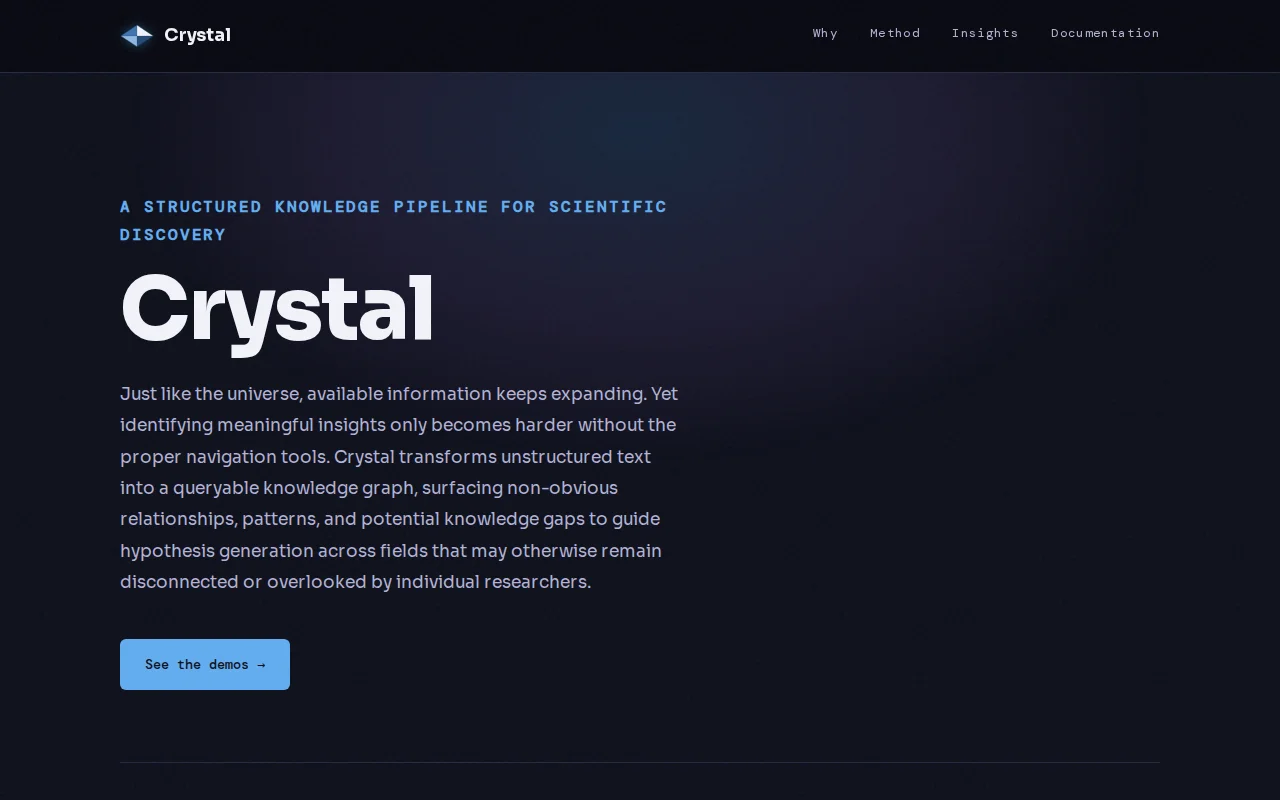
Same extraction pipeline maps neurobiology genes and Final Fantasy characters with equal precision.
Researchers and data scientists exploring cross-domain knowledge gaps
Connected Papers · Elicit · Scite
Interestingly, the same pipeline extracts useful entities and relationships from lore books about Final Fantasy, showing that the method works generally across domains. It'd be great to hear what anyone thinks.
Byte-verified reverse engineering reveals FFIX ocean uses only 3 shades across 3,583 tiles.
It compares the last 7 days to a 30-day baseline, flags spikes in workaround language, expectation gaps and escalations, and pushes Slack alerts with real customer quotes — the contextual snippets are the product's strongest hook. That said, the page glosses over classifier accuracy, tuning controls, and triage links; in a crowded space this'll live or die on precision and how easily teams can act on the alerts.
Typing game with stories when TypeRacer and NitroType already exist.
Read-only agent queries your existing Databricks warehouse with zero pipeline setup.
Yet another AI finance wrapper when Copilot Money already does this.
Combines GPU-first data ingest (cuDF + UVM) with format-aware inference choices (GGUF for local Gemma 2, TensorRT for production) and ships three runnable notebooks — including a full NIM-on-GKE deployment — so you can benchmark pandas vs cuDF and walk through local-to-cloud inference. Clever and practical for teams that actually need to scale telemetry queries, but expect non-trivial ops work, vendor lock-in to NVIDIA/GCP tooling, and cloud costs to reproduce the full stack.