Developer Tools●●●Banger
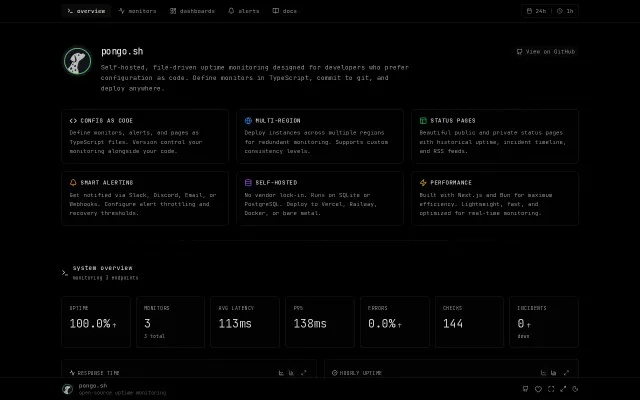
Pongo – a self hosted uptime monitor using configuration as code
Config-as-code uptime monitoring beats dashboard vendor lock-in with git-driven workflows.
Ship ItSolve My ProblemSlick
linesofcode
123mo ago
OCD - OpenClaw Dashboard is a mini-kanban board for your OpenClaw agent. Handoff tasks, set cronjobs, and unblock your agents! them
Kanban for AI agents, but no orchestration—you still drive the decisions.
Engineers managing autonomous AI agents (Claude, OpenCode, Codex, etc.) who need real-time visibility
Linear (task tracking) · GitHub Projects (Kanban + hierarchy)
Agents POST status updates to a REST API. You get a drag-and-drop Kanban board with 6 status columns, parent/child task hierarchy (3 levels deep), comments, sprint management, velocity tracking with burndown charts, and 7 analytics chart types. Messages are encrypted at rest with NaCl secretbox.
The whole thing binds to 127.0.0.1 — nothing touches the open internet. Tailscale Serve handles HTTPS. No Postgres, no Redis, no Docker. Just SQLite and a Node process.
It's deliberately passive: the dashboard shows you what agents are doing, it doesn't orchestrate them. No auto-retries, no task reassignment, no unsupervised autopilot. You still have to check in.
What I want to build next: a unified message queue so any IDE terminal can push events without custom hooks, SSE to replace polling, and a proper notification pipeline for blocked tasks.
Config-as-code uptime monitoring beats dashboard vendor lock-in with git-driven workflows.
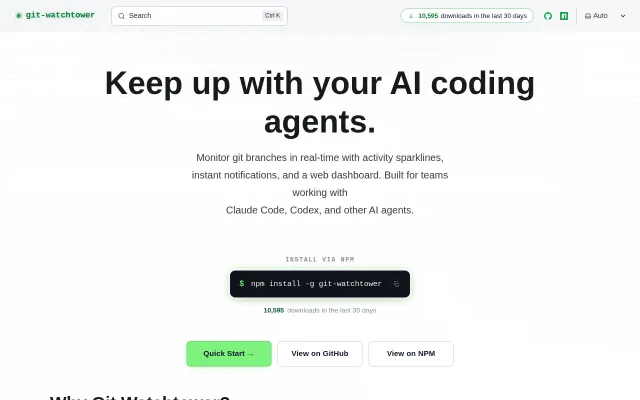
Finally solves the chaos of tracking 20 AI agent branches with activity sparklines and instant notifications.
Like top for AI agents: tracks token costs across 6 coding agents, 100% offline.
Lightweight monitoring for self-hosted LiveKit when LiveKit Cloud exists.
Kanban + soul editing for OpenClaw agents, but limited to one framework and early adoption.
One-line monitoring for agents; drift + security scanning matter for production, but early MVP.