Developer Tools●●●Banger
Egregore – Shared memory and coordination for multiplayer Claude Code
Git-backed shared memory solves AI team context drift better than vector DB wrappers.
Zero to OneBig BrainShip It
ohmyai
522mo ago
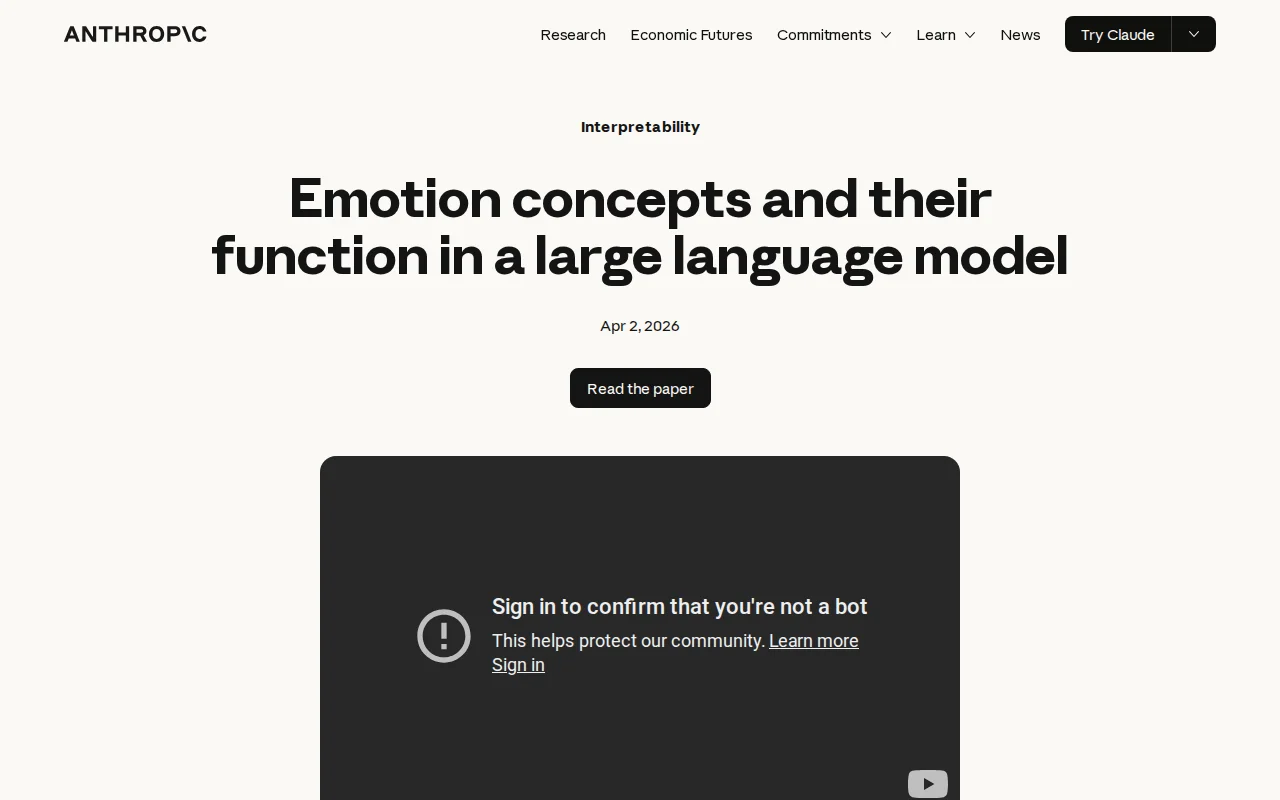
Anthropic research paper, not a Show HN project — link doesn't match the described multi-Claude system.
AI researchers, ML engineers, interpretability researchers
Anthropic Interpretability Research · OpenAI Mechanistic Interpretability · Neel Nanda's interpretability work
So I improved it-- fixed up tool-limit and memory issues, and started down a rabbit hole inspired by Anthropic's recent research on emotion concepts in LLMs: [https://www.anthropic.com/research/emotion-concepts-function](https://www.anthropic.com/research/emotion-concepts-function)and the result was two named Claude instances (they chose "Wren" and "Kite") collaborating through shared memory and a file-based message queue, coordinated by a Firefox extension.
Github: https://github.com/ASIXicle/persMEM
I don't have a CS background. I'm late to the party and probably re-inventing a lot of wheels, but I think the topic and data that Wren and Kite brought into being is absolutely fascinating.
I'd really appreciate any feedback on glaring security holes I missed. I've always been "printer and a gun" kinda guy but I sort of just said fuck it with this one.
Git-backed shared memory solves AI team context drift better than vector DB wrappers.
No merge conflicts by design since every save creates a unique file.
Sosreport collaboration tool, but ticketing systems already handle this workflow.
Mimir hooks into Claude Code lifecycle events so agents can 'mark' facts (e.g., "API uses snake_case") into a DuckDB-backed memory and RAG pipeline, then auto-injects that context as additionalContext for later agents. It's a pragmatic, well-scoped solution to the annoying problem of agent amnesia — very useful if you run agent swarms, but its impact is limited by Claude Code adoption and the need for the surrounding infra (BGE keys, hooks).
Reverse-engineers Claude's mistakes into git-tracked rules, but only useful for Anthropic users.
Prevents AI agents from re-litigating rejected architectural decisions across sessions.