SaaS●●Solid
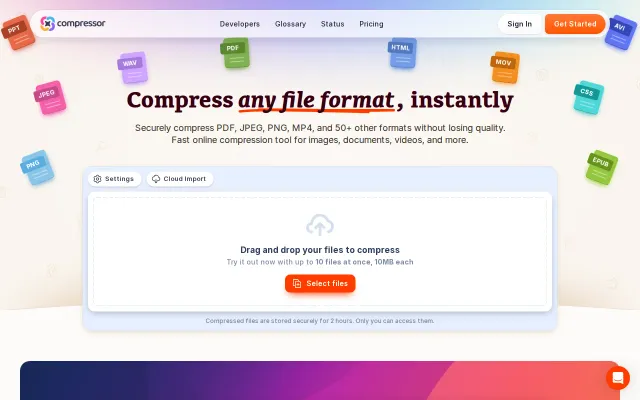
Compressor.app – Compress almost any file format
ML classifier detects text formats automatically, but CloudConvert already does 50+ formats.
SlickSolve My Problem
matylla
403mo ago
Compress all connected MCP into a single router MCP and save up to 99% on tokens
Cuts MCP token bloat from 26K to minimal overhead with two-tool proxy architecture.
Developers using multiple MCP servers with coding agents
MCP Registry · Claude Code MCP integration
For example, let’s take three popular MCP servers: Notion, GitHub, and Pylance. The overhead they create on every turn is about 26K tokens. If we assume an average 50-turn coding session and Opus pricing, the overhead for a single session is about $0.9275.
`mcp-compress-router` does something very simple: it proxies all MCP servers with just two tools: `get_tool_schema` and `invoke_tool`. `invoke_tool` proxies the call to the downstream MCP server. The `get_tool_schema` description lists the tool names and arguments for all downstream MCP server tools so that the agent knows what's available. Whenever it needs a tool, it first calls `get_tool_schema` to read the full description and argument schema, and then calls `invoke_tool`.
The savings are pretty serious. The example of 3 MCP servers is compressed to 900 tokens with the "max" compression level (just tool names), or to about 2000 tokens with the "high" compression level (the default one: tool names plus argument names). So you'll be saving 90%+ this way.
ML classifier detects text formats automatically, but CloudConvert already does 50+ formats.
98% token savings on Gradle output—genuinely smart compression for coding agents.
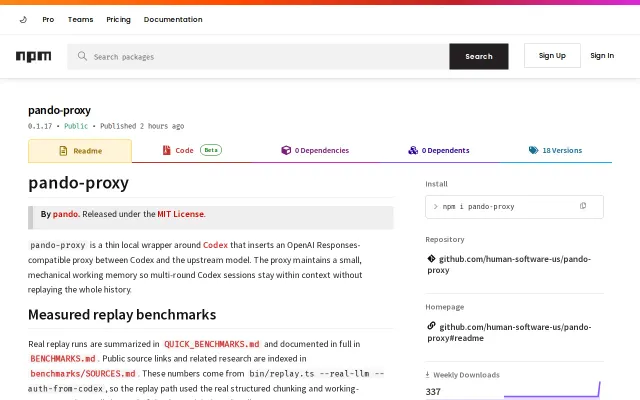
Transparent proxy cuts Codex context tokens by 87% via working memory.
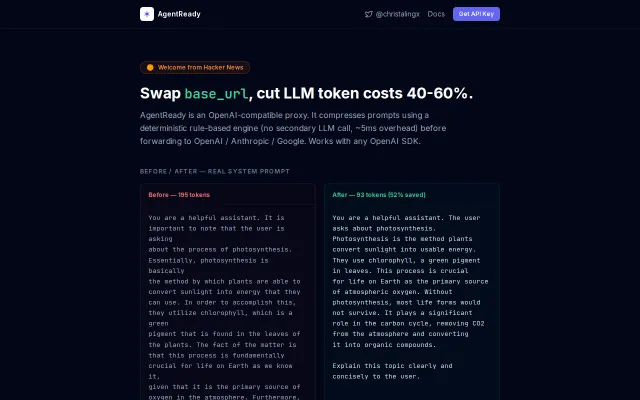
Drop-in proxy that cuts GPT token costs 40-60% without changing app code.
Two MCP tools replace hundreds when typical integrations need one tool per endpoint.
Practical screenshot compression for AI agents, but image optimization tools already exist.