AI/ML●●●Banger
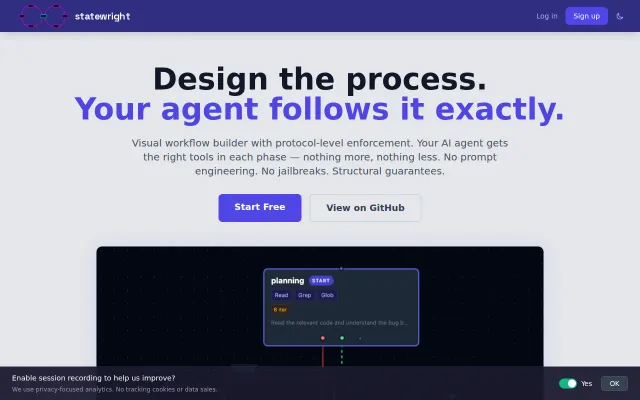
Statewright – Visual state machines that make AI agents reliable
Protocol-level tool enforcement prevents jailbreaks better than system prompts.
Big BrainZero to OneSlick
azurewraith
3028d ago
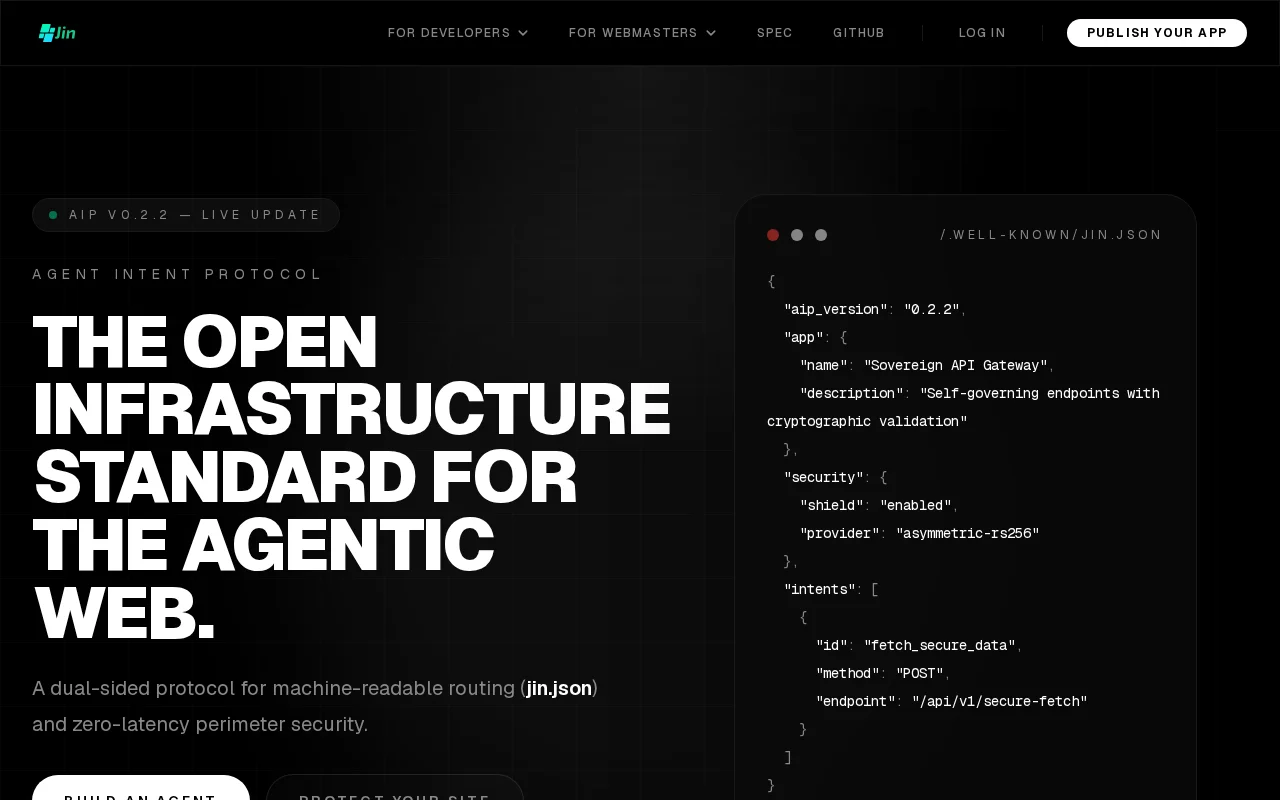
Perimeter security plus intent discovery beats pure scraping, but adoption is the real hurdle.
AI agent developers and webmasters building API infrastructure
Model Context Protocol (MCP) · OpenAPI Specification · A2A Protocol
I'm building Jin - an open-source protocol for agent builders and webmasters to make the everyday internet legible for AI agents.
I use AI agents for coding & research and one thing I've observed is that we spend to much time, money or both on giving scraping powers to our agents. That got me thinking, what if there was a system for my AI agent to deliver what I want from the internet without having to break a sweat? And that gave me the intent layer idea.
Here's how Jin works - 1. AI agent side: you only pass the instructions to your agent in a skill.json or skill.xml format. That's the first step. The skill will tell the agent to look for jin.json on the website and use the intent map to navigate, take action like CRUD, etc. It lives under app/.well-known/jin.json
2. Webmaster side: the webmasters can run the jin-cli at the root of their project, the cli will map the project, generate intent map in a jin.json file and save it wherever the app lives. For example, in a monolithic structure, the jin.json can live at the root. For a monorepo structure, it can live under app/web or app/marketing, etc. This file can be totally edited the way you want. Apart from generating intent maps, it tells you how you can easily edit, what you can put, what should go & what not, etc. There's a to-do list in jin.json
Along with this, in the latest version, I've added a Jin shield to protect websites from unauthorised scrapers. This shiled lives next to whatever firewall you are using, consider this like a first line of defence. It will snitch who came in. You can register your agent on meetjin.com for free and use the generated key to access any website that uses Jin shield. The agents carry a cryptographic RS256 JWT passport and the Jin shield verifies this locally using cached JWKS public keys.
The specification is open (CC0), the tooling is Apache 2.0. Use it, break it, roast it praise it.
Access the cli: npx @papercargo/jin-cli Access the key: https://meetjin.com Github: https://github.com/meetjin/jin
I would really appreciate to know your use case and feedback.
Cheers!
Protocol-level tool enforcement prevents jailbreaks better than system prompts.
Robots.txt for AI restaurant agents addressing real regulatory compliance needs.
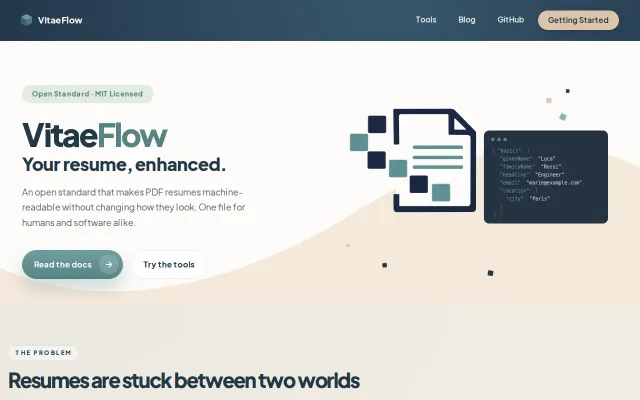
PDF/A-3 embedding solves JSON Resume's adoption problem elegantly.
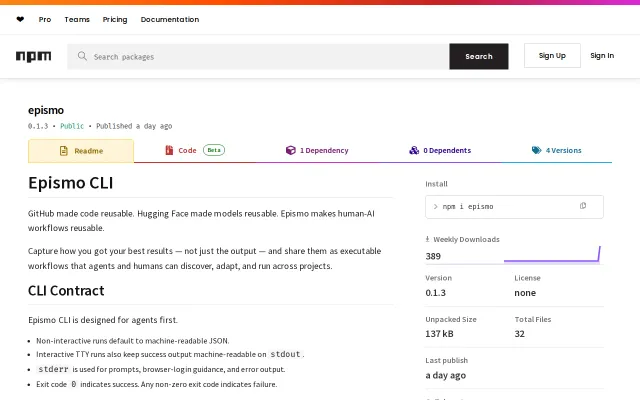
Agent-first CLI contract with proper stdout/stderr separation for workflow capture.
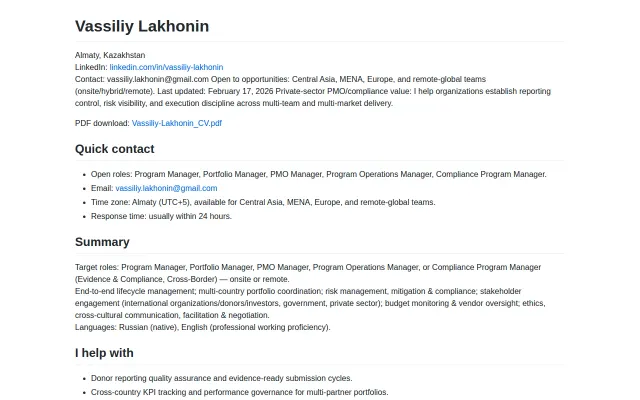
Includes actual machine-readable artifacts (resume.json, evidence.json, llms.txt, agent-card.json) plus JSON-LD and GitHub Actions for basic indexing — that's an honest, useful handshake between a human CV and automated agents. Smart idea and practical execution, but it stops short of delivering searchable semantics or an embedded search UI so the structured data mostly benefits bots rather than helping humans scan in 60 seconds.
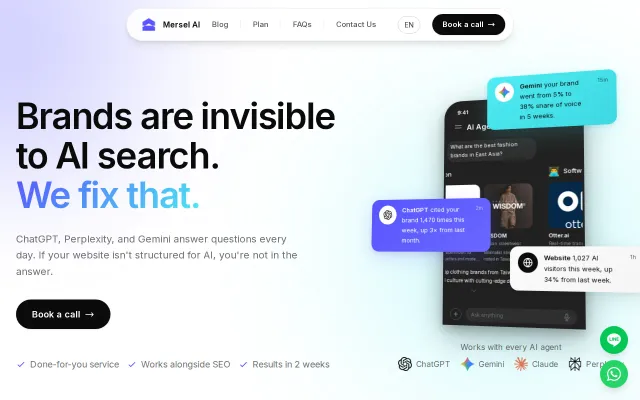
Smart, focused play: instead of chasing rankings, they add a machine-readable layer and server-rendered HTML so LLMs can actually see and cite product + review data. The landing shows concrete citation and traffic lift case studies and emphasizes zero visual change — sensible for conservative brands. It isn't reinventing structured data or SSR, though; the value hinges on execution details (how they extract, maintain JSON-LD for widget content, and map prompts to content), which the page glosses over.