Education●●Solid
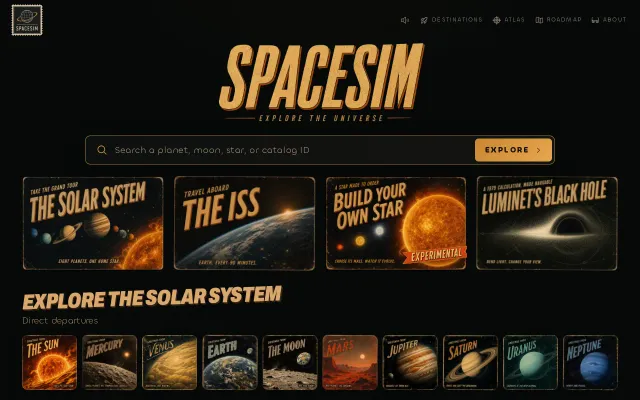
A browser universe simulator with reproducible scientific state
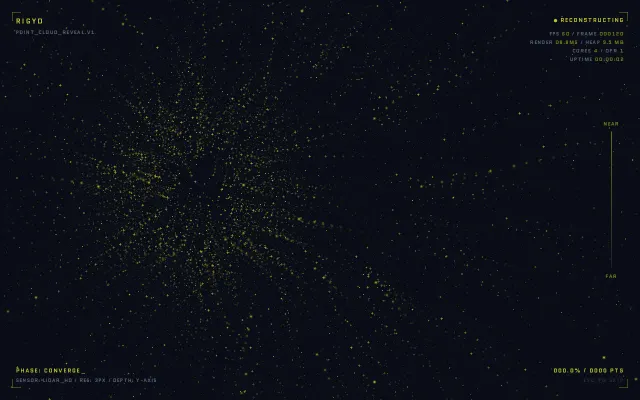
Reproducible scientific states make this more than just a pretty 3D star map.
Eye CandyRabbit HoleNiche Gem
romainsimon
312d ago
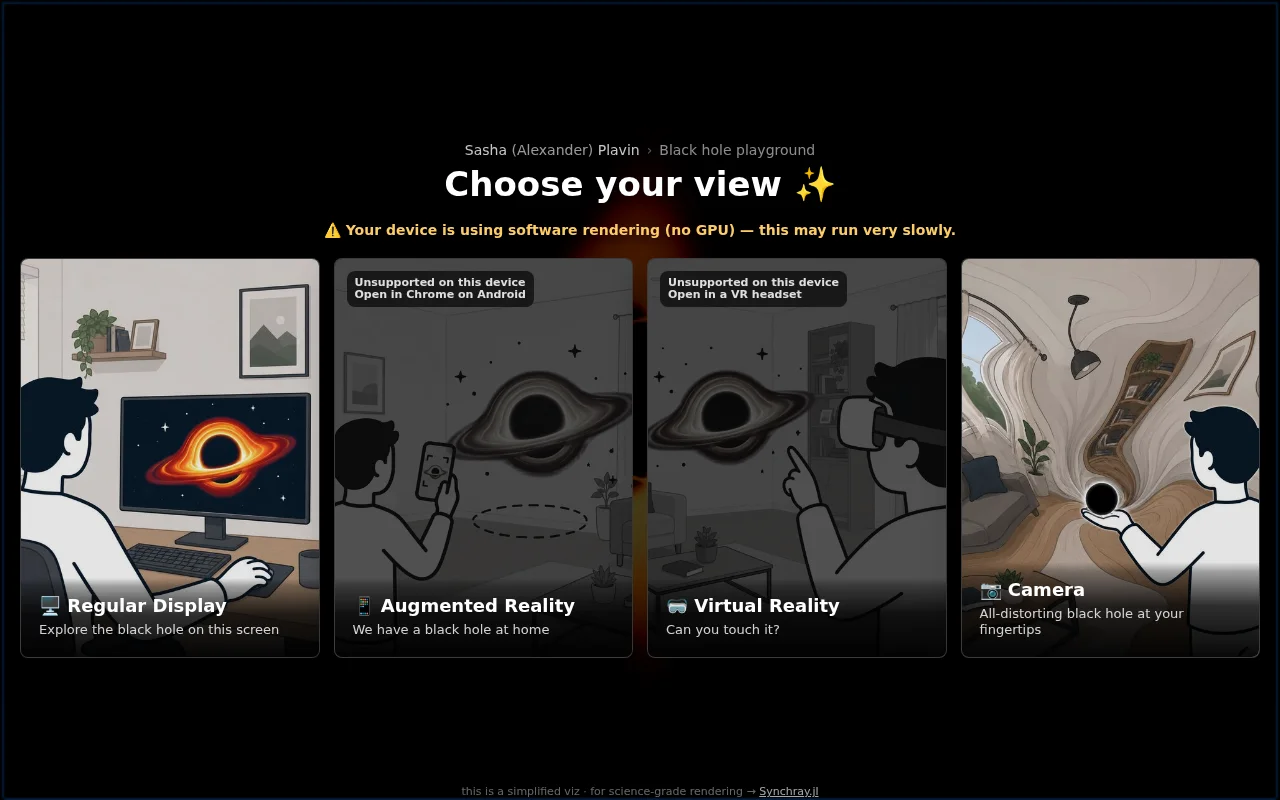
Real relativistic raytracing in your browser with AR mode to put a black hole in your room.
Science enthusiasts, students, educators
SpaceEngine · Universe Sandbox · NASA's Eyes
I'm Sasha (Alexander) Plavin, an astrophysicist at Harvard's Black Hole Initiative studying quasars and black hole environments. I work with raytracing/radiative transfer simulations professionally, and wanted to make one anyone can play with — so I built this app.
Put the black hole onto your screen (any browser), or directly into your room with AR or VR (requires WebXR, for example Chrome on Android, or any VR headset). When looking around, pay attention to unintuitive relativistic effects: rays bending around the black hole, and special relativistic "Doppler boosting" changing brightness depending on the viewing angle — zoom out to see the fast jet where the latter effect is especially pronounced. Faint markers show where other viewers are standing right now.
Alternatively, put the black hole in front of your camera and watch it lens your actual surroundings. Light winds around the hole, so you see both what's in front of you and what's behind you at once (when the device and browser allow both camera feeds). The closer to the black hole, the stronger the bending — and the longer the light-travel delay: wave at it and watch the changes propagate inward. (unfortunately, WebXR restrictions make AR passthrough and the camera feed mutually exclusive)
No signup, basic features work on every device, no data uploaded — the camera feed never leaves your device. Source code: https://github.com/aplavin/blackhole.plav.in.
Enjoy having a black hole in your room, or use it for education/outreach — any questions, feedback, or suggestions are welcome!
Reproducible scientific states make this more than just a pretty 3D star map.
Adds mass and density to meshes when most 3D tools only do visuals.
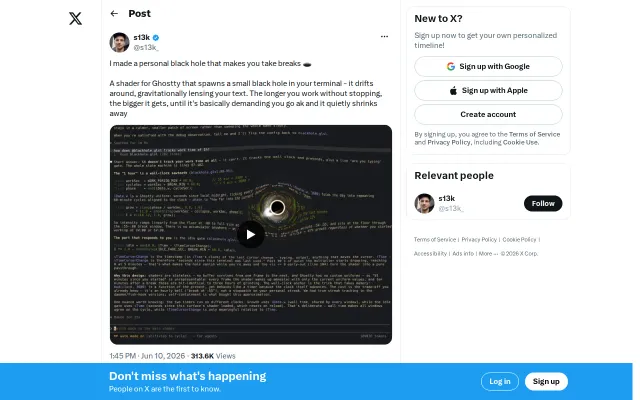
Shader-based break reminder that uses gravitational lensing to guilt you into stepping away.
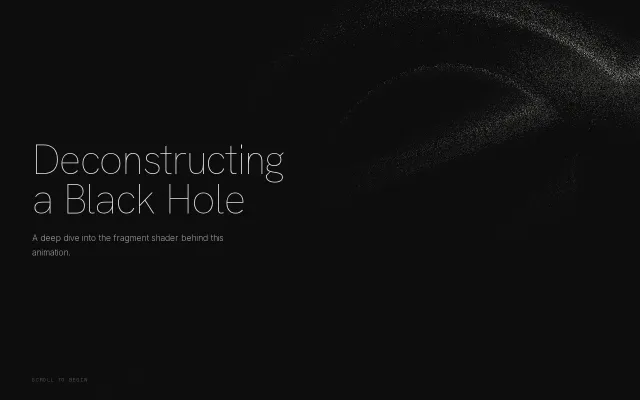
Live GLSL shader breakdown that actually runs in your browser while you read.
The repo actually implements an RK4 geodesic integrator in CUDA kernels to trace millions of rays and produce frame sequences — plus handy scripts to generate a Perlin accretion disk and preprocess NASA EXR star maps. It’s the sort of technical playground that shows real GPU know‑how and produces striking renders, but the experience is experimental: you must manually fetch assets, run preprocessing scripts, and there are no builds, benchmarks or accuracy notes to help anyone reproduce or compare results.
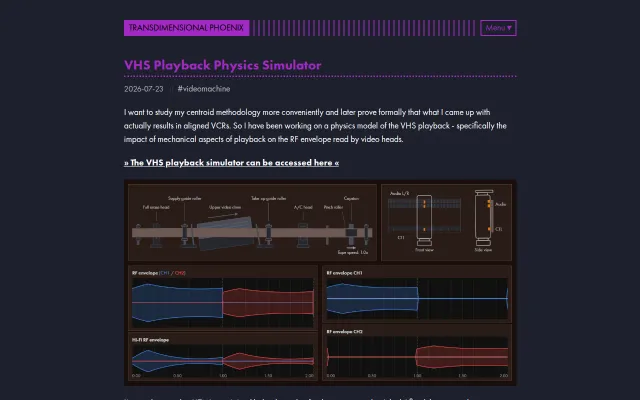
Models azimuth rejection and Hi-Fi phase relationships for VCR alignment tuning.